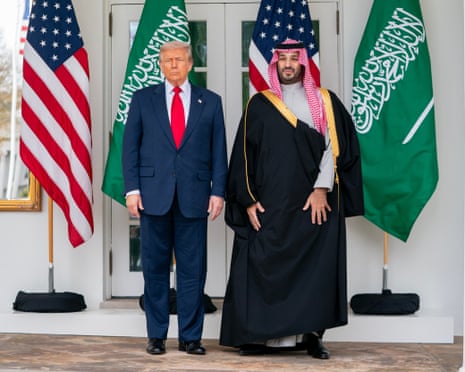
The US has signed a landmark nuclear deal with Saudi Arabia that could allow the kingdom to enrich uranium in the future.
In a statement on Wednesday, the US Department of Energy said its secretary, Chris Wright, and his Saudi counterpart, Prince Abdulaziz bin Salman, signed a “peaceful nuclear cooperation agreementâ€, along with a “bilateral safeguards agreementâ€.
The full details of the deal have yet to be released, but the timing of the announcement is controversial, as the US's war with Iran is being fought in part to prevent Tehran enriching uranium domestically and make it near-impossible for Iran to build a nuclear weapon.
A civil nuclear deal with Saudi Arabia has been in the works for years during both Donald Trump's first administration and that of former president Joe â Biden. No deal has come together before now, in part because of warnings from nonproliferation groups who say that it could offer Saudi Arabia a path to develop a nuclear weapon.
The deal will be submitted to Congress for review, where it could face opposition among lawmakers who fear a lack of monitoring safeguards to restrict Saudi Arabia's uranium enrichment.
Saudi Arabia has in the past said it would need a nuclear weapon if Iran acquired one, an intention Iran has repeatedly denied. But in lengthy talks stretching over more than one administration, the US also feared that Riyadh would look elsewhere for nuclear technology if the US did not provide what it wanted. Saudi Arabia has long said if it does not partner with the US, it could partner with China or Russia which have different proliferation standards.
In a report to Congress earlier this year, the US administration urged support for the US-Saudi nuclear deal, in part to “prevent strategic competition from seizing an opportunity to undermine United States national security interests for decades to comeâ€.
The report also argued that the US must seize the opportunity to expand nuclear cooperation to “re-establish our leadership in the global civilian nuclear energy market and reap the benefits of expanded influence in foreign countries hosting our reactorsâ€.
According to the US energy department, the Saudi partnership agreed on Wednesday is expected to expand American nuclear technology exports, create “high-paying†US jobs, and “strengthen America's energy and national security postureâ€.
“These agreements reflect our two nations' shared commitment to strengthening US-Saudi commercial relations, delivering prosperity at home and security to our allies abroad,†Wright said in a statement.
“Rest assured, these agreements uphold the highest standards of nuclear safety and nonproliferation, while relying on the world's best nuclear technology and scientists, designed right here in the United States.â€
However it is likely the agreement will not include the enhanced monitoring by the International Atomic Energy Agency (IAEA) that is found in the so-called additional protocol to which Iran had been subjected under the 2015 nuclear deal.
In a statement to CBS, Dan Sumner, chief executive of Westinghouse Electric Company – an American nuclear reactor company expected to support Saudi Arabia's nuclear development – said: “The US government's announcement to launch a civil nuclear cooperation agreement with Saudi Arabia is a landmark step that strengthens energy security, expands opportunities for US industry and workers, and drives significant long-term economic growth and investment benefits for both countries.â€
A day earlier, the defense secretary, Pete Hegseth, appeared before the US Senate to request additional funding from the Senate appropriations committee, as the US continues its campaign to prevent Iran from developing uranium enrichment capabilities and obtaining a nuclear weapon.
Before the deal was announced, Rosemary Kelanic, the head of the Middle East programme at Defense Priorities, warned in a social media post: “Giving Saudi Arabia uranium enrichment technology is a terrible idea on many counts. But it's especially idiotic to do it *in the middle of a war over Iran's nuclear programme*.â€
She described the decision as reckless and not in the US national interest. “Saudi enrichment would put immense pressure on Iran to get the bomb. Is Trump TRYING to provoke Iran into weaponising?â€
Others said it showed the US thought Saudi Arabia had matured into a country that wanted to diversify its energy mix away from oil.
Saudi Arabia and nuclear-armed Pakistan signed a mutual defence pact after Israel launched an attack on Qatar targeting Hamas officials. Pakistan's defence minister then said his nation's nuclear programme “will be made available†to Saudi Arabia if needed, something seen as a warning for Israel, long known as the Middle East's only nuclear-armed state.