Editor’s note: Faig Mahmudov is a journalist based in Azerbaijan who covers regional security, foreign policy and geopolitical developments. The views expressed in this article are his own and do not necessarily reflect the editorial position of News.Az.
The South Caucasus has reached a point at which the central question is no longer who won the last war, but whether the political conditions are being created to prevent another one. Azerbaijan and Armenia have moved substantially beyond the military confrontation that defined their relations for decades. Negotiations, border delimitation, regional connectivity and the prospect of formal normalisation have created an opportunity to transform the region's strategic environment.
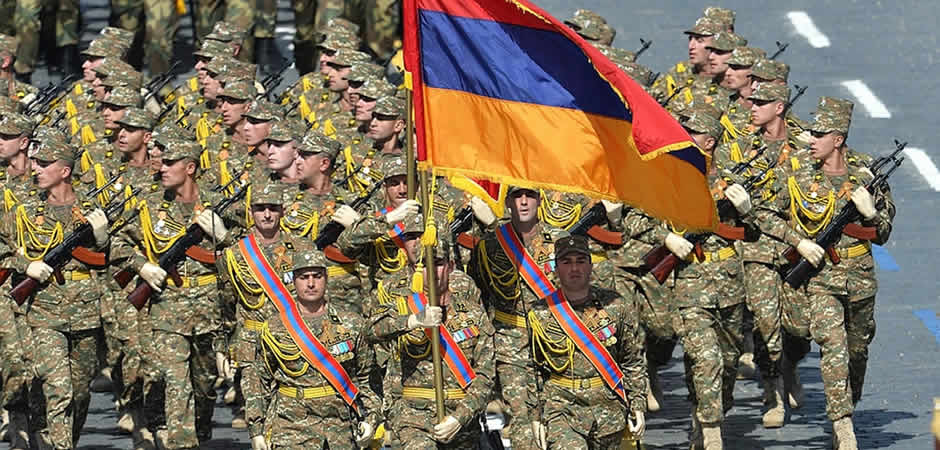
Yet treaties alone do not make peace irreversible. They can establish borders, define obligations and regulate interstate relations, but they cannot determine how societies interpret the past or imagine the future. This is precisely why developments inside Armenia deserve attention. The continued involvement of young people in military-style training, particularly when it intersects with narratives questioning the finality of the post-conflict order, raises a difficult question: can a state construct peace diplomatically while parts of its society continue to reproduce a mentality of confrontation?
The issue should not be reduced to Armenia's military modernisation. Yerevan has the same sovereign right as any other government to maintain armed forces, reform its defence institutions and respond to changes in modern warfare. Nor should every form of civilian preparedness be portrayed as evidence of aggressive intent. First aid, emergency response, physical fitness and disaster preparedness are normal components of resilient societies.
The concern begins elsewhere: when civilian training systematically acquires the characteristics of battlefield preparation and when adolescents are among its participants.
Instruction involving firearms, tactical movement, reconnaissance, field navigation, camouflage, battlefield medicine and the use of unmanned systems represents something more consequential than conventional patriotic education. When such disciplines are combined within organised programmes, they create a body of practical knowledge that can be transferred directly into an armed conflict environment.
Source: caucasuswatch
The increasing attention paid to FPV drones makes this development particularly relevant. Recent wars have fundamentally altered assumptions about military power. Relatively inexpensive unmanned platforms have enabled small units to conduct reconnaissance and precision attacks that once required considerably greater resources. A person trained to operate such systems is therefore acquiring more than a recreational technological skill when that training takes place within a broader combat curriculum.
This does not mean that every young Armenian receiving such instruction is preparing to participate in a future war. Such a conclusion would be both simplistic and analytically weak. The more important issue is the ecosystem being created. A dispersed network of people familiar with drones, communications, weapons, field medicine and small-unit tactics can constitute a latent mobilisation resource even without being formally incorporated into the armed forces.
But technology is only one dimension of the problem. The ideological environment surrounding these activities is potentially far more significant.
The persistence of symbols and narratives associated with the former separatist entity in Azerbaijan's Karabakh region matters precisely because symbols in post-conflict societies are rarely politically neutral. They preserve particular interpretations of history. When they appear in environments where young people are simultaneously acquiring military skills, the boundary between remembrance and political aspiration becomes difficult to ignore.
There is a profound difference between remembering a lost war and educating a generation to believe that its outcome must eventually be reversed.
That distinction will be crucial for Armenia's future.
States emerging from unsuccessful wars frequently face a choice between strategic adaptation and historical revisionism. The first requires society to examine previous assumptions, accept geopolitical realities and construct a new national strategy around achievable objectives. The second offers a more emotionally attractive proposition: defeat is temporary, history remains unfinished and a future generation may one day recover what the previous generation lost.
The attraction of the second narrative is understandable, but its consequences can be destructive. Revanchism does not need to produce immediate military action to destabilise a region. Its most dangerous effect is more gradual: it prevents peace from acquiring legitimacy within society.
A government may sign an agreement because the balance of power requires it. A society convinced that the agreement merely reflects temporary weakness may treat the same document as something to be revised when circumstances change. Under those conditions, peace exists legally but remains strategically conditional.
This is why the Armenian government's approach towards militarised civic structures matters. The relevant question is not simply whether these organisations formally belong to the state or receive direct instructions from government institutions. In modern political systems, state responsibility is not measured exclusively through formal chains of command.
Governments also communicate priorities through regulation, access, tolerance and institutional engagement. When organisations engaged in military-style activities can expand their infrastructure, recruit young participants and operate publicly, the authorities inevitably face questions about where they intend to draw the line between legitimate civic activity and the normalisation of armed confrontation within society.
This becomes even more important because official Yerevan increasingly presents regional peace as a strategic objective.
There is an inherent contradiction between seeking normalisation externally and allowing a culture of permanent mobilisation to develop internally. Diplomacy requires societies to accept that yesterday's enemy can become tomorrow's neighbour. Revanchist political culture requires precisely the opposite: the preservation of the enemy as a permanent category.
Armenia therefore faces a choice that goes far beyond its relationship with Azerbaijan.
It must determine what kind of state it intends to build after decades of conflict.
One model is based on internationally recognised borders, functioning institutions, economic modernisation, regional connectivity and pragmatic relations with neighbouring countries. The other remains psychologically tied to territorial questions that have already produced enormous human, political and economic costs.
The first model requires difficult adaptation. The second can survive through memory, grievance and expectation. But only one offers Armenia a sustainable development strategy.
Source: turdef
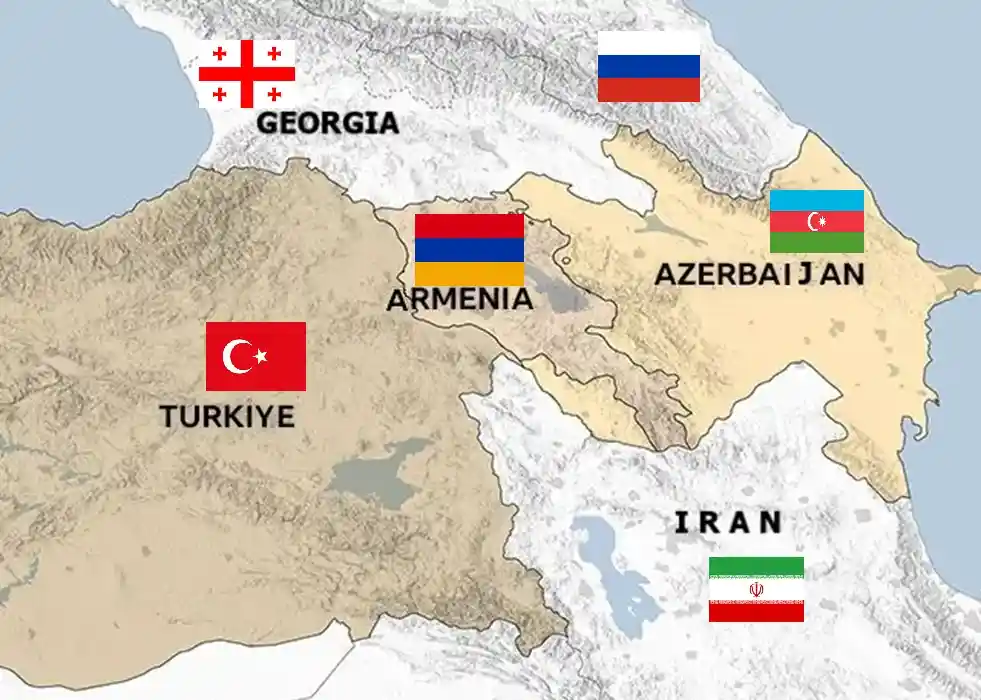
Geography reinforces this reality. Azerbaijan and Türkiye will remain Armenia's neighbours regardless of changes in governments, alliances or international circumstances. Armenia cannot build a long-term national strategy on the assumption that geography itself can somehow be politically overcome. Its security will ultimately depend not only on military capabilities or external partnerships, but also on predictable relations with the states surrounding it.
This is why the debate about young Armenians receiving military-oriented training is ultimately not about drones, shooting ranges or individual organisations. It concerns the political purpose assigned to the next generation.
The same young person learning to operate an FPV drone could become a specialist in robotics, engineering, agriculture, logistics or civilian aviation. Knowledge itself is neutral. The decisive question is whether technological competence is connected to economic modernisation or to an expectation of another battlefield.
For a country facing demographic pressures, economic constraints and a complicated geopolitical environment, this distinction is strategic.
Armenia can spend the coming decades producing generations psychologically connected to an unresolved past, or it can direct the same human capital towards building a competitive state capable of benefiting from a more interconnected South Caucasus.
No peace agreement can make that choice on Armenia's behalf.
Azerbaijan and Armenia may eventually complete the legal architecture of normalisation. Diplomatic relations can be established, borders can become more predictable and transport links can reconnect economies separated by decades of conflict. These would constitute historic changes.
Yet the durability of that architecture will ultimately be tested outside negotiating rooms.
The decisive indicator will be whether societies cease regarding war as an unfinished political instrument.
For Armenia in particular, the post-conflict period presents an opportunity to redefine patriotism itself. Patriotism does not have to mean preparing another generation to recover territory. It can mean building institutions that work, creating an economy capable of retaining young people, strengthening internationally recognised statehood and ensuring that another generation is not sacrificed to objectives inherited from the past.
This is where the real strategic debate lies.
A society does not fully leave a war behind when the shooting stops. It leaves the war behind when the next generation is no longer given a political reason to restart it.
The South Caucasus may now have its best opportunity in decades to achieve precisely that transition. Whether it succeeds will depend not only on what Azerbaijan and Armenia sign, but also on what they teach their young people to expect from the future.
For Armenia, therefore, the fundamental choice is becoming increasingly clear: to prepare a generation to compete in a new regional order, or to prepare it to challenge that order by force.
The first choice could turn the end of the conflict into the beginning of a new era.
The second would merely turn peace into an interval between wars.
(If you possess specialized knowledge and wish to contribute, please reach out to us at [email protected]).
News.AzÂ