Thorny divisions exposed by draft deal
Gabrielle Canon
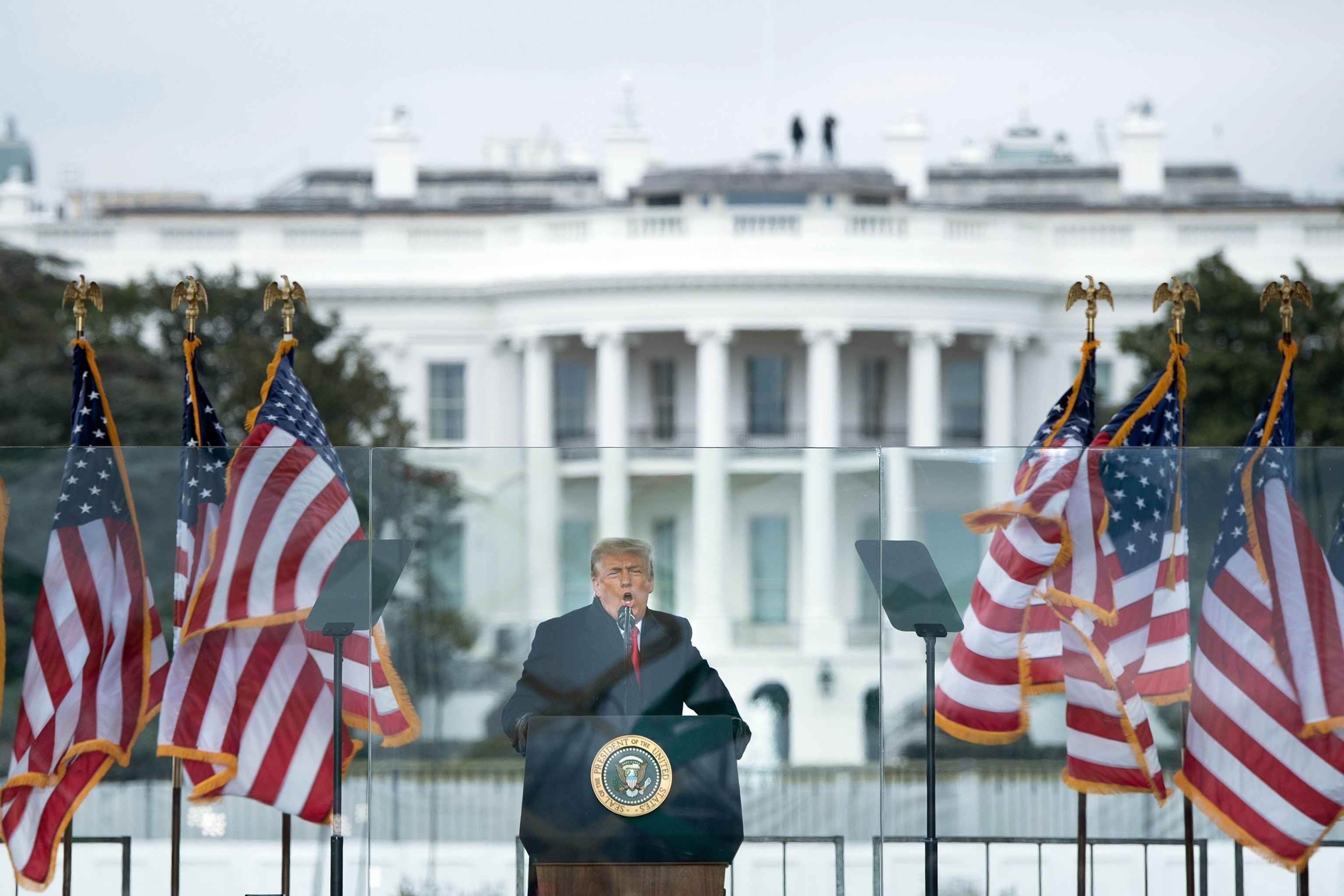
Welcome to day 2 of week 2, as the clock winds down with just four days left to hammer through thorny divisions with lots left on the negotiating table. Monday brought out a first draft of the agreement but it's far from set in stone.
The 18-page document includes 144 separate items, including many that are still being hotly disputed. Language on the transition away from fossil fuels, calls to reel in overshoot (which under current policies is projected to surge past 1.5C to 2.7C of warming by 2100), and stronger financial support for developing countries were outlined as a way to “draw out partiesâ€, Chris Bowen, climate and energy minister of Australia and lead negotiator of the talks told the Guardian on Monday.
In other words, changes are expected. Insiders aren't planning for the next draft to come quickly and it's possible (likely) that the talks will go into overtime this week.
Key events

Sandra Laville
New government data published on Tuesday reveals nature in the UK is continuing its steep decline.
The latest biodiversity indicators produced by the Department for Environment, Food and Rural Affairs show that 11 out of 15 species measures have deteriorated over the long term, with 10 of these also declining in recent years. Breeding birds, butterflies, and priority species are among those continuing to suffer.
The data on the decline in nature comes after the prime minister called for greater climate resilience at Cop31. Richard Benwell, chief executive of Wildlife and Countryside Link, said: “Today's biodiversity indicators show that nature is still disappearing around us. Species abundance has fallen by 40% since 1970, priority species by an awful 80%, and most protected sites are damaged or degraded.
“We cannot build resilience while our natural defences are crumbling around us. Healthy ecosystems are our best protection against floods, droughts, and extreme heat. Restoring nature is not an optional extra in tackling environmental hazards – it is essential to save lives and livelihoods.
“The Government must match its climate leadership abroad with urgent action and serious investment in nature at home. Business as usual is failing. We need sustained funding and stronger action to restore wildlife, revive habitats, and protect the natural systems on which our safety, resilience and prosperity depend.â€

Damien Gayle
A spectre is hanging over Cop31. The spectre of AI.
Artificial intelligence is threatening to massively increase power demand around the world. And with that, carbon emissions. But it is barely spoken about in the halls and meeting rooms of the UN climate summit
Or at least publicly. Behind closed doors is another matter. According to research, almost 500 people at Cop31 are from corporate groups and companies involved in the AI buildout.
Lighthouse Reports, a public interest investigative journalism platform, said it counted a total of 495 registered attenders from 86 companies associated with building out AI infrastructure.
Engineering, design and construction had the largest representation, with 161 attenders. Companies that offer power and electrical equipment to datacentres were the second largest group.
That was followed by 54 representatives of datacentre operators, hyperscalers, cloud and AI companies including Amazon (AWS), Alibaba (Alibaba Cloud), ByteDance, Google, NTT DATA, Microsoft, Equinix, EdgeConneX, Meta and NVIDIA.
Discussion of AI in Antalya has been limited. It has no specific agenda item. But at the beginning of the second week of the UN climate summit the Turkish presidency unveiled a voluntary “Antalya AI pledgeâ€. It sought to encourage nations to commit to assess the growing environmental risks of the technology, while tapping its potential for finding climate solutions.
However, it fell flat among nations invited to a high level meeting to introduce it. The pledge received 80 endorsements. But barely 10 nations were among them while the rest were companies or civil society groups, AFP reported.
The pledge was then supposed to be launched at a press conference, which was cancelled and rescheduled. And then the replacement time was cancelled as well, this time with no time or date when it is supposed to take place. The Turkish and Australian Cop31 presidencies did not respond to a request for comment.
In any case, AI has not proven to be a reliable partner when it comes to climate information. A UN-backed study published on Monday found the mildest challenge from users quickly turns AI models into climate crisis deniers.
Gabrielle Canon
There are a lot of competing voices at Cop31. But for those willing to escape the florescent lights and the unceasing hum of activity within the Blue Zone conference centre, an oasis outsides offers the voices that may be missing from negotiations: bird song and forest sounds are pumped through a speaker surrounding a tranquil pond providing a welcome break from the din inside.

The display created by Turkey's General Directorate of Forestry was mostly being used as a nice backdrop for sidebar conversations and smoke breaks around midday Tuesday, but at least a handful of people were spotted sitting in the grass solo, perhaps catching a bit of peace before the inevitable pull to head back inside.
Draft deal a ‘shopping list’ fundamentally at odds with delivery, EU negotiator warns
Speaking at a press conference just now, the EU's climate commissioner, Wopke Hoekstra, lamented the language on climate finance, trade and carbon capture (CCS) in the draft decision. He argued that the focus of this Cop was supposed to be on implementation. “It had the characteristics of a shopping list,†he said of yesterday's text.
“That, in our view, is fundamentally at odds with the logic of implementation,†he added. “Delivering what we have already agreed on, that should be the focus. And that is why we do think that – particularly in the domain of finance, particularly in the domain of trade, also in the domain of CCS, and suggesting that might be the solution to everything – I think the cover decision does not go in the right direction and needs significant change.â€
Hoekstra expressed his support for the Turkish co-host's electrification push to get 35% of global final energy from electricity by 2035. “The more, the better. The quicker, the better. The cleaner, the better.â€
However, he indicated the EU was flexible on how clean that electricity should be, “if, to some degree, a bit of pragmatism is needed to bring others into the tentâ€.
The position was echoed by Darragh O'Brien, the climate minister of Ireland, which holds the rotating Presidency of the Council of the EU. He referenced the 700 million people who do not even have access to electricity, and the progress being made “not just exclusively†through renewables.
Russia, Saudi Arabia and Australia biggest exporters of historical fossil fuel emissions
The co-host of the Cop31 climate summit is among the countries with the greatest responsibility for having exporting fuels that destroy a stable climate, according to new analysis by Carbon Brief.
Between 1850 and 2025, Australia shipped coal, oil and gas that added 28.1bn tonnes of CO2 to the atmosphere, the analysis found. Only Russia and Saudia Arabia bore greater responsibility, with exported emissions more than double Australia's.
Top 10 exporters of fossil fuel emissions, 1850-2025
There is no standard way to divvy up the blame for fouling the atmosphere with planet-heating pollutants. Traditional measures focus on where the fuels were burned, and can even account for the carbon embodied in imported goods.
This new approach puts the spotlight on the countries that extract the fuels. A country such as Saudi Arabia shoots up the ranking when including exported emissions in the tally, with more historical responsibility than even India, a country with 40 times as many people.
Historical emissions broken down by domestic extraction and consumption, imports and exports
While the two biggest historical polluters, the US and China, are net importers of fossil fuels, they still sit at the top of this table. The bulk of their climate damage comes from fuels they dug up at home.
Studies have found that fossil fuel-burning must drop drastically to keep the planet from heating to horrific levels. While the fossil fuel industry and exporting countries argue against cutting production before demand falls, and some activists have fought to shift the focus away from consumption to the companies supplying dirty energy, most economists I've asked about it have made the case that both sides of the equation would need to fall in tandem to avoid counterproductive rebound effects.
Gabrielle Canon
Thousands of miles away from where negotiators are grappling over how to address the serious impacts from a warming world, the California coast is experiencing a glimpse of what's to come.
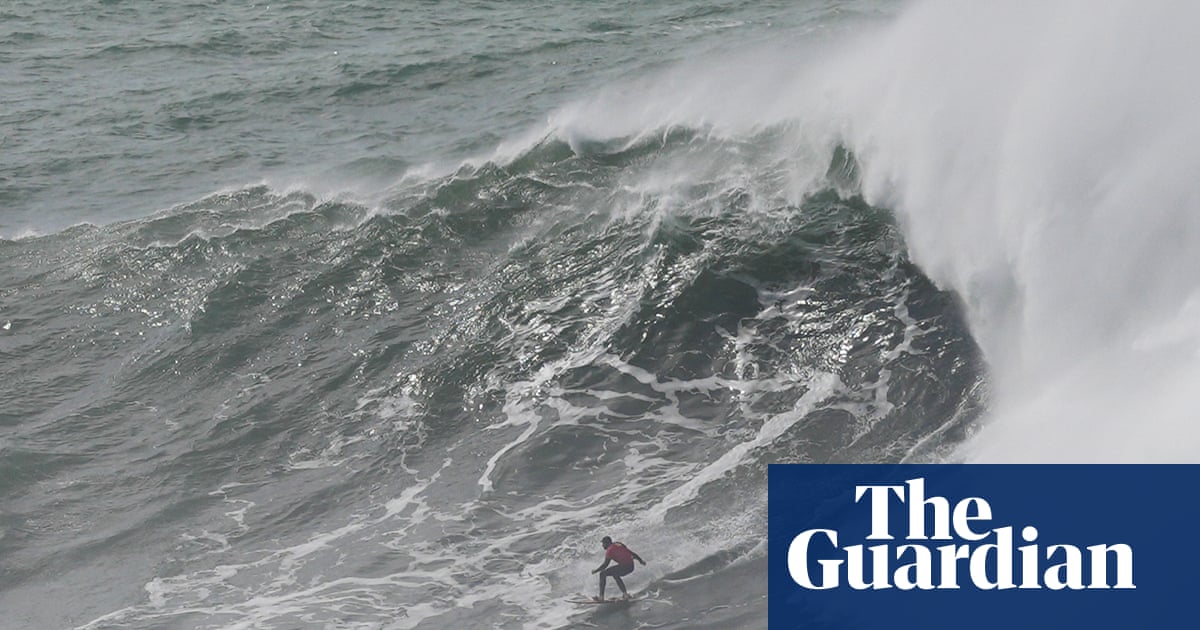
The severe effects of a historic El Niño have dramatically raised sea levels along the shores of the western US, and enormous ocean waves are chewing through swaths of the coastline. Beachside homes have been destroyed by the conditions that have also harmed marine ecosystems.
Meanwhile, ocean temperatures in the region have smashed through previous records, setting off a cascade of effects that may worsen over the next few months.
“It is like nothing we've ever seen,†Dr Jono Wilson, the science director for The Nature Conservancy's oceans program told the Guardian last week, as scores of dead seabirds and marine mammals washed up on beaches, life supporting a vital food web ocean ecosystems depend on plummeted, and violent surf crashed into the coast. “We just are trying to figure out how to wrap our heads around the sheer scale of this event.â€
As a storm system churned over the San Francisco Bay Area early this week, adding another layer of hazards to the swollen tides, behemoth waves flooded into parking lots along the beaches and prompted evacuation warnings in nearby communities. The federally-run National Weather Service forecasted waves between 25-35ft, with some up to 50ft. There have already been deaths in recent weeks, as beach-goers were ripped from the shore into the water.

A rare tornado warning was also issued in the region this week. Twin whirling water spouts were spotted over San Francisco waters, as forecasters warned a series of severe storms could bring torrential rains and the threat of flash flooding or debris flows over the next week.
This super El Nino, a climate phenomenon defined by unusually warm equatorial ocean conditions, is rapidly heating and expanding parts of the Pacific, compounding the impacts from the climate crisis and extreme marine heatwaves that have already stressed ocean ecosystems and their inhabitants. It's expected to strengthen over the next few months, and California is bracing for more rising tides and extreme weather that could overwhelm infrastructure. Scientists have said that the impacts are but a harbinger of what lies ahead as the climate crisis unfolds.
Gabrielle Canon
Perhaps the cosiest corner of Cop31 is tucked against a wall filled with hopes for the future. At the children and youth pavilion participants are invited to leave a mark – even if it's just a colourful scribble.

Popular AI chatbots quickly turning to climate denial, UN-backed study finds

Graham Readfearn
Artificial intelligence models can quickly turn into climate crisis deniers at the mildest challenge from users, according to a new UN-backed study.
While AI models can accurately confirm simple facts about climate change, eight times out of 10 when they pivoted to a wrong answer, they did so “at the very first sign that the user mildly disagreed†to confirm incorrect statements such as “CO2 is not the main driver of climate changeâ€.
The report uncovered a strong tendency for AI models to be sycophantic, meaning the model is more interested in pleasing the user than standing by facts – an issue identified when people turn to AI chatbots for personal advice.
The report from Unesco and University College London was launched at the UN climate summit in Turkey on Monday, revealing the results of tests on 15 of the world's most popular AI models.
Leona Verdadero, Unesco's lead author of the report, said: “AI is not neutral. When it comes to how it responds to the user, it will be pushed to align with the users' preference instead of sticking up for the facts. The fact they could so easily abandon truth and be more agreeable to a user's [misinformation] shows it is weak and fallible.â€
When AI was asked how a single climate policy would work, such as a carbon tax, the models were mostly accurate. But when asked how two climate policies could work together, accuracy collapsed to no better than random guessing, the researchers said.
Matthew Pearce
Just three out of 40 major European cities currently meet revised EU limits for air pollution, with cities in southern and eastern Europe lagging behind their Nordic counterparts, a study has found.
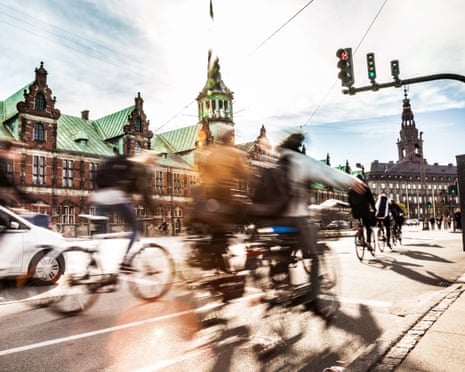
Copenhagen, Greater Stockholm and Greater Helsinki were the only cities to meet all four limits for nitrogen dioxide and fine particulate matter air pollution, according to environmental group Clean Cities.
The findings highlight the scale of the challenge facing European cities as the revised limits are due to become law across the EU next month, with compliance expected by 2030.
Athens and Bucharest came bottom of the rankings, with all 11 cities receiving the lowest grades concentrated in southern and central and eastern Europe. Athens recorded the highest average nitrogen dioxide concentration, at 37.6 micrograms per cubic metre.
The report found that measures including low-emission zones, electric buses, school streets and improved cycling infrastructure had helped some cities make significant progress. London, Paris and Stuttgart were among those to have reduced air pollution substantially over the past decade.
Barbara Stoll, founder and senior director of Clean Cities, said air pollution was “not inevitable†and that strong political leadership could make a significant difference.
She said relatively affordable measures, including expanding cycling networks and introducing school streets, could help cities improve air quality.
Australia was dubbed “Fossil of the Day†yesterday for what campaigners called a masterclass in climate hypocrisy.
The title, awarded by Climate Action Network (CAN) each day to a country blocking progress, singled out the Cop31 co-host for presiding over negotiations to rescue the climate while signing off on polluting projects.

Australian fossil fuel subsidies were estimated at 16.3bn Australian dollars this year, eclipsing the country's annual climate finance offering by an order of magnitude. The government has also approved 38 coal and gas projects since taking office in 2022.
“With four days to go, the Presidency lacks sufficient urgency,†said Denis Cauchi, CEO of Climate Action Network Australia. “Australia professes to be a friend to the Pacific, yet at home they are expanding the biggest threat to the Pacific – coal and gas. You cannot call yourself a global climate leader while fuelling the biggest cause of the climate crisis – fossil fuels.â€

Paul MacInnes
The United Nations has been asked to review Fifa's status as a signatory to a key environmental initiative, with complainants arguing football's governing body has a “record of failure†on climate action.
Fifa is a signatory to the UN's Sports for Climate Action Framework, a coalition which seeks to persuade sporting organisations to “work together to achieve a climate-resilient futureâ€. Under the framework, signatories agree to cut their greenhouse gas emissions by 50% by 2030 and to “partner with key stakeholders to deliver joint climate actionâ€. They can have their status as a signatory removed, however, if “sincerity in participation or ability to participate is a cause for concernâ€.
According to five organisations that have submitted a joint complaint to the UN, Fifa's actions are inconsistent with its words. In a letter to executives at the United Nations Framework Convention on Climate Change, they argue “being a signatory of the Framework means making a commitment to both organisational climate progress and climate leadership. On the basis of the facts laid out below, we assert that Fifa has a record of failure on each of these key commitments.â€
The letter claims Fifa has undermined its commitments by expanding the size of its tournaments, with the men's World Cup increasing from 64 matches in 2022 to 104 matches in 16 cities across three countries this past summer, making it what the complainants say is “the most polluting World Cup everâ€. In 2030, by which time Fifa's emissions should have been halved, the World Cup is due to be held in six countries across three different continents, with potentially 64 teams and even more matches.
The complainants acknowledge Fifa launched a climate strategy in 2021, committing it to halving emissions by 2030 and reaching net zero by 2040. “However,†the letter says, “that strategy is not clear on how exactly these targets will be achieved. The evidence indicates that Fifa has expanded, rather than reduced, its emissions in the years since, principally by choosing to expand the footprint of its major tournaments.â€
A second part of the complaint argues Fifa has failed in its responsibility to “champion transformative climate action†by agreeing a multi-year commercial arrangement with the Saudi Arabian energy giant Aramco as a “major worldwide partnerâ€.
Gabrielle Canon
There's plenty to go through in the coming days beyond the key sticking points. As part of a complementary platform to the negotiations, Cop31 is organised into “thematic days†and Tuesday is slated for “Oceans, Seas, Nature and Land Useâ€.
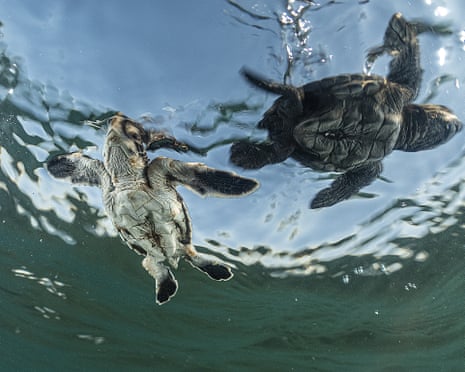
Cop31 was dubbed a “Blue Cop†in anticipation that there would be substantial actions taken on oceans and that ocean-based solutions could be worked into climate commitments. At the start of the summit Ocean Conservancy vice-president, Dr. Fatima Candance, pointed to this year's mascot – a loggerhead turtle – as an important symbol for the work. “But symbolism alone won't deliver the action we need,†she said, urging leaders to move from “pledges to projectsâ€.
Speaking of pledges, last year's land use pledge to recognise or strengthen rights across 160m hectares in tropical forest countries by 2030 is also up for review on Tuesday.
More than 50 Indigenous Peoples', local community and Afro-descendant Peoples' organizations and allied civil society groups from around the world issued a joint letter on Monday urging international leaders to ensure territorial rights are protected not just on paper but on the ground.
“Success must be measured not only by hectares recognised, but by territorial rights upheld, governance strengthened and communities empowered to determine their own futures, free from unwanted extractive and large-scale industrial activities,†the letter states.
That includes support politically and financially, with calls for direct funding for Indigenous Peoples, local and Afro-descendant communities. The letter followed a report issued last week from a collective of organizations that showed how oil, gas, mining, logging, and industry are threatening territories.
“Without securing our territorial rights, human rights violations continue, conflicts escalate, and our territories that sustain life remain under threat,†said Dinamam Tuxa, Executive Coordinator, Articulation of Indigenous Peoples of Brazil (APIB) in a statement issued with the letter. “Demarcating Indigenous Peoples territories is not only a matter of justice; it is an effective climate policy.â€
Thorny divisions exposed by draft deal
Gabrielle Canon
Welcome to day 2 of week 2, as the clock winds down with just four days left to hammer through thorny divisions with lots left on the negotiating table. Monday brought out a first draft of the agreement but it's far from set in stone.
The 18-page document includes 144 separate items, including many that are still being hotly disputed. Language on the transition away from fossil fuels, calls to reel in overshoot (which under current policies is projected to surge past 1.5C to 2.7C of warming by 2100), and stronger financial support for developing countries were outlined as a way to “draw out partiesâ€, Chris Bowen, climate and energy minister of Australia and lead negotiator of the talks told the Guardian on Monday.
In other words, changes are expected. Insiders aren't planning for the next draft to come quickly and it's possible (likely) that the talks will go into overtime this week.