(function() {
try {
var cs = document.currentScript,
p = (document.cookie.split(‘gnt_i=’)[1] || ”) + ‘;’,
l = p.substring(p.indexOf(‘~’) – 2, p.indexOf(‘;’));
if (!l) {
var n = window.performance && performance.getEntriesByType(‘navigation’) || [],
st = n[0].serverTiming || ”;
if (st.length) {
for (const t of st) {
if (t.name === ‘gnt_i’) {
l = t.description.split(‘*’)[2];
break;
}
}
}
}
if (l) {
var g = decodeURIComponent(l).split(‘~’);
comply({
country: g[0],
city: g[2],
zipcode: g[3],
state: g[1]
});
} else {
comply();
}
} catch(e) {
comply();
}
function comply(loc) {
if(window.ga_privacy) return;
loc = loc || {};
var host = window.location.hostname || ”,
eu = host.split(‘.’)[0] === ‘eu’,
cco = hp(‘gnt-t-gc’),
sco = hp(‘gnt-t-gs’),
cc = cco || loc.country || (eu ? ‘ES’ : ‘US’),
sc = sco || loc.state || (cc === ‘US’ ? ‘CA’ : ”),
t = true,
gdprLoc = {‘AT’: t, ‘BE’: t, ‘BG’: t, ‘HR’: t, ‘CY’: t, ‘CZ’: t, ‘DK’: t, ‘EE’: t, ‘EL’: t, ‘EU’: t, ‘FI’: t, ‘FR’: t, ‘DE’: t, ‘GR’: t, ‘HU’: t, ‘IE’: t, ‘IT’: t, ‘LV’: t, ‘LT’: t, ‘LU’: t, ‘MT’: t, ‘NL’: t, ‘PL’: t, ‘PT’: t, ‘RO’: t, ‘SK’: t, ‘SI’: t, ‘ES’: t, ‘SE’: t, ‘NO’: t, ‘LI’: t, ‘IS’: t, ‘AD’: t, ‘AI’: t, ‘AQ’: t, ‘AW’: t, ‘AX’: t, ‘BL’: t, ‘BM’: t, ‘BQ’: t, ‘CH’: t, ‘CW’: t, ‘DG’: t, ‘EA’: t, ‘FK’: t, ‘GB’: t, ‘GF’: t, ‘GG’: t, ‘GI’: t, ‘GL’: t, ‘GP’: t, ‘GS’: t, ‘IC’: t, ‘IO’: t, ‘JE’: t, ‘KY’: t, ‘MC’: t, ‘ME’: t, ‘MS’: t, ‘MF’: t, ‘MQ’: t, ‘NC’: t, ‘PF’: t, ‘PM’: t, ‘PN’: t, ‘RE’: t, ‘SH’: t, ‘SM’: t, ‘SX’: t, ‘TC’: t, ‘TF’: t, ‘UK’: t, ‘VA’: t, ‘VG’: t, ‘WF’: t, ‘YT’: t},
gdpr = !!(eu || gdprLoc[cc]),
gppLoc = {‘CA’: ‘usca’, ‘NV’: ‘usca’, ‘UT’: ‘usnat’, ‘CO’: ‘usco’, ‘CT’: ‘usct’, ‘VA’: ‘usva’, ‘FL’: ‘usnat’, ‘MD’: ‘usnat’,’MN’: ‘usnat’, ‘MT’: ‘usnat’, ‘OR’: ‘usnat’, ‘TN’: ‘usnat’, ‘TX’: ‘usnat’, ‘DE’: ‘usnat’, ‘IA’: ‘usnat’, ‘NE’: ‘usnat’, ‘NH’: ‘usnat’, ‘NJ’: ‘usnat’},
gpp = !gdpr && gppLoc[sc];
if (gdpr && !window.__tcfapi) {
“use strict”;function _typeof(t){return(_typeof=”function”==typeof Symbol&&”symbol”==typeof Symbol.iterator?function(t){return typeof t}:function(t){return t&&”function”==typeof Symbol&&t.constructor===Symbol&&t!==Symbol.prototype?”symbol”:typeof t})(t)}!function(){var t=function(){var t,e,o=[],n=window,r=n;for(;r;){try{if(r.frames.__tcfapiLocator){t=r;break}}catch(t){}if(r===n.top)break;r=r.parent}t||(!function t(){var e=n.document,o=!!n.frames.__tcfapiLocator;if(!o)if(e.body){var r=e.createElement(“iframe”);r.style.cssText=”display:none”,r.name=”__tcfapiLocator”,e.body.appendChild(r)}else setTimeout(t,5);return!o}(),n.__tcfapi=function(){for(var t=arguments.length,n=new Array(t),r=0;r3&&2===parseInt(n[1],10)&&”boolean”==typeof n[3]&&(e=n[3],”function”==typeof n[2]&&n[2](“set”,!0)):”ping”===n[0]?”function”==typeof n[2]&&n[2]({gdprApplies:e,cmpLoaded:!1,cmpStatus:”stub”}):o.push(n)},n.addEventListener(“message”,(function(t){var e=”string”==typeof t.data,o={};if(e)try{o=JSON.parse(t.data)}catch(t){}else o=t.data;var n=”object”===_typeof(o)&&null!==o?o.__tcfapiCall:null;n&&window.__tcfapi(n.command,n.version,(function(o,r){var a={__tcfapiReturn:{returnValue:o,success:r,callId:n.callId}};t&&t.source&&t.source.postMessage&&t.source.postMessage(e?JSON.stringify(a):a,”*”)}),n.parameter)}),!1))};”undefined”!=typeof module?module.exports=t:t()}();
}
if (gpp && !window.__gpp) {
window.__gpp_addFrame=function(e){if(!window.frames[e])if(document.body){var p=document.createElement(“iframe”);p.style.cssText=”display:none”,p.name=e,document.body.appendChild(p)}else window.setTimeout(window.__gppaddFrame,10,e)},window.__gpp_stub=function(){var e=arguments;if(__gpp.queue=__gpp.queue||[],!e.length)return __gpp.queue;var p,n=e[0],t=1function OptanonWrapper() { }Skip to main content


(function() {
let vdContainer, vdShow, vdHide,
flagCaption = false,
vdToggle = document.getElementById(‘videoDetailsToggle’),
section = ga_data.route.sectionName || ga_data.route.ssts.split(‘/’)[0],
subsection = ga_data.route.ssts.split(‘/’)[1];
vdToggle.addEventListener(‘click’, ()=> {
// query dom only after user click
if (!vdContainer) {
vdContainer = document.getElementById(‘videoDetailsContainer’);
vdShow = document.getElementById(‘vdt_show’),
vdHide = document.getElementById(‘vdt_hide’);
}
vdContainer.hidden = !(vdContainer.hidden);
// show/hide elements
if (vdContainer.hidden) {
vdShow.hidden = false;
vdHide.hidden = true;
} else {
if (!flagCaption) {
flagCaption = true;
fireCaptionAnalytics()
}
vdShow.hidden = true;
vdHide.hidden = false;
}
});
function fireCaptionAnalytics () {
let analytics = document.getElementById(“pageAnalytics”);
try {
if (analytics) {
analytics.fireEvent(`${ga_data.route.basePageType}|${section}|${subsection}|streamline|expandCaption`);
} else {
if (window.newrelic) window.newrelic.noticeError(‘page analytics tag not found’);
}
} catch (e) {
if (window.newrelic) window.newrelic.noticeError(e);
}
}
}());
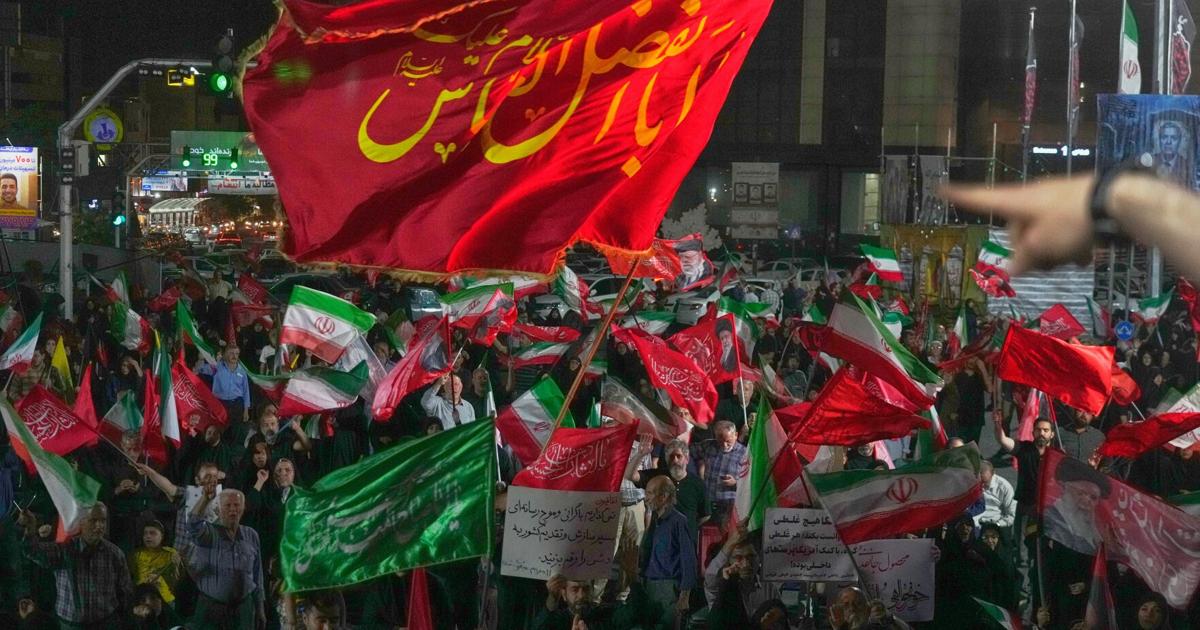
Iran launched more attacks on America’s Gulf allies July 18 after a seventh night of U.S. strikes on Iranian military targets, including logistics hubs, escalating the war one week after a ceasefire collapsed.
Kuwait came under sustained attack, with a hit on a desalination plant and suspended operations at Kuwait International Airport because of repeated missile and drone threats.
Trump has not personally commented on the strikes through social media. He is expected to be at his golf club in Bedminster, New Jersey Saturday.
Here is what to know:
Were there injuries or deaths?
Iran’s Islamic Revolutionary Guard Corps said it had struck a U.S. military support center at Camp Arifjan and destroyed a radar facility at Ali Al Salem Air Base.
Both are in Kuwait.
Kuwait Petroleum Corporation later said one of its oil facilities had been hit in “repeated Iranian attacks”, causing significant damage and some injuries, according to the state news agency.
Kuwait’s armed forces said they had intercepted Iranian ballistic missiles and drones early on Saturday, adding that a number of firefighters and oil sector workers had been injured while responding to the attacks.
Attacks on civilian infrastructure
Iran was responding to U.S. strikes targeting bridges, power facilities and other infrastructure.
“Since there is no international institution to prevent the savagery of the U.S. military, we have no path before us except the Quranic command: ‘Whoever attacks you, attack them in the same manner’,” the IRGC said in a statement warning U.S. allies in the region to expect more strikes.
U.N. Secretary-General Antonio Guterres was concerned about the escalation, particularly “attacks on civilian infrastructure in Iran and across the region”, his spokesperson said on Friday.
Iranian media reported strikes early on Saturday in Hormozgan Province on the Strait of Hormuz. State TV said three people were killed and eight wounded while two bridges and a road tunnel were damaged.
A day earlier, Iranian state media said U.S. strikes hit at least five bridges in the south. Seven people were reported killed in attacks on bridges in the port of Bandar Khamir, where a train station was also hit. An airport was reported hit further east in Iranshahr.
Iranian media reported that several missiles struck power facilities and desalination pumps in the southern city of Jask on Saturday, citing a local official. Some 10,000 people in 20 villages were left without water, Tasnim news agency reported. The governor of Jask later said emergency water deliveries had begun to the affected villages.
A power generation and water desalination plant in Kuwait was hit in an Iranian attack, the country’s Electricity, Water and Renewable Energy Ministry said in a statement. It was the second attack on Kuwaiti water desalination sites in two days.
Kuwait’s Foreign Ministry said Iran’s targeting of vital infrastructure endangered civilians and violated international law, adding it held Tehran fully responsible for the attacks.
What does it mean for oil prices?
Oil prices climbed more than 4% on Friday to their highest level in more than a month, adding to political pressure on U.S. President Donald Trump as the Republican Party tries to hold on to power in November congressional midterm elections.
Washington and Tehran have been testing the limits of escalation since their ceasefire agreement fell apart last week, raising the prospect of a return to all-out war.
On July 17, both sides took aim at shipping traffic, with the U.S. saying it was enforcing a naval blockade while Iran said it targeted vessels that violated its rules on navigating the Strait of Hormuz, the vital waterway for one-fifth of the world’s oil supply.
What other countries were hit?
Iran launched attacks on Saudi Arabia for the first time in about three months, according to two people familiar with the matter, triggering early warning alarms in Al-Kharj, east of the capital Riyadh, and at Yanbu on the kingdom’s Red Sea coast.
The people said one attack had targeted the Prince Sultan Airbase in Al-Kharj, which hosts U.S. forces.
Saudi state media did not elaborate on what triggered the early warnings and the government media office did not respond to a request for comment. The IRGC made no mention of any attack on Saudi Arabia.
Contributing: Reuters
Share your feedback to help improve our site!