
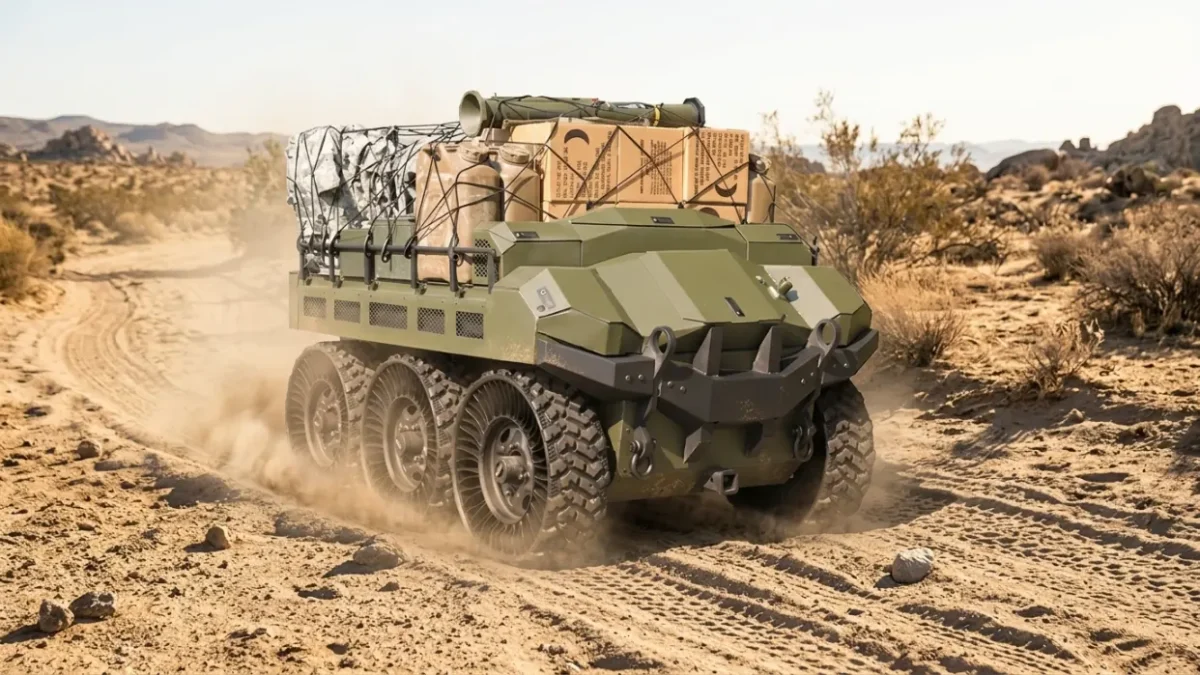
Defense Feeds, Washington, D.C. – U.S. Army selects Dire Wolf UGV for autonomous logistics, taking another step toward integrating robotic ground vehicles into battlefield sustainment operations.
The selection of the Dire Wolf unmanned ground vehicle (UGV) under the BLADES initiative reflects the Army's effort to automate supply distribution, reduce risks to personnel and improve logistics in contested operational environments.
The program is part of a broader modernization strategy focused on using autonomous systems to support frontline forces while maintaining the uninterrupted flow of supplies during high-intensity operations.
U.S. Army Selects Dire Wolf UGV for Autonomous Logistics
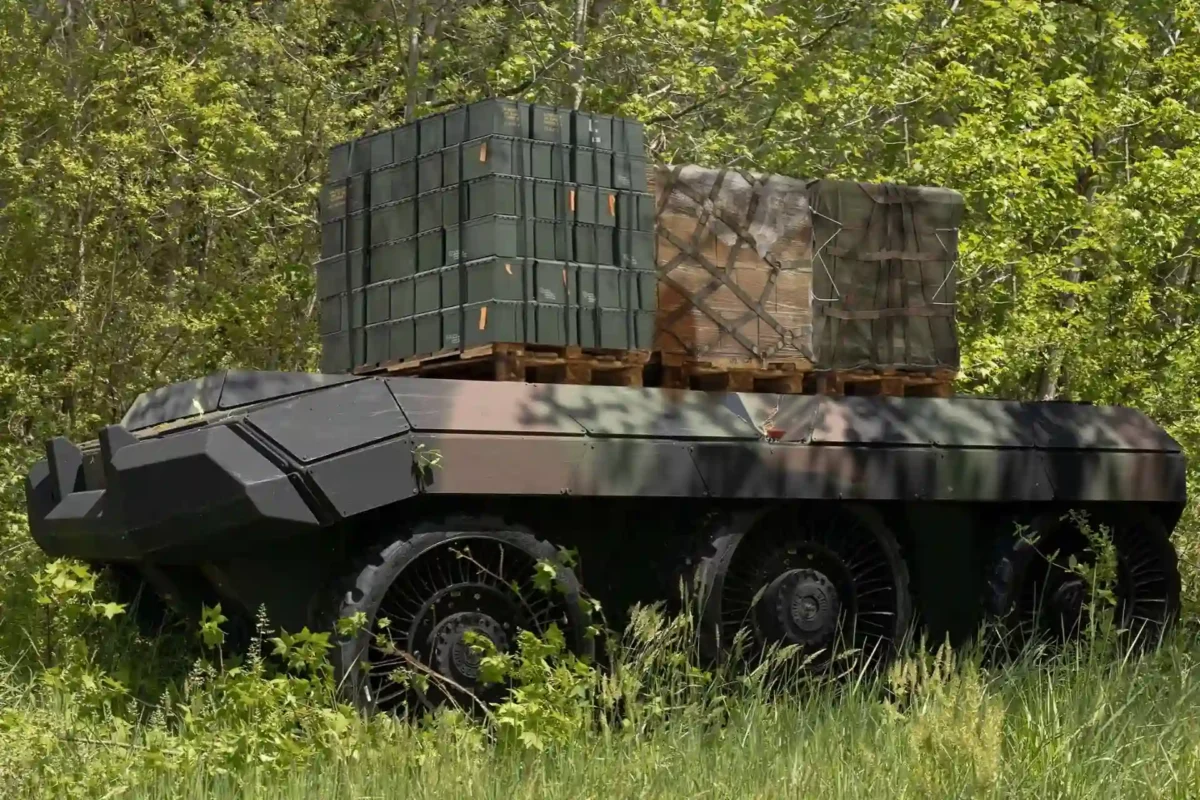
The decision that U.S. Army selects Dire Wolf UGV for autonomous logistics follows the Army's continued investment in robotic platforms capable of transporting supplies without exposing soldiers to unnecessary risk. Developed to operate across challenging terrain, the Dire Wolf UGV is designed to carry essential cargo, including ammunition, food, fuel and medical supplies, directly to forward positions.
As part of the BLADES (Baseline Logistics Autonomous Distribution and Execution System) program, the vehicle will help evaluate how autonomous ground platforms can improve sustainment operations in environments where traditional resupply missions may face elevated threats or restricted access.
Unlike conventional logistics vehicles, unmanned cargo systems can operate without onboard crews, enabling commanders to conduct resupply missions while reducing personnel exposure during high-risk operations. Their modular design also allows them to support multiple mission profiles depending on operational requirements.
The selection represents another milestone in the Army's transition toward integrating autonomy into everyday military logistics.
The Dire Wolf UGV also reflects the Army's broader interest in developing scalable robotic systems that can operate alongside manned vehicles as part of mixed logistics formations. Rather than replacing existing transport assets, autonomous ground vehicles are intended to handle routine or high-risk resupply tasks, allowing crewed platforms to focus on missions that require human decision-making and operational flexibility.
Another advantage of autonomous logistics platforms is their ability to support distributed operations across dispersed battlefields. As military units become more decentralized, maintaining a reliable flow of supplies over multiple routes becomes increasingly important. Unmanned cargo vehicles such as the Dire Wolf could provide commanders with additional options for sustaining isolated units while reducing the logistical footprint and increasing the resilience of battlefield supply networks.
Autonomous Logistics Is Becoming a Battlefield Priority
Modern military operations increasingly depend on resilient logistics capable of functioning under contested conditions. As potential adversaries expand long-range precision strike capabilities, electronic warfare and persistent surveillance, sustaining frontline units has become more complex than moving supplies from one location to another.
Autonomous ground vehicles offer several operational advantages by providing flexible resupply options, reducing demand on crewed transport assets and supporting distributed operations across wider areas. These systems can also be integrated into larger networks of autonomous air and ground platforms to create more adaptive logistics chains.
The BLADES initiative reflects this evolving approach, exploring how robotic systems can complement—not replace—traditional logistics vehicles while improving the speed and survivability of supply operations.
As autonomous technologies mature, military planners are expected to expand their role beyond cargo transport into casualty evacuation, engineering support and reconnaissance missions.
Robotic Sustainment Supports Future Multi-Domain Operations
The announcement that U.S. Army selects Dire Wolf UGV for autonomous logistics aligns with broader efforts to modernize sustainment capabilities for future multi-domain operations. Logistics is increasingly viewed as a decisive factor in maintaining operational tempo, particularly during prolonged or geographically dispersed campaigns.
By introducing autonomous cargo platforms, the Army aims to improve the resilience of supply networks while allowing soldiers to focus on higher-priority combat tasks. Robotic systems can help maintain logistical support even in environments where traditional vehicle movements are constrained by terrain, enemy observation or electronic threats.
The program also contributes to the Army's wider modernization portfolio, which includes artificial intelligence, autonomous systems and advanced command-and-control technologies designed to improve battlefield adaptability. Successful field evaluations could influence future procurement decisions and accelerate the adoption of robotic logistics across additional units.
The fact that the U.S. Army selects Dire Wolf UGV for autonomous logistics demonstrates the growing importance of autonomous sustainment in modern military planning. As armed forces seek to improve operational endurance while minimizing risk to personnel, robotic ground vehicles are expected to become an increasingly valuable component of future battlefield logistics.