(function() {
try {
var cs = document.currentScript,
p = (document.cookie.split(‘gnt_i=’)[1] || ”) + ‘;’,
l = p.substring(p.indexOf(‘~’) – 2, p.indexOf(‘;’));
if (!l) {
var n = window.performance && performance.getEntriesByType(‘navigation’) || [],
st = n[0].serverTiming || ”;
if (st.length) {
for (const t of st) {
if (t.name === ‘gnt_i’) {
l = t.description.split(‘*’)[2];
break;
}
}
}
}
if (l) {
var g = decodeURIComponent(l).split(‘~’);
comply({
country: g[0],
city: g[2],
zipcode: g[3],
state: g[1]
});
} else {
comply();
}
} catch(e) {
comply();
}
function comply(loc) {
if(window.ga_privacy) return;
loc = loc || {};
var host = window.location.hostname || ”,
eu = host.split(‘.’)[0] === ‘eu’,
cco = hp(‘gnt-t-gc’),
sco = hp(‘gnt-t-gs’),
cc = cco || loc.country || (eu ? ‘ES’ : ‘US’),
sc = sco || loc.state || (cc === ‘US’ ? ‘CA’ : ”),
t = true,
gdprLoc = {‘AT’: t, ‘BE’: t, ‘BG’: t, ‘HR’: t, ‘CY’: t, ‘CZ’: t, ‘DK’: t, ‘EE’: t, ‘EL’: t, ‘EU’: t, ‘FI’: t, ‘FR’: t, ‘DE’: t, ‘GR’: t, ‘HU’: t, ‘IE’: t, ‘IT’: t, ‘LV’: t, ‘LT’: t, ‘LU’: t, ‘MT’: t, ‘NL’: t, ‘PL’: t, ‘PT’: t, ‘RO’: t, ‘SK’: t, ‘SI’: t, ‘ES’: t, ‘SE’: t, ‘NO’: t, ‘LI’: t, ‘IS’: t, ‘AD’: t, ‘AI’: t, ‘AQ’: t, ‘AW’: t, ‘AX’: t, ‘BL’: t, ‘BM’: t, ‘BQ’: t, ‘CH’: t, ‘CW’: t, ‘DG’: t, ‘EA’: t, ‘FK’: t, ‘GB’: t, ‘GF’: t, ‘GG’: t, ‘GI’: t, ‘GL’: t, ‘GP’: t, ‘GS’: t, ‘IC’: t, ‘IO’: t, ‘JE’: t, ‘KY’: t, ‘MC’: t, ‘ME’: t, ‘MS’: t, ‘MF’: t, ‘MQ’: t, ‘NC’: t, ‘PF’: t, ‘PM’: t, ‘PN’: t, ‘RE’: t, ‘SH’: t, ‘SM’: t, ‘SX’: t, ‘TC’: t, ‘TF’: t, ‘UK’: t, ‘VA’: t, ‘VG’: t, ‘WF’: t, ‘YT’: t},
gdpr = !!(eu || gdprLoc[cc]),
gppLoc = {‘CA’: ‘usca’, ‘NV’: ‘usca’, ‘UT’: ‘usnat’, ‘CO’: ‘usco’, ‘CT’: ‘usct’, ‘VA’: ‘usva’, ‘FL’: ‘usnat’, ‘MD’: ‘usnat’,’MN’: ‘usnat’, ‘MT’: ‘usnat’, ‘OR’: ‘usnat’, ‘TN’: ‘usnat’, ‘TX’: ‘usnat’, ‘DE’: ‘usnat’, ‘IA’: ‘usnat’, ‘NE’: ‘usnat’, ‘NH’: ‘usnat’, ‘NJ’: ‘usnat’},
gpp = !gdpr && gppLoc[sc];
if (gdpr && !window.__tcfapi) {
“use strict”;function _typeof(t){return(_typeof=”function”==typeof Symbol&&”symbol”==typeof Symbol.iterator?function(t){return typeof t}:function(t){return t&&”function”==typeof Symbol&&t.constructor===Symbol&&t!==Symbol.prototype?”symbol”:typeof t})(t)}!function(){var t=function(){var t,e,o=[],n=window,r=n;for(;r;){try{if(r.frames.__tcfapiLocator){t=r;break}}catch(t){}if(r===n.top)break;r=r.parent}t||(!function t(){var e=n.document,o=!!n.frames.__tcfapiLocator;if(!o)if(e.body){var r=e.createElement(“iframe”);r.style.cssText=”display:none”,r.name=”__tcfapiLocator”,e.body.appendChild(r)}else setTimeout(t,5);return!o}(),n.__tcfapi=function(){for(var t=arguments.length,n=new Array(t),r=0;r3&&2===parseInt(n[1],10)&&”boolean”==typeof n[3]&&(e=n[3],”function”==typeof n[2]&&n[2](“set”,!0)):”ping”===n[0]?”function”==typeof n[2]&&n[2]({gdprApplies:e,cmpLoaded:!1,cmpStatus:”stub”}):o.push(n)},n.addEventListener(“message”,(function(t){var e=”string”==typeof t.data,o={};if(e)try{o=JSON.parse(t.data)}catch(t){}else o=t.data;var n=”object”===_typeof(o)&&null!==o?o.__tcfapiCall:null;n&&window.__tcfapi(n.command,n.version,(function(o,r){var a={__tcfapiReturn:{returnValue:o,success:r,callId:n.callId}};t&&t.source&&t.source.postMessage&&t.source.postMessage(e?JSON.stringify(a):a,”*”)}),n.parameter)}),!1))};”undefined”!=typeof module?module.exports=t:t()}();
}
if (gpp && !window.__gpp) {
window.__gpp_addFrame=function(e){if(!window.frames[e])if(document.body){var p=document.createElement(“iframe”);p.style.cssText=”display:none”,p.name=e,document.body.appendChild(p)}else window.setTimeout(window.__gppaddFrame,10,e)},window.__gpp_stub=function(){var e=arguments;if(__gpp.queue=__gpp.queue||[],!e.length)return __gpp.queue;var p,n=e[0],t=1function OptanonWrapper() { }Skip to main content


(function() {
let vdContainer, vdShow, vdHide,
flagCaption = false,
vdToggle = document.getElementById(‘videoDetailsToggle’),
section = ga_data.route.sectionName || ga_data.route.ssts.split(‘/’)[0],
subsection = ga_data.route.ssts.split(‘/’)[1];
vdToggle.addEventListener(‘click’, ()=> {
// query dom only after user click
if (!vdContainer) {
vdContainer = document.getElementById(‘videoDetailsContainer’);
vdShow = document.getElementById(‘vdt_show’),
vdHide = document.getElementById(‘vdt_hide’);
}
vdContainer.hidden = !(vdContainer.hidden);
// show/hide elements
if (vdContainer.hidden) {
vdShow.hidden = false;
vdHide.hidden = true;
} else {
if (!flagCaption) {
flagCaption = true;
fireCaptionAnalytics()
}
vdShow.hidden = true;
vdHide.hidden = false;
}
});
function fireCaptionAnalytics () {
let analytics = document.getElementById(“pageAnalytics”);
try {
if (analytics) {
analytics.fireEvent(`${ga_data.route.basePageType}|${section}|${subsection}|streamline|expandCaption`);
} else {
if (window.newrelic) window.newrelic.noticeError(‘page analytics tag not found’);
}
} catch (e) {
if (window.newrelic) window.newrelic.noticeError(e);
}
}
}());
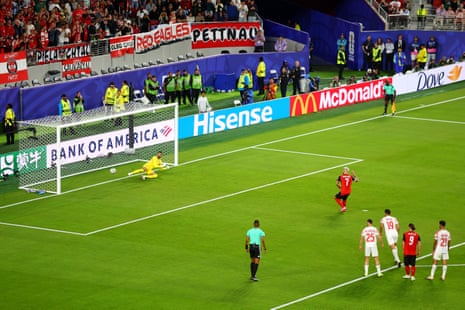
MONTERREY, Mexico РHerv̩ Renard was formally introduced as the new Tunisian head coach on Tuesday after the firing of former Tunisia coach Sabri Lamouchi at this 2026 World Cup.
Renard formally accepted the position Monday night, flew into Monterrey the next day, and held his first training session.
“When the federation called me, I didn't hesitate for a second,” Renard said. “Because there are still two matches to go in the group stage, and in football, where there's life, there's hope.”
The French coach joins historic company upon his arrival. It is the fifth time a manager has taken over during the World Cup, and the second time Tunisia has done so. Tunisia relieved Henryk Kasperczak of his duties after losses to England and Colombia at the 1998 World Cup. However, it is the first time in World Cup history a manager has taken over after one match.
Renard will serve his fifth job as an African national team manager. The 57-year-old French international coached Zambia twice, Angola, Ivory Coast, Morocco, and now Tunisia. Renard has coached in club soccer as well, with his most notable job being Lille's main man from May to November in 2015.Â
This is Renard's fourth World Cup overall and third in the men's competition. Renard's most memorable moment was beating Argentina as Saudi Arabia’s coach in the 2022 World Cup. Renard's side went into the halftime locker room down one goal, but his fiery and iconic speech to the team led to a second-half comeback and a 2-1 victory in the first game. Saudi Arabia fell to Poland and Mexico, ending their 2022 World Cup in the group stage.
Buy World Cup Tickets!
He takes over for Sabri Lamouchi, who fell 5-1 in Tunisia's opening World Cup match against Sweden. Lamouchi led the Eagles of Carthage in five matches, winning only one. He preceded the opening match loss with a 5-0 loss to Belgium and a 1-0 loss to Austria.Â
“I've just told them they have to keep their heads up, advance, you're here to represent the country,” said Renard. “Tunisia, it's an honor, a duty, and we need to do a lot better than the result in the first match.â€
Renard, known for his quick man management and ability to pick up results against tougher competition, has four days before his first kickoff against Japan on Saturday. Tunisia sits at the bottom of Group F. The Eagles of Carthage take on Japan, which earned a 2-2 draw against the Netherlands in its opening match.
Brooks Thomason is a student in the University of Georgia's Carmical Sports Media Institute.
Share your feedback to help improve our site!