At 19, Emmanuel* was caring for three siblings when he was forced last year to join Viv Ansanm, a coalition of gangs that controls large swathes of Port-au-Prince. Their father had left Haiti for Brazil to find work, and Emmanuel had been waiting for the promise of a job at a livestock programme run by Sakala, a local youth development organisation in the capital's densely populated Cité Soleil neighbourhood.
“We lost him because he couldn't wait any longer,†Daniel Tillias, co-founder of Sakala, told The New Humanitarian and Foreign Policy, adding that Emmanuel has since fled Viv Ansanm and gone into hiding.
Sakala is among many organisations in Haiti that lost US funding last year and are struggling to continue their programmes aimed at tackling the impact of rising gang violence through peace and development initiatives.
Before President Donald Trump came back to office in January 2025, US funding made up more than 65% of humanitarian aid in Haiti, where 6.4 million people – out of a population of nearly 12 million – are currently in need of assistance.
In January 2025, one of Trump's executive orders suspended new foreign assistance and set in motion the dismantling of USAID. The following month, a separate order gutted the Inter-American Foundation (IAF), and by March, Secretary of State Marco Rubio announced the administration was cancelling 83% of USAID's programmes worldwide. In Haiti, the freeze halted roughly 80% of US-funded programmes, according to OCHA, the UN's emergency aid coordination body. Many of these were vital for families to get by and for violence-prevention programming in neighbourhoods where armed groups recruit.
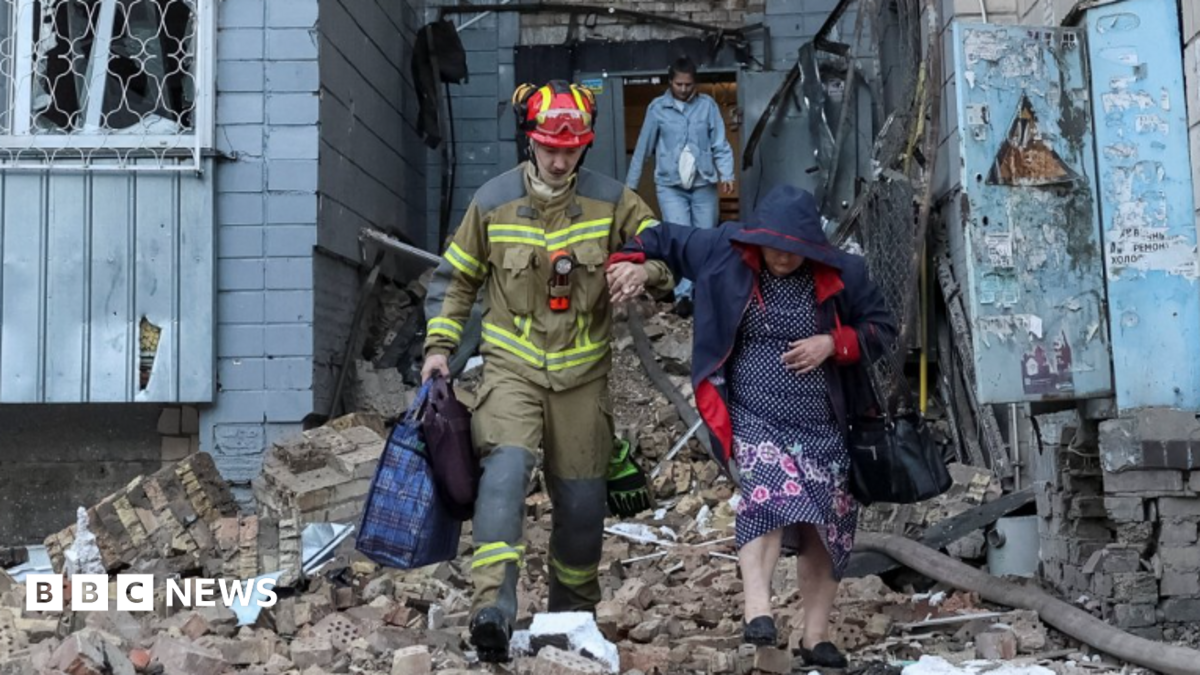
Armed groups now control 90% of Port-au-Prince and continue to expand in neighbouring departments such as Artibonite. A record 1.5 million people have now been internally displaced, food insecurity affects more than half of the population, and insecurity disrupts every aspect of daily life. Like Emmanuel, a rising number of children and young people have been left without access to education or job opportunities, and therefore with no other choice than to join gangs for the survival of their families.
According to UNICEF, the number of children recruited into armed groups tripled in 2025 compared to the previous year, and they now make up half of all Haitian gang members.
While cuts did not create Haiti's gang recruitment crisis, they gutted the programming designed to keep young people out of the armed groups: job training, income support, education, and community mediation.
“USAID helped manage Haiti's problems,†said Christine Saintvil, chief growth officer of Papyrus S.A., a Haitian firm helping more than 300 local organisations qualify for the agency's funding. “[Its dismantling] has created a level of desperation that pushes people to default to an easy solution.â€
For Tillias, recruitment is straightforward: Gangs take in the kids who are left available, who can't earn money elsewhere. Sakala's tuition support, tutoring, sports, and small agricultural jobs existed to occupy that availability, with young people competing over 500-gourdes-a-day jobs (about $4) producing seedlings. The cuts erased a roughly $100,000 USAID proposal to employ young Haitians to raise rabbits, as well as an agriculture grant for cultivation in the north. A cassava project meant to cover 25 acres ended up being planted on only three.
“Without USAID support, all you have left is the rule of the ganglord,†Tillias said.
Peace and development initiatives stifled
When the freeze came down in January 2025, USAID had roughly $330 million “in outstanding commitments†to ongoing programmes in Haiti, according to an analysis of federal spending data by the Center for Economic and Policy Research (CEPR).
Only 7.6% of USAID's Haiti spending since late 2023 reached local organisations directly, but it paid salaries and kept programmes running in neighbourhoods the state had abandoned – initiatives that children and communities depended on.
Isabelle Clérié, a Haitian anthropologist and transitional justice expert, said these jobs and programming were the only social services available in some places: The loss of them left more ground for armed groups and “aggravated an already complicated situationâ€. In Cité Soleil, for instance, gangs have foundations providing basic public infrastructure “because they understand that it's them or nobodyâ€, she added.
According to a report published by Church World Service following Trump's executive order, the IAF cut nearly $10 million across 27 grants in Haiti, leading to more than 80,000 Haitians losing access to locally led development programmes. USAID cancelled a five-year programme for conflict, peace, and security, as well as agriculture and livelihood development projects involving both international and local organisations.
Among them was the Haiti Citizen Security Program, a $24 million effort overseen by Tetra Tech that funded local peacebuilding organisations, including Lakou Lapè. The entire five-year programme cost less than 2.5% of the $1 billion the US says it has already spent supporting security in Haiti in recent years. The freeze also halted $1.4 million to Papyrus S.A.
“All [local organisations] have been impacted in some form or another,†said Saintvil. “A lot of us are in limbo because we… were still owed money, or reimbursement of all of the funds that were disbursed.â€
For Lakou Lapè, the shift has been debilitating. The organisation was running five programmes – one funded at $1.2 million annually – when the stop-work order came. It gave up its offices.
Before the cuts, Jean-Gilles Bernard Camille, an independent peace facilitator, conducted trauma trainings and organised psychosocial support and peace committees at Lakou Lapè. He sat down with everyone from private sector figures to armed group leaders. In neighbourhoods hit by armed violence and drone strikes, he said that some residents who might otherwise have joined armed groups out of revenge decided not to because they remembered the trainings.
Camille, amongst other peace facilitators, used to manage upwards of 10 sessions a month; he hasn't led a single dialogue session since the end of 2025. The Haiti-based Institute for Research and Action for Peace (IRAP) hoped to hire the facilitators full-time as peace committees, but the cuts mean they can now only offer them occasional session work at $120 a day.
Louis-Henri Mars, board member and special adviser at IRAP, summed up the importance of USAID funding by saying it allowed organisations like his to bring people from all sectors of Haitian society together around trauma, dialogue, and collaboration. “When that stops, then we have to go back to square one and start again,†he said.
Killing for two meals a day
Fourteen-year-old Jean* joined an armed group after his father was killed. He was taken at gunpoint to one of Viv Ansanm's gangs bases while running errands for his mother in the neighbourhood of Canaan two years ago. Although he was forcibly recruited, he acknowledged that part of him also wanted to join. “I wanted to be part of this base because I wanted to know how it operated,†he said.
Initially, he would bring bullets to one of the gang coalition's leaders, Jeff Larose (better known as Kanaran), and walk the streets with other gang members, stopping cars to ask for money. He also watched over kidnapped civilians. In exchange, he was fed twice a day. But then, he was given a new assignment.
“One day, they brought in a young man who had stolen a gun from a gang member… They told me it was my job to kill him; I had no choice, so I killed him with my handgun,†Jean said. “I killed four people,†the boy added. “When I did it, I felt like my heart was being ripped out.â€
Whether recruited willingly or by force, teenagers usually remain at the bases to do odd jobs, undergo initiation, and be used as cannon fodder in shootouts with the police. While they are being fully indoctrinated into the mindset of the armed groups, they are guarded by their elders and cannot escape. When the leader feels he can trust them, they are used as informants or to throw Molotov cocktails at police vehicles.
“I killed four people. When I did it, I felt like my heart was being ripped out.â€
Some time later, while the armed group held a large party, Jean managed to slip out and hid in the streets until he came across a police officer who took him to a transit centre run by the state agency responsible for reintegrating children from armed groups, the Institut du Bien-Être Social et de Recherches (IBESR).
The procedure followed a handover protocol signed in October 2023 by the Haitian government and the UN to require that children encountered in armed groups during security operations be treated primarily as victims and handed over to child protection authorities.
In the future Jean hopes to earn money laying tiles. “To stop young people from joining gangs, you have to talk to them and warn them,†he said.
“We risk having more banditsâ€
The risk of recruitment is particularly high among the displaced.
Yvenel Louis, 29, is the president of the management committee of a displacement site set up at Club International, a former nightclub that now holds 455 families. He and his neighbours from Pernier, a violence-ridden suburb on the outskirts of the capital, have been displaced three times in two years. The last time was on the night of 11 July 2025, when armed groups overran their camp and he guided residents out by megaphone at 11pm, including children and people with disabilities.
As president of the camp, Louis has overseen several mediation and humanitarian programmes. He said their loss will be felt for years. Children see armed men commanding respect, he explained, “and they [now] won't find anyone to tell them that's not the right path… Without the organisations that once preached peace, we risk having more bandits.â€
Gamania Ceide, a facilitator who works alongside Camille, also believes peacebuilding programmes make a real difference.
She recalled a case involving a young man from the Tokyo neighbourhood who had been through their conflict-management trainings at Lakou Lapè. When Tokyo burned for the second time, his house went down with his mother inside. Armed groups offered him weapons for revenge, but he refused. “He always says if it weren't for the training he received, he doesn't know what would have happened after his mother's death,†Ceide said.
Preventive programmes, including education and vocational training that give displaced adolescents something to do, have been the most affected by the cuts, according to Geetanjali Narayan, UNICEF's representative in Haiti. Those USAID-funded courses taught skills like bicycle repair and hairstyling and offered “a little bit of normalcyâ€, she said.
UNICEF has patched some of the gap with other donors, but 79% of its roughly $257 million humanitarian appeal for Haiti remained unfunded, as of 30 June. Without such alternatives, a young person concludes, “Let me go join the armed groups. Why not? I have nothing else hereâ€, Narayan added.
The IBESR, which runs one transit centre in Port-au-Prince and has a larger one planned for Les Cayes to accommodate 600 to 1,000 children, is also likely to be directly affected by UNICEF's shrinking budget as it depends on the agency and community organisations for trusted access to gang-controlled neighbourhoods.
The impact of the cuts also extends to work upstream of the violence that seeks to fight food insecurity.
Hunger and desperation are powerful drivers of gang recruitment. People in displacement centres often face starvation — conditions that fuel vulnerability to armed groups. The majority of children in gangs don't work and don't have parents who earn enough to care for them.
“They are hungry,†said Camille. “Some are joining to find enough to eat.â€
Gael Pressoir, an agronomist who founded the Haitian research institute Chibas, was mid-way through several USAID-funded projects when the agency was dismantled, including an innovation lab run with US universities that was willing to back long-term agricultural research. “If we want to do peacebuilding in Haiti, we better invest in our agriculture sector,†he said, adding that Haiti imports more calories than it produces.
Mercy Corps, a global humanitarian aid nonprofit, saw its peacebuilding most affected, along with livelihood initiatives that stabilised family incomes through agricultural work. Globally, the organisation shut down 43 of its 60 US-funded programmes.
Addressing the root causes
Some organisations have turned to the EU to try to fill the funding gap, but they are also granting less money, said Mélodie Cerin, grants director for the Ayiti Community Trust and grants manager for Global Initiative Against Transnational Organized Crime (GI-TOC).
Compounding the issue is the state's own limited peacebuilding infrastructure, said Clérié, the Haitian anthropologist. Following the first coup against Jean-Bertrand Aristide in 1991, a government Truth Commission was formed but failed due to lack of political will and funding.
A similar commission was re-established in 2024, but “was stillbornâ€, Clérié said, while a national commission for disarmament, demobilisation, and reintegration (DDR) was created but given no funding. Under pressure to deliver, the agency put out banners urging fighters to lay down their weapons, with no steps to follow and a phone number that didn’t work.
“Nobody trusts the government,†Clérié said. “Nobody believes justice is possible.â€
For anthropologist Jessica Hsu – lead analyst for the Center for Operational Analysis and Research (COAR) and head of research, advocacy, and learning for Roots of Development – lasting solutions must come from the “grassrootsâ€. That means expanding access to mental health support and pursuing transitional justice to address the roots of the country's protracted conflict.
“This is about building a hyper-local civil society and replicating that in every single community,†she said. “This is the horizontal accountability that nobody ever talks about, because it's always vertical up until the donor.â€
But according to Clérié, the government's prevailing narrative is to just kill all the gang leaders and gang members, assuming this is what people want. This is the logic behind the security force the US is funding, and it is what the peacebuilding and livelihood programmes are working against, she explained.
“It's the dehumanisation of not just the gang members, but the communities and everything they've suffered through,†Clérié said. “They don't feel human. They feel like animals. The gang members themselves say, ‘we are devils'. They're like, ‘we're here to die — so who cares?'â€
Clérié leads community dialogues on transitional justice, walking groups through frameworks like restorative justice and collective memory. Without that work, she said, “we're going to just keep repeating the cycle, because we're not actually going to dismantle the thing that is at the root of all of this.â€
*Names changed for security reasons. With additional reporting by André Paultre in Port-au-Prince, Haiti. Edited by Daniela Mohor.