
Royal Mail to cut 2,500 head office and support jobs by end 2027
Royal Mail plans to cut up to 2,500 jobs by the end of next year, as it struggles with a slump in letters being sent and seeks to compete in the cutthroat parcel delivery market.
To simplify its processes and save money, Royal has carried out a review of its head office and support functions, and will reduce them by “up to 2,500†– less than 2% of its workforce of more than 131,000 people, it said.
The company, owned since April 2025 by the Czech billionaire Daniel KÅ™etÃnský, hopes to achieve the reductions through “natural attrition†(people leaving anyway) and voluntary redundancies, without the need for compulsory redundancies.
It stressed that its frontline roles in delivery and processing, including posties and drivers, will not be affected.
Royal Mail said it needs to adapt to a rapidly-changing market: Letter volumes have declined by more than 70% since their peak, whilst customer demand for faster and more convenient parcel delivery services continues to grow.
Royal Mail has briefed its unions, the Communication Workers Union (CWU) and Unite CMA, on the proposals and formal consultation with both unions is now underway.
Alistair Cochrane, the chief executive, said:
double quotation mark We have been working hard to reduce costs and simplify processes across all areas of the business as we transform to win in a very competitive market. These proposed changes remove duplication and allow us to invest further in the service we deliver for our customers.We are committed to treating everyone fairly and respectfully throughout this process, working closely with our trade unions. The proposed changes will not be easy, but they are an important part of building a stronger, simpler and future-ready Royal Mail for our customers and colleagues.
Key events
Back to Royal Mail's planned 2,500 job losses. Cat Hobbs, director of the campaign group We Own It, said:
double quotation mark This is absolutely disgraceful. The very last thing Royal Mail needs is massive staff cuts. It's already failing to deliver letters – with reports of people picking up their own mail and the government saying statutory targets are not being met. This is despite increasing our stamp prices by a shocking 107% since privatisation in 2013. It's truly shameful that this is the state of our once proud 500 year old Royal Mail.
Andy Burnham must make good on his promise to reverse Thatcher's legacy by taking it back. He can either buy it back directly for around £3.6 billion – although he could easily negotiate a price cut after the damage done by its Czech billionaire owner – or he can squeeze it with regulation until Kretinsky hands our asset back over. Shareholders have pocketed £2 billion since privatisation while households now wonder if the postie is ever coming. Enough is enough.
Burnham must step in directly. Stop these absurd staff cuts, reduce stamp prices, reinstate proper deliveries and force the company to deliver. If it goes bust, take it back and run it properly so we can rely on it. People still need letters and people would send more post if prices weren't so outrageous and the Royal Mail could be trusted. It used to be ours, Burnham must give it back to the public.
Boots acquired by Canadian branch of billionaire Weston family for $8.9bn
Boots has been acquired by the investment company of the Canadian branch of the billionaire Weston family, for $8.9bn including debt.
Wittington Investments said it had entered into a “definitive agreement†to buy Boots, which is majority owned by the US private equity firm Sycamore Partners, in partnership with Stefano Pessina and his family.
Boots, which dates back to 1849 when it was founded in Nottingham by John Boot, has 1,800 stores in the UK and employs 51,000 people.
Under the terms of the deal, Wittington will acquire Boots' retail operations in the UK and Ireland; Boots Opticians; and the No7 Beauty Company; and its Thailand and franchised businesses.
Wittington said it plans to invest in the chain, upgrading stores, improving the website and expanding healthcare services.
Sycamore, in partnership with Pessina and his family, will retain ownership of the Boots group's other interests in Farmacias Benavides and Alliance Healthcare Deutschland. Sycamore bought the wider Walgreens Boots Alliance business for $23.7bn in 2025.
The Boots chief executive Alex Baldock said:
double quotation mark Boots matters. Every day, our colleagues give millions of people longer, healthier and happier lives.For all of our social impact and commercial success to-date, the opportunity ahead is even greater. I look forward to making the most of that opportunity and building a world class Boots for our colleagues, customers, patients, and communities.
The deal marks the return of the Canadian branch of the Weston family to the UK high street, after it previously owned Selfridges. The family later sold the department store chain for £4bn in 2022. The Westons are widely known throughout Canada for owning the grocery store Loblaws and the pharmacy chain Shoppers Drug Mart.
The UK branch of the family, which operates its businesses through a separate investment vehicle, is known for holding a majority stake in Primark through the parent company Associated British Foods.
News of the prospective Weston deal comes months after Sycamore tried and failed to sell Boots to the Australian pharmaceutical group Sigma Healthcare in a deal that would have valued the business at $10bn this summer.
Boots has changed hands several times in the past 20 years. After a merger with Alliance Unichem in 2006, the combined company was taken over by the private equity firm KKR in 2007, before Walgreens first took a 45% stake in 2012 and then completed a takeover at the end of 2014.
Galen Weston, who chairs Wittington, will become chairman of Boots. He said
double quotation mark Boots is one of Britain's most enduring businesses, with a rich heritage, a trusted name and a vital role in everyday life across the UK and Ireland. We have great respect for Boots' legacy and leading market position. We see a meaningful opportunity to make a great business even better through stable long-term ownership, further capital investment, and the renewed operating focus required to serve customers with excellence for generations to come.
Pessina described Boots as “an iconic brand and a British institutionâ€.
double quotation mark It has been one of the privileges of my and Ornella's life to have been so closely associated with Boots over the last 20 years. We are delighted to be passing on a thriving Boots to strong and reliable owners who understand the value of its great heritage.
Unite union slams Royal Mail’s ‘devastating job losses’ caused by ‘years of inaction’
Unite has slammed Royal Mail's plans to cut up to 2,500 jobs by the end of next year as the result of “years of inaction†and said it would fight this decision “every step of the wayâ€.
The union said the company, the government and the regulator Ofcom had failed to tackle the serious problems facing Royal Mail, especially high competition from gig economy postal services, it said.
Unite general secretary Sharon Graham said:
double quotation mark Unite CMA [Communications Managers' Association within the union] has been warning for some considerable time that unless the government and Ofcom address the serious challenges facing Royal Mail, further jobs will be put at risk.
This is not good for employees or customers. It will not improve quality of service and the workforce must not be made the scapegoats for poor decisions made by the company, government or Ofcom.
Without urgent action, this will happen again. More jobs will be lost, employment standards will continue to fall and customers will continue to be let down. The answer cannot simply be another round of job cuts.
Unite CMA has repeatedly warned that without urgent intervention to modernise the service, tackle the gig economy and create a level playing field across the delivery sector, further job losses are inevitable. It said the government must review the regulatory framework governing the postal industry to ensure positive action is taken.
Unite CMA national chair Gary Sassoon-Hales said:
double quotation mark These devastating job losses have been directly caused by years of inaction. Unite will not stand for our members being penalised for a situation that is not of their making.Unite is now supporting our affected members at Royal Mail during this very difficult time and is committed to fighting this decision every step of the way. Firm change, not further job losses, is what is needed to ensure the future of Royal Mail.
Unite CMA represents managers, professionals and staff employed across Royal Mail and the wider communications sector.
Five ex-Barclays traders clear their names over Libor rigging
Five former Barclays traders, jailed in the UK for plotting to rig â global benchmark interest rates used to set mortgages, loans and other financial products, won â an appeal to clear ​their names today.
London's Court of Appeal quashed the convictions of Philippe Moryoussef, from France, Calcutta-born Jay Merchant, â Britons Colin Bermingham and Jonathan Mathew and Alex Pabon, an American. Judges will lay out their reasons later today.
This unravels some of the UK Serious Fraud Office's most high-profile prosecutions.
Prosecutors portrayed the traders as a symbol of banker greed at a time â of taxpayer fury at staggering bank bailouts during the 2007-2009 financial crisis, which sent stock markets plummeting and economies into recession.
Last year the Supreme Court overturned the ‌convictions of Tom Hayes — a former star trader at UBS and Citigroup — and ex-Barclays trader Carlo Palombo for rigging the now-defunct interbank interest rate ‌Libor and its euro equivalent, Euribor.
The Supreme Court ruled that the trial judges had misdirected juries and that legal errors undermined the fairness of the trials, laying the groundwork for today's Court of Appeal decision.
Merchant, Pabon, Moryoussef, Bermingham and Mathew were sentenced to between 33 months and eight years in jail between 2016 and 2019 after a series of landmark SFO trials.
Designed to estimate the costs at which banks would lend to each other, Libor and Euribor were once a benchmark for interest rates underpinning around $450 trillion of financial contracts, from derivatives to student loans.
“It's hard to take in,†said a tearful Bermingham, 70, outside the courtroom, according to Reuters. “You don't believe it until you hear ‌it.“
Moryoussef, now 58, gained notoriety for jumping bail and fleeing to his native France. He was tried in London in his absence, sentenced to eight years in jail and has remained a fugitive since.
“Today, I ​am regaining my soul, and for the first time, I can envision my next chapter in peace,†he said in a statement.
Mathew, 45, said that having his conviction quashed was about “finally having validation that this is an injustice that never should have happened.“
The SFO, which did not contest the appeals, reiterated in a statement that the Supreme Court had found “ample evidence†on which a properly directed â jury could have convicted Hayes and Palombo.
But it added:
double quotation mark After carefully considering this judgment and the full circumstances, ​we do not oppose the appeals ​of five individuals convicted by juries in relation ​to Libor and Euribor.
A further appeal by Christian Bittar, a French former star Deutsche Bank trader ​sentenced to jail in 2018, ‌is expected to be ​heard on Friday.
Bittar, once described as ​one of the world's most skilled traders, is the only case being contested by the SFO following his guilty plea more than eight years ago.
US startup reports positive results for Parkinson’s drug
A US startup has reported positive results for an experimental new Parkinson's treatment from a late-stage clinical study, and plans to meet with the regulator.
Boston-based Cerevance, a company part-funded by the UK's SV Health Investors Dementia Discovery Fund, carried out a phase 3 trial with 341 volunteers to test its Parkinson's medication solengepras, which met its main goal with statistical significance.
When given the drug as an add-on treatment once a day, patients reported improvements in daily function, daytime alertness, and quality of life. The company says the medication restores balance by regulating just one side of brain circuit, and doesn't act directly on dopamine unlike other therapies, which means there are fewer side effects.
Parkinson's affects around 166,000 people in the UK and nearly 12 million worldwide, with the global number projected to more than double by 2050.
Cerevance plans to meet with the the US regulator, the FDA, to discuss the path to a potential application for approval.
Other Parkinson's therapies target the molecule dopamine, which acts as a brain messenger that helps muscles to move smoothly. Daytime sleepiness, a known side effect of today's dopamine-based drugs, improved, Cerevance said.
Cerevance was founded in late 2016 as a joint venture between Californian venture fund Lightstone Ventures and Japanese drugmaker Takeda Pharmaceuticals.
South West Water owner taps investors to fund infrastructure investment

Joanna Partridge
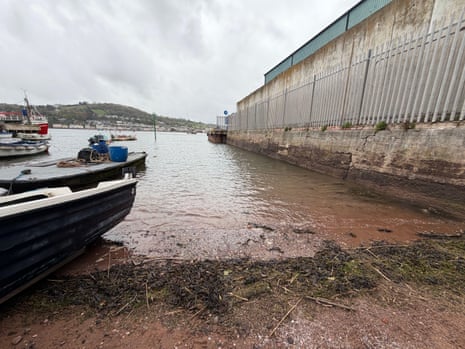
The owner of embattled South West Water, Exeter-based Pennon Group, has launched a £550m investor cash call and cut the water company's shareholder dividend to help it fund infrastructure investment, just days after it was hit by a record £7.9m fine for hundreds of sewage spills.
The London-listed company, which supplies water to some 3.5m customers across the south west of England, as well as 380,000 business customers around the UK, said the rights issue would help to support a £1bn investment “to drive improved outcomes for customers and communitiesâ€.
Pennon's new boss, Keith Haslett, who was appointed chief executive in April, said he had conducted a comprehensive review of the business and had identified areas for improvement, including customer service and the firm's environmental performance.
South West Water was fined nearly £8m in September by a judge, who issued the largest fine for environmental offences in the region and said the company's conduct amounted to reckless failures in management systems and response to known risks.
The company was fined after hundreds of sewage spills during a six year period at popular bathing spots including the coastal village of Harlyn in north Cornwall and in sensitive habitats, like the River Camel, which is home to otter and Atlantic salmon and popular with birdwatchers and sailors.
Pennon said it would also slash its shareholder dividend by about 30%, including the impact of the equity raise, as part of its “operational resetâ€.
Shares in Pennon, which also owns Bristol Water and SES Water, tumbled as much as 22% during morning trading following the company's announcement, named “project Proteusâ€, after a sea god in Greek mythology. The shares are still the biggest loser on the FTSE 250 index, down 21.1%
Haslett told reporters the reaction to the company's plans had been “mixedâ€, saying:
double quotation mark Investment is needed to achieve improvements – we're funding the plans in the right way.
He added this would not be funded by further increases to customers' bills and said he was also bringing some critical roles back in-house, including leakage teams which were previously outsourced.
Here's our full story on UK house prices flatlining.
O2 signs record £200m deal to keep London venue's naming rights
O2 has struck a record deal thought to be in the region of £200m to retain the naming rights to the London venue the O2 in the largest renewal of its kind in UK history.
The 10-year agreement will extend O2's relationship until at least 2038. It cements the sponsorship as the second longest-running UK stadium naming rights deal after Arsenal's partnership for the football club's London ground,
Under the deal with Anschutz Entertainment Group (AEG), which bought the site of the ill-fated Millennium Dome five years after it was shut following the millennium celebrations, O2 is thought to be paying about £20m a year in the wide-ranging partnership.
This is an almost 50% increase on the annual amount under the existing deal which was due to expire at the end of next year. It is more than triple the £6m a year O2 paid in its initial 10-year deal when the future success of the O2 and surrounding site was far from certain.
Apparent exodus of super-rich suggests UK is no longer billionaires' playground
If recent complaints are believed, London and the UK are no longer welcoming for ultra-high net worth individuals.
London was once globally renowned as the “billionaires' playgroundâ€, where the world's super-rich could relax in the Georgian townhouses of Mayfair undisturbed by the grasping hand of the state.
But if recent complaints by fleeing ultra-high net worth individuals are to be believed, the city is no longer as welcoming for those who consider themselves to be Britain's most-persecuted minority.
They complain of Labour's stricter tax regime and the antipathy of others towards those with extreme wealth. One even suggested that he was leaving the country because of London's low-traffic neighbourhoods. The financier Ben Goldsmith said:
double quotation mark If I want to organise a gathering now, I have to take into account a lot of my friends are not here any more,†said . “How the hell are we supposed to pay for health services and everything if we are driving out the highest rate taxpayers?
Poland's ‘solidarity' push for EU energy resilience in face of Russian aggression
Also on the energy front, our economics correspondent Richard Partington travelled to Gdansk, to look at Poland's ‘solidarity' push for EU energy resilience in face of Russian aggression.
Two miles off the coast of Gdańsk, the white steel piles of Poland's first offshore gas terminal rise from the slate-grey Baltic. Installed at a height eight metres above the waves, the floating cranes and construction vessels here are on the frontline of Europe's push for energy security.
Since the taps were turned off on Russian gas after Vladimir Putin's invasion of Ukraine four years ago, Poland has turned to the global energy market for supplies. But while conditions are far from ideal as the Middle East war drives oil and gas prices to stratospheric levels, strengthening the diversity of the country's energy mix remains a top priority for Poland, its Baltic neighbours, and the EU at large.
Looking out to sea from the windswept beach backed by pine forest, Maciej Wawrzkowicz, the offshore project manager at the national gas company Gaz-System, and the construction manager Krzysztof Polatynski say the Baltic is not an easy place to build.
Before work could start, Polish navy minesweepers were called in to torpedo unexploded mines and bombs from the second world war. Construction is halted by storms, while the sea froze over last winter. But speed is important in this project of international significance.
Shell expects refineries to almost double the profit from every barrel of fuel made
Shell's refineries are expected to make almost double the profit from every barrel of fuel produced owing to record prices caused by shortages around the world.
In a market trading update, the energy supermajor forecast profit margins of $42 a barrel in the July to September period, far above the $24 a barrel of the second quarter and the previous high of about $28 in mid-2022.
The margins reflect the steep increase in the price of refined fuels, including diesel, relative to the cost of crude oil, as the shutdown of war-damaged refineries in the Middle East and Russia squeezes supplies.
The Middle East crisis helped Europe's biggest oil and gas company to a profit of almost $10bn (£7.5bn) for the second quarter of 2026, more than double the figure for the same period last year and its second highest quarterly earnings on record.
Today, Brent crude, the global oil benchmark, has risen $1.27 or 1.3% to $101.84 a barrel.
Royal Mail to cut 2,500 head office and support jobs by end 2027
Royal Mail plans to cut up to 2,500 jobs by the end of next year, as it struggles with a slump in letters being sent and seeks to compete in the cutthroat parcel delivery market.
To simplify its processes and save money, Royal has carried out a review of its head office and support functions, and will reduce them by “up to 2,500†– less than 2% of its workforce of more than 131,000 people, it said.
The company, owned since April 2025 by the Czech billionaire Daniel KÅ™etÃnský, hopes to achieve the reductions through “natural attrition†(people leaving anyway) and voluntary redundancies, without the need for compulsory redundancies.
It stressed that its frontline roles in delivery and processing, including posties and drivers, will not be affected.
Royal Mail said it needs to adapt to a rapidly-changing market: Letter volumes have declined by more than 70% since their peak, whilst customer demand for faster and more convenient parcel delivery services continues to grow.
Royal Mail has briefed its unions, the Communication Workers Union (CWU) and Unite CMA, on the proposals and formal consultation with both unions is now underway.
Alistair Cochrane, the chief executive, said:
double quotation mark We have been working hard to reduce costs and simplify processes across all areas of the business as we transform to win in a very competitive market. These proposed changes remove duplication and allow us to invest further in the service we deliver for our customers.We are committed to treating everyone fairly and respectfully throughout this process, working closely with our trade unions. The proposed changes will not be easy, but they are an important part of building a stronger, simpler and future-ready Royal Mail for our customers and colleagues.


