
IMF: UK should cut spending rather than raise taxes on banks

Heather Stewart
Heather Stewart is the Guardian's economics editor, reporting from Bangkok this week:
We've just been in the IMF's Europe press conference, where the topic of bank taxes in the UK came up [following our report that the chancellor is poised to tax Britain's banks].
Asked about the possibility at John Healey's upcoming budget, Helge Berger, the economist who is deputy director in the IMF's European department, suggested there might be better places to look to balance the books.
Berger pointed out that Healey's predecessor, Rachel Reeves, had raised taxes in her budgets, saying:
double quotation mark “The last two budgets involved increasing government revenue, and ultimately there's a moment where this becomes less productive but there's still areas where Britain can make additional headroom available: modernising the property taxes or VAT, these are good examples. We wouldn't recommend labour tax.â€
Berger added:
double quotation mark “Ultimately, with taxes roughly at 40% of GDP – historically, for Britain, a high number – then of course balancing these measures on the fiscal side, doing a bit more there, makes good sense.â€
He pointed to cost-cutting measures including removing the pensions triple lock, and “better targeting social benefits,†adding, “so I think that's where you would put the emphasis, rather than the tax that you mentioned.â€
Key events
Healey “considers new UK investor visa for wealthy foreigners”
Bloomberg are reporting this afternoon that Chancellor of the Exchequer John Healey is considering introducing a new UK visa route for wealthy foreigners.
The goal would be to attract immigrants who can help spur economic growth.
Proposals under considerion, they say, include a visa program directing immigrants to invest in innovative and high-growth sectors. Applicants might also be able to pay a flat-rate tax in exchange for investing in “qualifying investmentsâ€.
Bloomberg's Lucy White reports:
double quotation mark One option being considered by Healey's team is a proposal by the Institute for Public Policy Research, which recommends a visa program directing immigrants to invest £5 million ($6.7 million) over five years in a vehicle overseen by the state-owned British Business Bank. The pooled funds would be directed into innovative and high-growth sectors and pay out a set rate of return “significantly lower than market rates.â€Under another proposal by lobby group Foreign Investors for Britain, applicants would pay £2.5 million minimum into “qualifying investments†such as those run by the BBB. In return, they'd be allowed to pay an annual flat-rate tax of £200,000 for up to 15 years.
US industrial production up 0.7% in September
The latest US economic data shows America's economy is continuing to grow, thanks in part to the AI boom.
US industrial production rose 0.7% in September, beating expectations, led by investment in AI infrastructure, energy security and advanced manufacturing.
That follows a 0.1% rise in August.
Elsewhere in the markets, the US dollar has dipped after Federal Reserve chair Kevin Warsh resisted hinting that his central bank might raise interest rates later this month.
Warsh declined to give any guidance about the Fed's next move, during his appearance at the IMF's Annual Meeting today, saying only:
double quotation mark “We made very clear that we would deliver price stability, and we removed a dose of accommodation about a month ago.I don't prejudge meetings. I don't believe in saying now what I might do at the meetings that we have in the balance of this year.â€
The pound is now up almost a whole cent against the dollar, at $1.336.
CoreWeave shares down again amid AI debt worries
Over on Wall Street, shares in AI company CoreWeave have tumbled again at the start of trading, as concerns grow over its borrowing levels.
CoreWeave are leading the fallers on the Nasdaq index, down 7%.
Yesterday, the cost of protecting CoreWeave bonds against default rose to the highest intraday level on record.
CoreWeave runs AI datacentres, funded by issuing high-yield debt.
Shares in CoreWeave fell sharply earlier this week – including a 15% tumble on Wednesday – before recovering some ground yesterday after Nvidia CEO Jensen Huang voiced support for the company.
Fawad Razaqzada, market analyst at StoneX, says:
double quotation mark CoreWeave was among the names caught up in the recent sell-off, although the stock recovered yesterday after Nvidia CEO Jensen Huang said the company's financial position was improving and its cost of capital was falling. That is hardly an impartial endorsement, given Nvidia's sizeable interest in CoreWeave, so the more important question is whether the recovery can be sustained once the immediate reassurance fades.More broadly, this week's price action suggests the market debate is beginning to shift. The question is no longer simply how large the AI opportunity can become, but how profitable the enormous investment required to realise it will ultimately be.
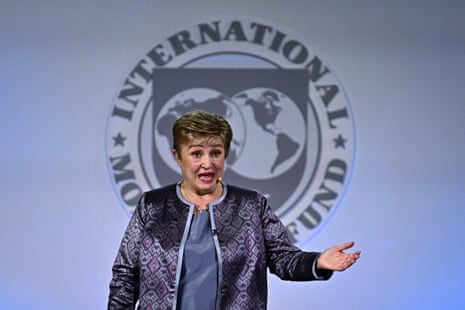
The head of â the IMF on Friday isued an appeald to global leaders to cooperate in the face of multiple economic risks, such as rapid advances in AI and the Iran war.
Kristalina Georgieva said the sheer speed of technological change added to the long list of challenges, including disruptions to the global trading ​system, high food and energy prices and lingering wars, all of which threatened to widen the ‌gulf between advanced economies and the world's poor.
Bond markets, ‌she said, were clearly sensing the risks, with US, German and Japanese 10-year sovereign yields reaching their highest levels in decades.
“The need of the hour is for urgent and practical international cooperation,†Georgieva told at a plenary session today.
Audit, tax and business advisory firm, Blick Rothenberg argues that increasing the bank corporation tax surcharge from 3% back to 8% might backfire.
Artur Vorobyev, a director at Blick Rothenberg, says:
double quotation mark Although this may sound like a reversal of a tax cut, when the surcharge was reduced in 2023, corporation tax increased from 19% to 25%. The combined rate on bank profits went up from 27% to 28%. Increasing the surcharge to 8% now would bring the combined rate to 33%. This is a significant rise and is counterproductive if the Government wants banks to invest and lend more to aid growth.â€
Bloomberg: UK banks warn Healey's tax plan will curtail economic growth
Bloomberg are reporting that the UK's banking industry has “ramped up lobbying†against extra taxes planned by Chancellor of the Exchequer John Healey.
They are apparently warning that a hike could shrink economic output by £6bn over five years and hit areas outside London the hardest.
Bloomberg add:
double quotation mark Pushing a surcharge banks pay on top of a standard corporation tax to 8% from 3% would also cut lending by about £10 billion by 2029 and reduce investment into the UK, according to a letter sent earlier this week to Healey by David Postings, chief of industry lobby group UK Finance.
[£6bn, incidentally, is also an estimate for the amount of tax lost over the last three years from the cut in the bank surcharge to 3%….]
Photos: Protests at the IMF
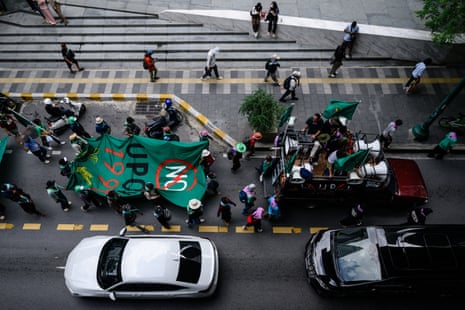
Demonstrators have been protesting against the IMF and the World Bank at their meeting in Bangkok today, for the second day running.
According to the Bangkok Post, they encountered a police blockade which prevented them walking to Queen Sirikit National Convention Center, where the annual meetings are being held.
The Assembly of the Poor put the number of local and international protesters at 1,000 but the Metropolitan Police Bureau estimated about 800.


IMF: UK should cut spending rather than raise taxes on banks
Heather Stewart
Heather Stewart is the Guardian's economics editor, reporting from Bangkok this week:
We've just been in the IMF's Europe press conference, where the topic of bank taxes in the UK came up [following our report that the chancellor is poised to tax Britain's banks].
Asked about the possibility at John Healey's upcoming budget, Helge Berger, the economist who is deputy director in the IMF's European department, suggested there might be better places to look to balance the books.
Berger pointed out that Healey's predecessor, Rachel Reeves, had raised taxes in her budgets, saying:
double quotation mark “The last two budgets involved increasing government revenue, and ultimately there's a moment where this becomes less productive but there's still areas where Britain can make additional headroom available: modernising the property taxes or VAT, these are good examples. We wouldn't recommend labour tax.â€
Berger added:
double quotation mark “Ultimately, with taxes roughly at 40% of GDP – historically, for Britain, a high number – then of course balancing these measures on the fiscal side, doing a bit more there, makes good sense.â€
He pointed to cost-cutting measures including removing the pensions triple lock, and “better targeting social benefits,†adding, “so I think that's where you would put the emphasis, rather than the tax that you mentioned.â€
IG have spotted that UK traders are increasingly betting against the big four British banking stocks ahead of the Autumn Budget.
Data from their trading platform shows that the number of short trades across the big 4 banks increased by 58% week on week.
Barclays saw the sharpest increase in selling activity, with short trades jumping 81% week-on-week.
XTB: Bank tax could hurt FTSE 100
Higher taxes on banks could have an impact on the FTSE 100 since the banking sector makes up nearly 20% of the UK blue chip shares index, says Kathleen Brooks, research director at XTB.
double quotation mark The UK's banking sector has been extremely resilient this year and has performed positively, for example Lloyds Banking Group is higher by 20% in the past 12 months. The risk is that downward pressure will now build, and this will dim the attractiveness of the entire index.We will need to wait for the Budget to get the details of this tax, afterall, this is the Labour Party and they are well known for their U-turns. The Chancellor may need to water down plans for a tax if he wants to avoid denting both the economy and the FTSE 100.
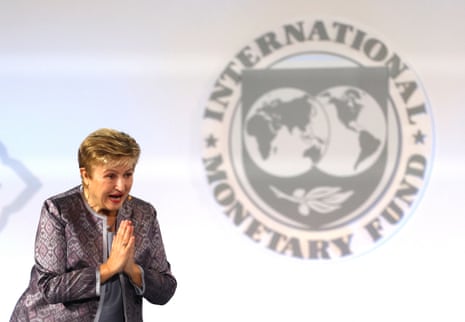
Back in Bangkok, IMF chief Kristalina Georgieva has warned that the risks of artificial intelligence may exceed its opportunities if no adequate safeguards and ethical framework are put in place.
During a panel discussion that included Anthropic co-founder Jack Clark, Georgieva said AI was already strengthening the global economy, but could also deliver negative shocks if it failed to deliver major productivity gains as quickly as hoped, Reuters reports.
Georgieva says:
double quotation mark “If there are no safeguards, then the risks may exceed the opportunities. And above all, we do need an ethical foundation, and I'm not sure we are there as a society.â€
Pound at three-week high
The pound has touched its highest level against the US dollar in over three weeks.
Sterling has gained half a cent to $1.3335, its highest level since 23 September.
Traders are expecting the Bank of England to raise interest rates in November – higher rates are typically good for a currency's value.
Investors will also be weighing up the impact of the budget later this month – and wondering whether John Healey will maintain the UK's fiscal headroom – the buffer for meeting its borrowing rules.
Matthew Ryan, head of market strategy at global financial services firm and FX specialists Ebury, says:
double quotation mark “The question that matters most to us is how the budget could affect the pound and the gilt market.We see the fallout in markets as dependent on whether Healey can keep the economic damage to a minimum, while convincing markets that future spending plans won't come at the expense of debt sustainability.â€
Pensioners could suffer if the government hikes taxes on banks, points out Russ Mould, investment director at AJ Bell:
double quotation mark “The government might argue that banks are doling out significant amounts of money in dividends to shareholders, implying there is plenty of scope for them to pay a little bit more tax. The flipside is that any hit to dividends to offset higher taxes would penalise the large number of people in retirement who invest in banking shares for income.
No sign of a rebound in UK bank shares yet – Lloyds (now down 2.2%) are still the biggest faller on the FTSE 100, with NatWest now off 2%.
In other banking news, the UK government reportedly tried to persuade UBS to shift its headquarters and stock market listing to London in the event of the bank relocating out of Switzerland.
The FT has the story:
double quotation mark Rachel Reeves pitched London as a potential new home for UBS in discussions with the bank's chair Colm Kelleher during her time as chancellor, according to people briefed on the talks.The pair discussed the possibility of UBS moving its legal headquarters and listing to the UK if it were to redomicile, the people added, with the most recent meeting taking place earlier this year.
Will Howlett, financials analyst at Quilter Cheviot, points out that the jump in bank profits means tehy can absorb higher taxes.
He also suggests that higher bank taxes are already ‘priced in' to the company's share prices, saying:
double quotation mark “With the runup to the Budget and the rumour mongering that comes with it now in full flow, the government seems to be giving the UK's banking sector some mixed messages. John Healey has called the UK's banks a ‘jewel in the crown of the economy', yet briefings suggest they are going to get hit by a fresh increase in the levy on its profits.“The banks did manage to escape such measures last year, but with higher interest rates now expected for longer, the government may be thinking now is the time they can strike, especially if they want to limit the number of personal taxes they go after at the budget. The government is facing increased fiscal pressure as a result of the Middle East shock, and while economic growth is solid just now, this would appear easier pickings to help bolster the public finances.
“That said, much of this is reflected in valuations, with UK domestic banks already trading at a discount to European peers. That may explain the relatively muted reaction to share prices this morning. More domestically focused banks, like Lloyds and NatWest have seen drops in their share prices of around 2%, although this is far smaller than the approximately 6% hit you would see if the surcharge were raised by 5 percentage points back to the 8% where it stood previously. Much of the bad news is already priced in at a time where the banks are also able to absorb such a hit thanks to the profits they are making at the moment as a result of higher interest rates.


