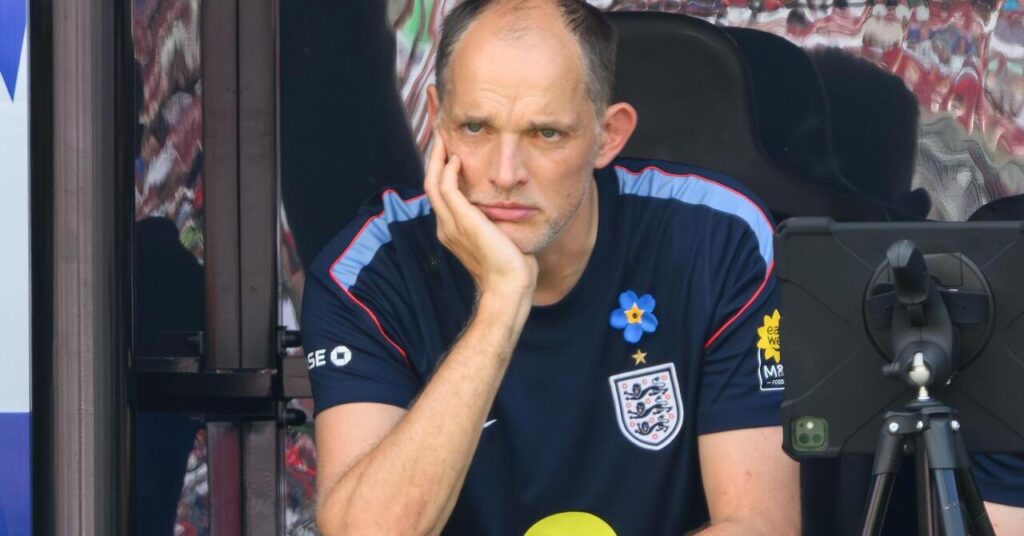
When the Football Association appointed Thomas Tuchel as England manager in October 2024, they knew exactly what they were paying for.
This was the man who won a Champions League with Chelsea in under six months. The man who took PSG to a Champions League final. The first manager in history to lead two different clubs to the Champions League final.
A serial winner in knockout football, a man who wins over 70% of his knockout matches across all competitions, at clubs across four different countries.
The FA handed him a contract through Euro 2028. They did so with a simple, unspoken brief: end 60 years of hurt. Now, with the World Cup underway and England opening their campaign against Croatia on June 17, the most pertinent question in English football is the same one it always is.
Is this finally the summer? And is Tuchel finally the man?
What he has built with England
The qualification campaign told its own story. England were the first European nation to confirm their place at the 2026 World Cup, finishing seven points clear of second-place Albania in UEFA qualifying Group K.
More tellingly, Tuchel's side had yet to concede a goal in competitive fixtures throughout the entire qualifying cycle.
The system he has built is a 4-2-3-1 – or at times a 4-1-4-1 – built on defensive strength and rapid vertical transitions.
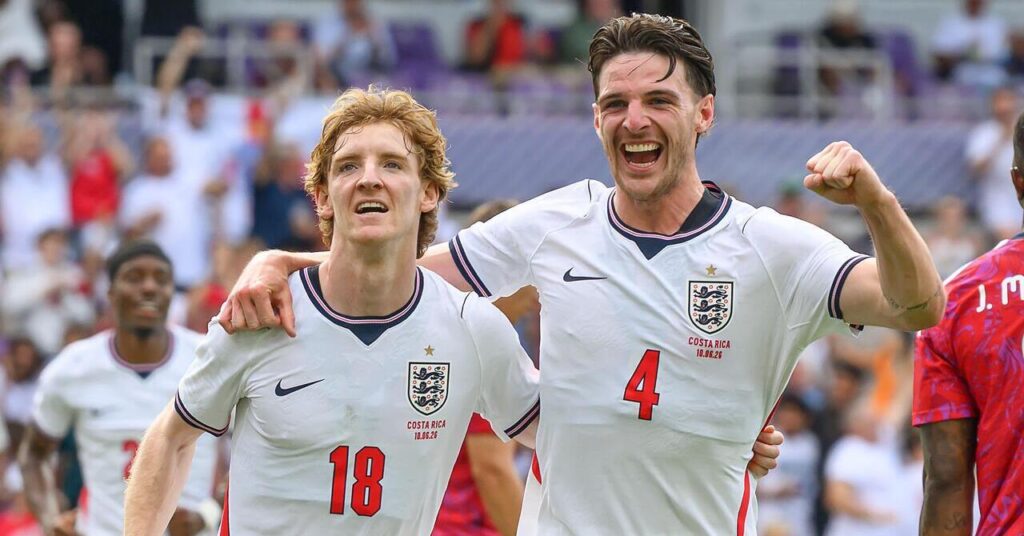
Elliot Anderson and Declan Rice controlled the rate of attack with a combined 92% average passing rate into the final third in England's best qualifying performances.
Rice is England's most important midfielder, providing both a solid central pivot and the precise dead-ball delivery that brought six set-piece goals across eight qualifiers.
Around a third of World Cup goals historically have come from set pieces, so that ability should not be underestimated.
Tuchel has also been ruthless in selection. Phil Foden, Cole Palmer and Trent Alexander-Arnold were left out of the final 26. He has been vocal about being willing to make brave decisions, and has proved he is prepared to trust new options when established stars are unavailable.
Adjustments that could win England the World Cup
The blueprint is in place. But the margins between a quarter-final exit and lifting the trophy in July are microscopic. Here is where Tuchel could find them.
Unlocking Kane
The single biggest tactical difference between England under Southgate and England under Tuchel is what the manager has done with Harry Kane.
Kane was consistently playing as a standard number nine under Southgate, but was playing around guys like Foden and Bellingham who all wanted to drop deep into pockets of space.
Kane's ability to drop deep can create space by pulling a centre-back with him, but if nobody makes a run into the space created, it is wasted.
He was isolated quite a bit under Southgate, and opposing teams were able to double him to neutralise him, which is why he scored just five goals over the last two major international tournaments.
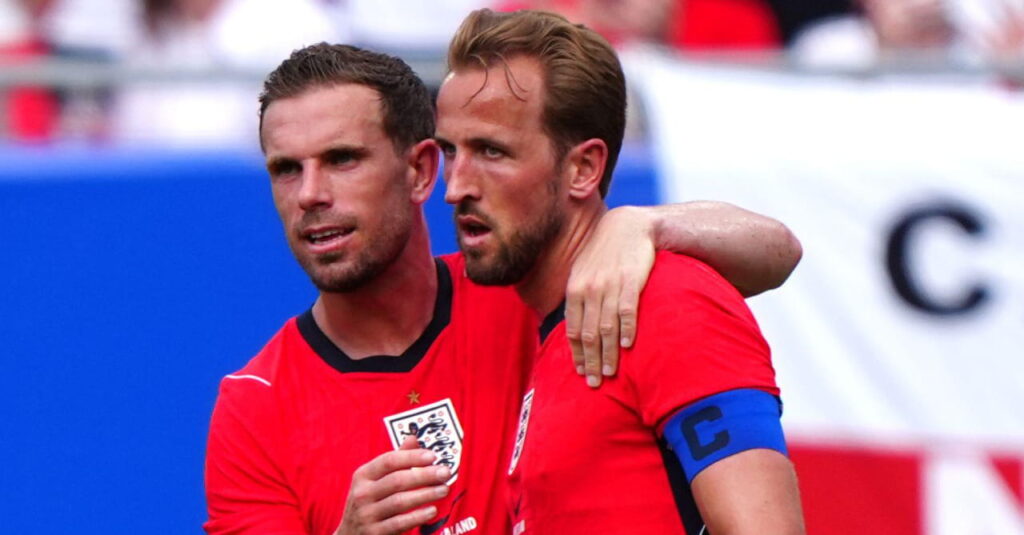
Tuchel has used Kane's ability to drop deep in a way that creates space for runners from wide areas, exactly as he deployed him at Bayern.
In the knockouts, where space becomes even more compressed, activating Kane as a creator as well as a finisher will be crucial.
The Bellingham puzzle
It is the tension at the heart of this England squad. He is most effective in a free attacking role but England's structure requires disciplined positional play from central midfielders.
The solution Tuchel has hinted at is using Bellingham from the bench as a game-changer in the knockout rounds, deploying him when space opens up and opponents tire.
Variety in attack
The omission of Foden and Palmer left many fans cold, but it also gives Tuchel something no previous England manager has possessed: a genuine surplus of creative options capable of playing the same system.
When Tuchel used Foden as a false nine with Bellingham in behind against Serbia, the combination produced England's most exciting football of the night.
The one shadow over everything
For all the optimism, one asterisk refuses to go away. While Tuchel boasts a very good chance of progressing deep into any given cup competition, it's a toss-up over whether he will get his team over the line, especially if the bout goes to penalties.
He lost two FA Cup finals with Chelsea. He lost a Carabao Cup final to Liverpool on penalties. He lost a Champions League final with PSG.
Five wins from 11 major finals is a fine record, but the six defeats are a reminder that this is a manager capable of being undone at the very last hurdle.
Can he do it?
Sixty years of failure teaches you to be sceptical. The better the squad, the higher the expectation. The higher the expectation, the greater the pressure. The greater the pressure, the worse England have historically performed when it matters most.
But something about this feels different. Not because of the squad alone, though it is excellent. Not because of the draw alone, but because of the man standing in the technical area.
Tuchel has been here before. He has sat in dugouts in Champions League finals when the weight of the moment crushes lesser managers.
The tactical edge is Tuchel's knockout record at club level, which gives England the best coaching argument they have had at a World Cup in decades.