
More than 1,900 flights cancelled over two days, according to Cirium
In total, more 1,900 flights had been cancelled by 5am today, according to the aviation analytics company Cirium, since yesterday's system issue at National Air Traffic Services.
Nats provides air traffic control services to 15 UK airports. While the technical problem has been resolved, the flight chaos has continued into a second day. Other flights have been delayed, causing chaos for tens of thousands of passenggers travelling to and from the UK.
Cirium says:
8 September: More than 1,750 flights arriving into and departing from UK airports were cancelled — 902 departures and 860 arrivals, out of 5,800 scheduled. A normal day is under 1–2%.
9 September: So far, 153 flights are cancelled — 55 departures and 98 arrivals. Just over 3%.
Key events
Ryanair calls on UK transport secretary to sack Nats boss
Martin Rolfe, the chief executive of National Air Traffic Services, has been summoned by the UK transport secretary Heidi Alexander this morning to answer questions about yesterday's system issue that has led to widespread flight chaos.
Ryanair, the UK's largest airline, has called Alexander to sack Rolfe, after the UK boss of Wizz Air urged him to consider resigning.
Ryanair highlighted the frequent and repeated failures of the Nats air traffic control system under Rolfe's leadership – failures that are not replicated in any other EU air traffic control provider. It said yesterday's problem, described as a “flight plan processing failure,†was the same as the one that caused a system outage in August 2023, when Rolfe promised this would not happen again.
Yesterday's latest NATS system failure shows that the primary system is unreliable, and the backup system is useless.
Ryanair's CEO Michael O'Leary said:
double quotation mark Martin Rolfe's position as NATS CEO is untenable. We don't need more ‘investigations', we don't need more “reportsâ€, and we don't need another parliamentary committee hearing where Martin Rolfe will promise change, will promise resilience, and will promise an effective backup system. Martin Rolfe is an overpaid (£1.4m p.a.) failure. It is time for his removal, and it is time that somebody competent was appointed to run UK ATC, which is one of Europe's most expensive ATC systems, and yet it keeps repeatedly failing.Under Martin Rolfe's watch, UK NATS has spent more money paying dividends to its shareholders (the UK Govt and UK airlines), but it has failed to invest in a resilient primary system, has failed to invest in an effective backup system, and as yesterday's events show now UK NATS keeps failing under Martin Rolfe's leadership.
Transport Minister Heidi Alexander, who owns 49% of NATS, must today demand that failing Martin Rolfe must quit, or be dismissed. Airlines and passengers serving the UK keep picking up the tab for Martin Rolfe's repeated failures. It is time for this expensive, failing CEO to go, and allow UK NATS to be led by somebody competent and capable of delivering a resilient system and a backup system that actually works.
Prices at the pump spike, AA and RAC say
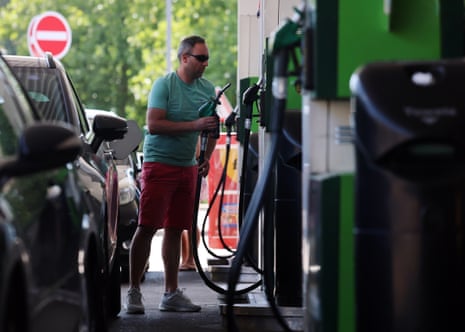
Petrol and diesel prices at the pump have also gone up, according to the AA and RAC motoring groups.
The AA said petrol prices have gone up by 4.4p a litre since the Bank Holiday last week. Diesel is up 4.1p a litre since 1 September. Yesterday, the two fuels averaged 166.2 and 187.7p a litre respectively.
The RAC said the average price of unleaded has increased by 5p a litre in just the last week to reach 167.17p, while diesel has gone up by the same amount to 188.63p. This means the cost of filling a family-size car has increased by £2.75 over this short period.
RAC senior policy officer Rod Dennis said:
double quotation mark Drivers are having to dig ever deeper into their pockets every time they fill up, and there's no sign of any relief yet. With the cost of a barrel of oil having averaged $96 for the last week, wholesale prices are surging and that's already feeding through to prices at the forecourt.The latest price rises throw into sharp focus just how exposed UK drivers can be to events thousands of miles away, and will likely increase calls for the chancellor to demonstrate support for households already struggling with the rising cost of living. As things stand, fuel duty – which, together with tax, accounts for half of the cost of every litre of petrol we buy – is set to start rising from January but we believe there is a very strong case for leaving it at its current level, at least until the end of the parliament.
With no end to the US/Iran conflict in sight, there's little drivers can do to protect themselves from rising prices, apart from driving as efficiently as possible.
Luke Bosdet, the AA's spokesman on pump prices, said:
double quotation mark Once again, with petrol wholesale costs shooting up to their highest since the Ukraine war, we can see average pump prices wasting no time in reflecting that. However, there are savings to be made by those drivers prepared to use the Fuel Finder tools now available to them.However, what also irritates drivers in England, Scotland and Wales is the persistent 6p gap between what they pay on average for fuel and the cheaper petrol and diesel in Northern Ireland. AA analysis of yesterday's prices registered with Fuel Finder shows that, in fact, hundreds of fuel stations on the mainland manage to retail fuel at prices on a par with Northern Ireland.
The trouble is, as the Competition and Markets Authrity reported, the vast majority choose to over-price petrol and diesel at the expense of commuters, families and businesses. Little wonder that electric vehicle sales have been booming this summer.
European stock markets slide while energy stocks are higher
Energy companies BP, Shell and British Gas parent Centrica are among the main risers on the FTSE 100 index today, as the oil price surged through $100 a barrel, for the first time since 24 July.
Centrica shares are up 2.1%, BP has gained 1.5% and Shell is 0.9% ahead.
The wider FTSE 100 index is trading lower, down 0.6% or 66 points at 10,745. The German, French, Italian and Spanish indices have fallen even more, between 1.1% and 1.9%.
Daniela Hathorn, senior market analyst at the trading platform capital.com, said:
double quotation mark Markets remain on the defensive as the latest escalation in the Middle East pushes Brent to $100 a barrel. US forces have struck Iranian oil tankers following attempted attacks on US naval vessels, while Iran retaliated against a US-used base in Jordan and says it targeted vessels attempting to cross the strait of Hormuz. Houthi attacks on Saudi energy facilities have widened the threat further, raising concerns that disruption could spread beyond Iranian supply to the infrastructure and alternative routes that have helped keep Gulf crude flowing.
That has brought the inflationary consequences of the conflict firmly back into focus. Wall Street fell on Tuesday as higher crude revived concerns that the energy shock could stall disinflation and force central banks to remain restrictive. US rate expectations have shifted accordingly, while upcoming inflation data will be particularly important in determining whether $100 oil is beginning to feed more materially into the Fed[eral Reserve] outlook.
Europe faces an even more immediate policy test with the European Central Bank meeting on Thursday. Markets are widely positioned for a 25 basis point hike, after the ECB explicitly warned in July that the full inflationary impact of the energy shock had yet to emerge. The latest surge in oil, and European gas prices, makes that concern harder to dismiss. Focus will be on Christine Lagarde's guidance on whether this is sufficient insurance against the energy shock or whether further tightening remains likely.
UK and European gas prices surge to multi-year highs
UK and European gas prices have risen to a multi-year highs, while the oil price jumped above $100 a barrel.
The escalating Middle East conflict, cooler weather and rising Asian gas prices has led to aggressive gas buying ahead of the winter.
The benchmark Dutch gas contract leapt nearly 4% to €78.73 per megawatt hour, the highest since January 2023.
The British contract rose 7.77 pence 196.57p per therm, the highest since late December 2022.
In oil markets, Brent crude surged through $100 a barrel for the first time since July, rising 2.7% to $100.68 a barrel.
European gas stores are only 67% full, compared to 79.5% a year ago, according to data from Gas Infrastructure Europe.
Analysts at HSBC are forecasting that European stock levels will reach 73% by 1 November, the lowest since data collection began in 2009, and do not expect Qatari liquefied natural gas exports, excluding damaged facilities, to return to normal until early next year at the earliest.
British Airways has cancelled more than 190 flights today because of yesterday's Nats outage.
The technical issue has been resolved, but there is still chaos at UK airports.
More than 1,900 flights cancelled over two days, according to Cirium
In total, more 1,900 flights had been cancelled by 5am today, according to the aviation analytics company Cirium, since yesterday's system issue at National Air Traffic Services.
Nats provides air traffic control services to 15 UK airports. While the technical problem has been resolved, the flight chaos has continued into a second day. Other flights have been delayed, causing chaos for tens of thousands of passenggers travelling to and from the UK.
Cirium says:
8 September: More than 1,750 flights arriving into and departing from UK airports were cancelled — 902 departures and 860 arrivals, out of 5,800 scheduled. A normal day is under 1–2%.
9 September: So far, 153 flights are cancelled — 55 departures and 98 arrivals. Just over 3%.
UK airport disruption: what are your rights if you have been affected?
We've done a handy explainer.
UK boss of Wizz Air urges Nats CEO to consider resigning
The UK boss of Wizz Air has urged Martin Rolfe to consider resigning over the repeated technical failures at National Air Traffic Services.
Yvonne Moynihan, the managing director of Wizz Air UK, said Wizz Air had 24 cancellations on Tuesday and more than 21 flights had long delays, so over 10,000 passengers coming in and out of London were disrupted at the Hungarian budget carrier alone.
“It's completely unacceptable that the travelling public has to pay for this,†told BBC radio 4's Today programme.
double quotation mark This is now the third time that we have had an ATC [air traffic control] failure, and during the peak period as well. So major questions need to be asked. At the moment, of course, the immediate priority is getting passengers to their destinations. But the longer term question really is understanding what exactly has happened and how has this happened on three different occasions? There are serious questions about the resilience of the system.
Asked whether the Nats boss should resign, she said:
double quotation mark In any industry when you've had three failures you need to consider three strikes and you're out. It's certainly something that he needs to look at.A third time and a third excuse is not enough any more. What we need to see from leadership is accountability. There are serious questions about the resilience of the system.
I think Nats and the leadership need to look deep inside themselves.
What we need to see from the leadership is accountability and reassurance that we won't face these repeated failures.
Oil price hits $100 a barrel for first time since July
Brent crude has just hit $100 a barrel for the first time since 24 July, as military strikes in the Middle East escalate.
Brent crude, the global oil benchmark, jumped to $100.19 a barrel, up more than $2, and a 2.2% increase. The oil price has risen by a quarter since early last month as hopes vanish for a deal between the US and Iran to end the six-month war that began with air strikes by the US and Israel on Tehran on 28 February.
This week, attacks by Iran-backed Houthi rebels from Yemen have set Saudi oil facilities ablaze, in an escalation of the conflict. The attacks could threaten oil shipments via the Red Sea, an alernative route to the strait of Hormuz which has been effectively closed for months.
The boss of National Air Traffic Services, which is half-owned by the government, has insisted that the organisation has invested enough in its systems.
Martin Rolfe told BBC Radio 4's Today programme:
double quotation mark Nats was actually a partial privatisation, 25 years ago, and since that point has had access to funding, we've invested way more than a billion [pounds], in technology over that time. Our service has consistently improved. Our safety has consistently improved from a very good base. But all of those things don't detract from the fact that when these things happen, it is disappointing and upsetting, for which I apologise.We are in a critical national infrastructure business where safety is our priority and it runs 24/7. It runs, you know, every single day of the year, every minute of the day, every minute of the night. It is never quiet in UK skies. Inevitably, things do go wrong in complex systems. We never want them to. We always hope they won't, but we absolutely plan for them to and make sure we handle them properly.
When asked if they “go as wrong in other countriesâ€, Rolfe replied:
double quotation mark Absolutely. In fact, I would say the UK has one of the best reputations in the world for its air traffic control service, both from a safety perspective and from a resilience perspective.We do have one of the best systems and one of the best services in the world. and that's consistently recognised globally.
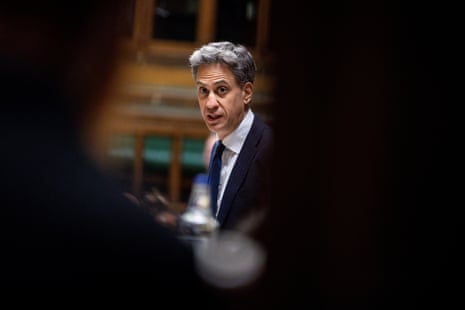
Ed Miliband: ‘We can’t have this happen again’
The UK cannot have a repeat of the travel disruption seen at airports, the foreign secretary has said.
Asked about the flight chaos, Ed Miliband told BBC Breakfast:
double quotation mark First of all, I want to apologise to all of the passengers who have faced disruption.This is frankly unacceptable. It was a problem at the National Air Traffic Service, but we can't have this happen again.
The transport secretary, Heidi Alexander, is calling in the head of the National Air Traffic Service this morning to get answers to this. Miliband added:
double quotation mark Frankly, we've got to have our airports running smoothly and properly, without those problems, and that is what the transport secretary will be asking for from the head of the National Air Traffic Service.
Nats boss rules out cyber attack as he apologises to passengers
The boss of National Air Traffic Services, Martin Rolfe, has ruled out a cyber attack as a cause of the flight chaos, and apologised to passengers caught up in the flight chaos caused by a system issue on Tuesday, and said he understands their frustration –- but stressed that safety comes first.
Speaking to BBC radio 4's Today programme, he said:
double quotation mark I'd like to start, as you might expect, by apologising to everyone who's been impacted by the issue that we had yesterday.In terms of the recovery, I absolutely understand the frustration. There is nothing we hate more than delaying people, and not allowing them to get to their destination. It disrupts airports and disrupts airlines. And we absolutely take accountability and responsibility for that. That is our job. But our job is also to make sure that people stay safe. We never do this lightly.
He ruled out a cyber attack.
double quotation mark We will be doing a very, very thorough and full investigation. We have at this point ruled out cyber. We don't believe it was a cyber attack.Obviously my focus and that of the team has been on both getting our system operating back up normally, which it is now. But there's obviously a huge tail to the disruption. And we'll be working on that through the course of today.
And then obviously our attention will turn to exactly what's happened, this particular incident. What I will say is I don't believe we've ever seen an incident happen more than once. So this will be something different that we've never seen in 50 years of operation.
Rolfe insisted that Nats dealt with the issue as quickly as it could:
double quotation mark We had everybody on site. Everybody was in the right place. We had all the engineers in place. We had our various partners from software industries and so on, all on hand. So this was resolved as quickly as it could be, but within the limits of making sure that it all stayed safe.
Oil prices rise towards $100 a barrel
In the markets, oil prices are rising towards the $100 a barrel level for the first time since July.
Brent crude has jumped 1.5% to $99.36 a barrel, as escalating attacks across the Middle East are fuelling fears over supply disruptions.
Iranian-backed Houthis in Yemen launched strikes on several Saudi cities while US forces hit several Iranian oil tankers and Iran targeted a US base in Jordan and attacked ships.
There is some confusion over the situation at Heathrow airport.
Heathrow said on X this morning:
double quotation mark Following yesterday's NATS technical issue, flights are operating today, but some disruption may continue as airlines reposition aircraft and crew. Please check your flight status with your airline before travelling to the airport and only travel if your flight is confirmed to be operating.We apologise to those affected and have extra colleagues across our terminals to support passengers while we work with NATS and airline partners to restore normal operations as quickly as possible.
However, the flight tracking website Flightradar24 says 177 flights have been cancelled so far on Wednesday, nearly all at London-Heathrow.
Air traffic control boss to meet UK transport secretary as second day of flight chaos takes cancellations past 1,300
Good morning, and welcome to our rolling coverage of business, the financial markets and the world economy.
The boss of the air traffic control provider Nats has been summoned by the UK transport secretary, as flight chaos carried on into a second day after a system issue, with after more than 1,300 flights cancelled to and from UK airports.
National Air Traffic Services provides air traffic control services to 15 UK airports. Its chief executive Martin Rolfe is due to speak to Heidi Alexander, before she addresses MPs in the Commons for the second reading of the Civil Aviation Bill.
Tens of thousands of passengers have been caught up in the chaos, with more cancellations and delays expected as airlines deal with the knock-on effects at airports including Heathrow, Gatwick, Manchester and Stansted.
According to FlightRadar, 246 flights had been cancelled at Heathrow Airport by 6am on Wednesday, while Gatwick passengers faced 33 cancellations.
Rolfe said he “always accept(s) full responsibility†when asked if he was considering his position after the incident.
He told Sky News:
double quotation mark I am the CEO of a piece of critical infrastructure, so it is my job to take responsibility for that.What I absolutely take responsibility for is keeping people safe and delivering the best service we possibly can on a day like today.
You will understand my focus is entirely about how we actually resolve this issue, get things back to normal, help our airlines, our airport customers and the travelling public.
The “technical issue†at the air traffic control services provider Nats caused Britain's third major stoppage in just over three years. Nats said on Tuesday evening:
double quotation mark This has been a very complex recovery and has created difficulties for the whole aviation network, from which it will take time to recover.
The breakdown started at about 1pm on Tuesday and affected departing flights at many of Britain's biggest airports including Heathrow, Gatwick, Manchester and Stansted. By the time Nats said it had fixed its flight processing system almost four hours later, most flights scheduled to depart were yet to take off. The disruption spread to include incoming flights to much of southern England.