Five days of tense calm in the Middle East came to an end on Wednesday, threatening to reignite the conflict between the United States and Iran.
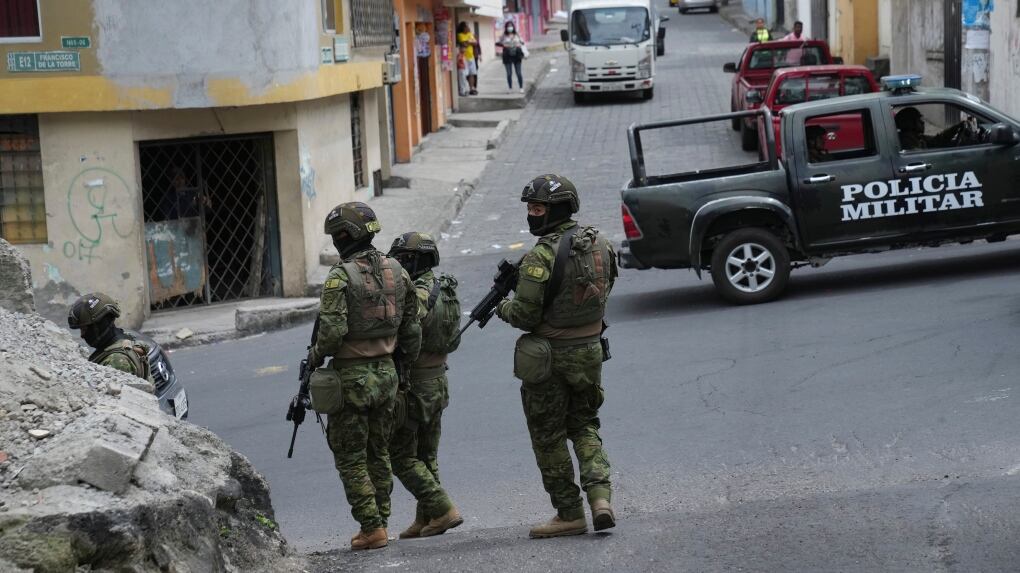
Iran rejected a compromise to reopen the Strait of Hormuz and launched a surprise attack against American forces in Jordan. Meanwhile, U.S. and Saudi warplanes have attacked Iranian-backed militias inside Iraq.
These developments appeared to halt an effort by Gulf and Pakistani mediators to save an unraveling ceasefire agreement between the U.S. and Iran. They could also further expand the scope of a war that began with joint U.S. and Israeli strikes in late February.
Why We Wrote This
The collapse of a potential compromise for reopening the Strait of Hormuz, and a new round of direct attacks between the United States and Iran, could lead more expansion of the conflict in the Middle East.
Mediation failed
Late Tuesday, Iranian officials rejected a proposal by Oman to end the deadlock between Washington and Tehran over shipping through the Strait of Hormuz. The critical waterway for Middle East energy supplies has remained largely closed because of U.S. and Iranian blockades.
Under the proposal, reportedly backed by Arab states and Pakistan, Oman and Iran would jointly manage the strait, allowing ships to choose from multiple routes, including one along the Omani coast and another closer to Iran's shoreline. Iran would also receive voluntary shipping “fees†under the plan.
But Iran rejected the proposal, insisting that it manages most international shipping through the Strait of Hormuz.
“The inbound shipping lane must be entirely under Iran's control, while part of the outbound lane may remain under Oman's control,†Iran's deputy foreign minister, Kazem Gharibabadi, told Iranian state television.

A second Iranian official told Reuters that a 50-50 joint-control arrangement with Oman “would not serve Iran's interests,†and that Tehran was offering a counterproposal based on Iranian management of the Strait of Hormuz. Iran had previously demanded a $1 million transit fee for every ship entering or leaving the passage.
Early on Wednesday, Iran intercepted three oil tankers attempting to cross through the waterway.
The Iranian military also carried out a surprise attack, firing several ballistic missiles at American forces based in Jordan. U.S. Central Command said all of the Iranian missiles were intercepted.
This was the fifth Iranian attack against Jordan in less than two weeks, including a July 17 missile attack that killed three U.S. Army soldiers.
In response to Wednesday's attack, President Donald Trump told Fox News that U.S. strikes against Iran would resume, adding, “We'll be hitting them hard.â€
The Gulf gets dragged in
The U.S. and Saudi militaries carried out airstrikes against Iran-backed militias in Iraq early Wednesday, according to U.S. Central Command and the Saudi defense ministry. This action followed a series of attacks by Iraqi militias against Saudi energy infrastructure. And it marked the first coordinated military operation between the U.S. and Saudi Arabia in more than a decade.
Until now, the Saudi government had refused to join the U.S.-led war, insisting on diplomacy and continued dialogue with Iran.

The joint U.S.-Saudi strikes killed more than 20 Iraqi fighters, according to a statement from one Iraqi militia group. Iranian news outlets reported that four officers from Iran's Islamic Revolutionary Guard Corps were also killed.
In a statement on Wednesday, the Saudi foreign ministry said targets in Iraq were “linked to the attacks on the [Saudi] kingdom's petroleum facilities,†and that strikes by pro-Iran militias “came at a time when the kingdom was exerting efforts contributing to end the escalation in the region.â€
“Nevertheless, these terrorist pro-Iran militias resorted to the path of irresponsible escalation,†the statement added.
Saudi Arabia stressed its “inherent right to defend itself and its national assets†at “the time and place of its choosing,†Maj. Gen. Turki al-Maliki, a Saudi Defense Ministry spokesman, said in a statement.
In recent weeks, Saudi officials have repeatedly told the Monitor that they are committed to pursuing diplomacy with Iran, and leaving military options as a last resort.
“Today's operation sends a clear message that this equation has changed,†says Mohammed Alhamed, a Saudi geopolitical analyst and journalist in Riyadh.
“If Iran-backed militias resume attacks against Saudi territory or Gulf energy infrastructure, I expect Saudi Arabia to respond again with precision and proportionality,†Mr. Alhamed tells the Monitor, adding that he doubts the incident would lead to a wider war.
“Effective deterrence is often what prevents larger conflicts,†he says. “Restraint should never be mistaken for weakness.â€