Even before it has taken office, Colombia's incoming government under far-right president-elect Aberlardo de la Espriella has made clear its intention to emphasise military operations and increase cooperation with the United States.
On 21 July, the Trump government's U.S. Deputy Assistant Secretary of War for the Americas, Joseph M. Humire, posted photographs on X that showed him meeting with De la Espriella's designated Defence Minister, retired general Jorge Mora. ‘Colombia is historically one of the U.S. strongest security and defense partners … we plan to take this partnership to new levels with Plan Patriot 2.0,' Humire wrote.
In response, Mora posted that the two countries ‘share a historic alliance, based in trust, cooperation and commitment to security and defence of our people. We will keep working to strengthen this strategic relationship and take it to new levels.'
De la Espriella has already said that Colombia will join Trump's Shield of the Americas alliance of far-right and conservative governments in the Americas, ostensibly formed to tackle drugs trafficking but which many observers believe aims to impose US strategic interests on the region and could target left-wing activists and other opponents.
The reference to Plan Patriot 2.0 has raised alarm bells in Colombia. In its final report published in 2022, Colombia's Truth Commission, created under the 2016 peace agreement, stated that ‘[t]he implementation of Plan Patriot, regardless of the military results achieved, resulted in serious human rights violations.' Plan Patriot was launched under the first government of Ãlvaro Uribe, elected in 2002, to target left-wing guerrilla groups the FARC and ELN.
However, human rights organisations found the Colombian military had colluded with paramilitary groups behind massacres, forced displacements and other atrocities. In 2008, the José Alvear Restrepo Lawyers Collective (CAJAR) reported that army operations in Cundinamarca worked with right-wing paramilitaries to commit killings, displacements, torture and forced disappearances. Military actions were expanded significantly through US funding despite, as the Truth Commission documents, the CIA being aware that military aid was being channelled to paramilitary groups that were murdering trade unionists, activists and other civilians.
According to the Truth Commission report, ‘the execution of various operations under Plan Patriota … resulted in serious human rights violations and breaches of International Humanitarian Law (IHL) affecting the region's inhabitants. These included extrajudicial executions (better known as “false positivesâ€), torture, arbitrary detentions, targeted killings, gender-based and sexual violence, enforced disappearances, mass displacement and threats, among others.' The regions most affected were the departments of Cundinamarca and Huila.
Under Plan Patriot 2.0, Colombia is likely to see renewed militarisation as De la Espriella plans to end the Petro government's strategy of pursuing peace through dialogue with active armed groups. While the so-called Total Peace plan made some important advances, violence also increased in some regions after an initial decline, allowing De la Espriella to present himself as a candidate for security. However, his plans to escalate military confrontation have fuelled concerns that human rights violations will increase as a result – as has occurred in the past.
The plan is likely to focus on expanding intelligence and military operations, particularly in zones of strategic importance or wealthy in mineral resources, while also replenishing depleted military hardware and introducing new technologies. Although those behind Plan Patriot 2.0 and other US operations in the region claim they aim to enhance security and combat drugs trafficking, similar programmes in the past have targeted human rights defenders and social activists.
The US has long shown little regard for human rights or rule of law in Latin America, with major breaches during Trump's second term. Since September last year, the US military has conducted multiple air strikes against small boats in Caribbean and Pacific waters. The US government claims that the more than 200 people killed in these attacks, who include Colombian citizens, were involved in drugs trafficking but has provided no evidence to support the accusations. Colombian president Gustavo Petro is among those who have condemned the strikes as ‘extrajudicial killings.'
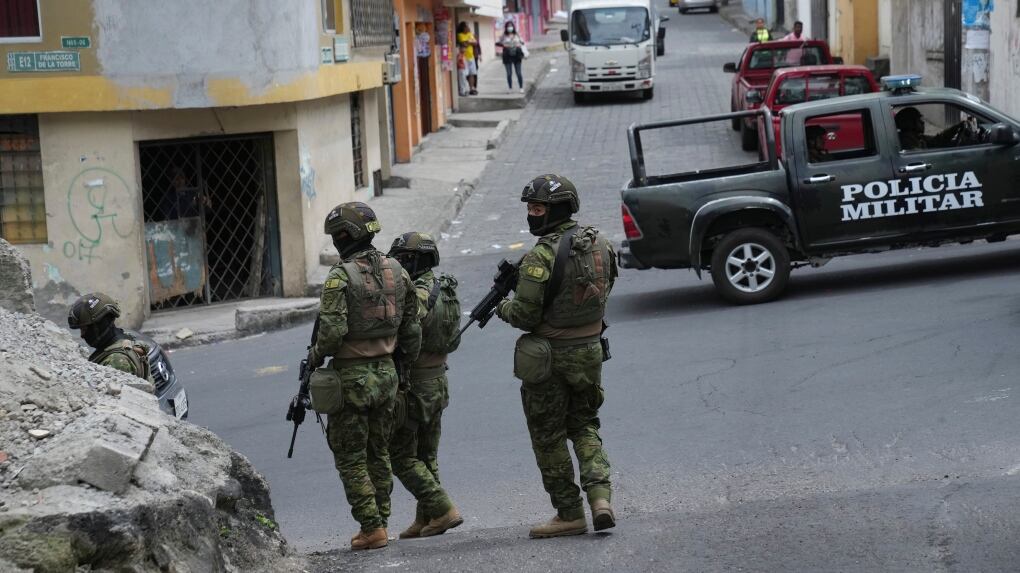
Earlier this year Human Rights Watch reported an increase in human rights abuses in Ecuador, where right-wing president Daniel Noboa has overseen increased cooperation with the US on counter-narcotics. The findings reveal that troops have been detaining and torturing peasants in operations that HRW stated were ‘too opaque' and ‘too dangerous' for Ecuadorians. Other human rights groups note that since the Noboa government increased cooperation with the US, over 500 people have been disappeared. The fear is that, under the De la Espriella government, Colombia will also witness a sharp increase in abuses.
Colombian communities have long opposed purely military solutions to the existence of armed groups. Many welcomed peace talks under the Petro government, while highlighting that more needed to be done to protect social activists and deal with root causes of conflict. Many now fear that they will be targeted in a renewed emphasis on conflict.