Key events
Aston Martin extends losses but hails improved sales

Jasper Jolly
Aston Martin's losses grew in the first half of the year even as the British sportscar maker claimed that its turnaround efforts had improved sales.
The company reported a loss before tax of £89m in the second quarter of 2026, up from £61m in the same period a year earlier, in a statement to the stock market on Wednesday. That left the loss for the first six months at £154m.
However, the FTSE 250 company's share price rose by 3.5% after it said its performance had “materially improved†during the half year, with revenues up 38% to £629m.
Aston Martin, famed as the maker of the sportscars featured in James Bond spy films, has endured years of turmoil since it listed on the stock exchange in 2018. Fashion billionaire Lawrence Stroll rescued the company in early 2020, only for the coronavirus pandemic and subsequent supply chain disruption to rock global industry. The company has gone through years of new fundraisings and job cuts.
The company has since struggled to cut its large debt burden as Donald Trump's tariffs on car imports last year hit sales in its most important market. Its net debt rose to £1.5bn at the end of June after a new £550m package agreed last week.
Stroll appointed former Bentley boss Adrian Hallmark as chief executive in 2024 to oversee the latest turnaround effort. He said:
double quotation mark “H1 2026 demonstrates that we are on track to deliver material financial improvement this year compared with 2025. Q2 2026 total wholesale volumes increased by 43% compared to the prior year period as our focus on smoothing production cadence materialised, with core retail volumes continuing to run ahead of supply.â€
Over in the FTSE 250, Greggs is the best performer as its shares jump 10% this morning.
The high street bakery chain said iced drinks and a wider range of salads helped boost sales during this summer's heatwave, with total revenue topping £1.1bn for the 26 weeks to June 27, a rise of 7.2% compared with the same period a year ago.
That was however largely driven by the opening of 34 net new shops – like-for-like sales were 2.1% higher at company-managed shops, and 1.3% higher at franchised shops.
Duncan Ferris, an analyst at the broker Freetrade, argues that the like-for-like growth rate looked “fairly pedestrian†and showed a loss of momentum against its last update in May.
double quotation mark Instead, standout profit growth was aided by lower-than-expected inflation, structural savings, new shops and the expansion of Greggs' grocery business.Greggs has also kept guidance unchanged as it signalled that H2 could be a little less tasty. Cost headwinds mean profits are likely to dip without a change in consumer backdrop.
Greggs has slightly dialled back its plans for new store openings, too, telling investors to expect 100-110 net new shop openings in 2026 rather than the prior target of 120. It also maintained its view that it can viably operate at least 3,500 UK shops as it continued investment in new supply chain sites in Derby and Kettering.
…Greggs says performance of new stores was particularly strong, and that the majority of new openings were in locations more than a mile away from other branches. This may alleviate fears the bakery chain's expansion is merely leavings its own stores competing with each other.
UK businesses divided on Andy Burnham as PM, poll shows
UK businesses are still undecided on Andy Burnham as the new prime minister, a new poll by Ipsos has found.
Its survey of more than 1,000 senior business leaders, conducted between 1 July and 16 July, found that 31% agreed that Burnham “has what it takes to be a good prime minister†– 31% disagreed, and 31% neither agreed nor disagreed.
However, Labour polled ahead of other parties among businesses for having the best policies on managing the economy (26%), for Britain's businesses (27%), for people in work (29%), and for boosting international trade and investment (23%)
Oliver Fenton, an associate director at Ipsos, said:
double quotation mark Our latest business polling results highlight some positive signs for the new Labour government: confidence has improved since the spring, with Labour increasing its lead as the party with the best policies for Britain's businesses.There is also evidence to suggest that Burnham's regional agenda appeals to UK businesses, but one in three remain unsure whether that he has what it takes to be a good Prime Minister.
Support with energy costs and business taxes will go a significant way to convincing the wider business community that Burnham is on their side.
Ipsos found there has been an increase since February in the proportion of businesses who say that Labour has the best policies on the economy, business, work, and international trade since February. The Conservatives have experienced a decline across the same period, with Reform now second place across these policy areas.
Its results were:
-
On managing the economy: Labour 26%, Reform UK 21%, Conservatives 14%
-
For Britain's businesses: Labour 27%, Reform UK 21%, Conservatives 16%
-
For people in work: Labour 29%, Reform UK 21%, Conservatives 14%
-
For boosting international trade and investment: Labour 23%, Reform UK 20%, Conservatives 17%
Investors in chip stocks around the world are growing increasingly nervous about AI spending – and the South Korean SK Hynix, which specialises in manufacturing dynamic random-access memory chips and flash memory chips, is caught in the eye of the storm.
Matt Britzman, an analyst at the broker Hargreaves Lansdown, says:
double quotation mark SK Hynix could hardly have picked a tougher moment for its Nasdaq debut. Just weeks after entering the US market, investors are grappling with virtually every AI concern imaginable, from questions about hyperscale spending and model efficiency to worries that the sector's extraordinary growth is beginning to slow.Against that backdrop, a set of results that largely reinforced the long-term investment case, but fell marginally short of elevated expectations, was enough to trigger a sharp reaction.
…The sell-off across memory stocks looks more like a sentiment reset than a change in the earnings story. Investors are moving from a phase in which every quarter delivered huge upgrades to forecasts to one in which growth remains exceptional but increasingly needs to be measured against already lofty expectations. Forecasting this market remains incredibly difficult because the AI landscape is evolving so quickly, so some earnings-day volatility is inevitable.
The key question now isn't whether companies can keep delivering endless upside surprises, but whether this earnings cycle proves more durable than the market expects.
In our view, the bull case remains intact, but the low-hanging fruit of constant upgrades is behind us. The opportunity increasingly centres on a structurally improved margin cycle, with higher peaks, shallower troughs and the potential for significant shareholder returns as monster earnings translate to enormous cash flows.
European stock markets open higher
It is an upbeat start to the day for European stock markets – the Stoxx Europe 600, which tracks the biggest companies on the continent, is up 0.3%.
The UK's blue chip FTSE 100 index is up 0.6%, led by a 1.9% rise in its basic materials sector after some strong earning reports this morning. The German Dax and the French Cac 40 are both up by about 0.3%.
That being said, Europe is not completely immune to the chip stock sell-off seen in Asia and in the US – its worst performers today include chip companies Infineon Technologies and ASML, both down by about 1%.
And in the mining sector: Rio Tinto has reported a jump in profit in its second quarter, thanks to rising commodity prices and a slimmer business after deep cost-cutting and divestments.
Profit rose 43% to $6.9bn (£5.2bn) on the back of stronger commodity prices, particularly in copper which has been boosted by AI-driven demand for building materials for data centres. Its shares are up 2% this morning.
Glencore has also published a production update today, telling investors that copper is up 15% on higher grades at key operations, and its marketing unit is expected to report a adjusted earnings of around $3.3 billion at its half-year point. Its shares are up 4%.
Reckitt Benckiser beats expectations, predicts lower impact of Iran war on costs
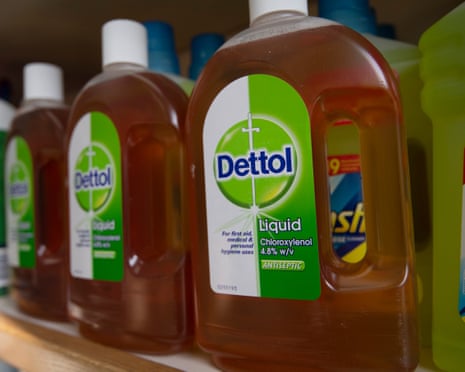
On the corporate front this morning, the consumer goods group Reckitt Benckiser reported stronger sales than expected in its second quarter, boosted by strong demand for its cleaning and hygiene products.
Like-for-like sales at Reckitt's core brands, such as Dettol disinfectants and Durex condoms, rose by 4.2%, compared with expectations of 3.7%,
However, the FTSE 100 company's operating profit dropped 14.3% at £1.47bn in the six months ended in June.
Reckitt, which warned in April over a possible hit of up to £150m due to rising oil prices, also said this morning that it now predicts a lower impact as prices have eased back (relatively speaking).
It said:
double quotation mark While still volatile, oil prices have moderated since then and we currently expect a reduced input cost impact in 2026. We continue to view this as a manageable headwind and are taking actions to mitigate the impact
The attempted attack by Iran on US forces have thrown “cold water on the idea of a swift de-escalation in the Persian Gulfâ€, analysts at the broker ING have warned.
Warren Patterson and Ewa Manthey wrote in a note this morning:
double quotation mark With Saudi oil infrastructure increasingly targeted, the risk of more prolonged supply disruptions grows. There are reports that the 400k b/d Jazan refinery in Saudi Arabia has shut following Houthi attacks over the weekend. If confirmed, this will only add to tightness concerns in the refined products market already dealing with disruptions from the Persian Gulf, as well as Russia.…Meanwhile, tanker traffic through the strait of Hormuz remains essentially halted. While Iran and Oman have held talks on managing vessel transits through the strait, Iran has rejected Oman's proposal for a 50-50 shipping plan. It would facilitate an inbound route on one country's side and the outbound route on the other's. Instead, Iran wants oversight of both inbound and outbound vessels.
They added that the European gas market looks “increasingly vulnerable as we head into winterâ€.
double quotation mark QatarEnergy has reportedly extended its force majeure for buyers in Asia and Europe to as far as the end of September. There have also been reports of QatarEnergy looking to subcharter an LNG carrier until the end of October, given the ongoing disruptions to Qatari LNG exports.EU LNG imports are on track to fall a little more than 25% YoY in July, which is making the job of refilling storage more difficult. EU gas storage is 56% full at the moment, below the 10-year seasonal average of 72%. Heatwaves across Europe will only add to the difficulty in filling up storage ahead of the winter. Tighter-than-usual storage at the start of the heating season suggests that gas prices will remain elevated through the winter, with the risk of spikes higher.
Introduction: Oil jumps after Iran attempts ‘surprise attack’
Good morning, and welcome to our rolling coverage of business, the financial markets and the world economy.
Oil is rising again this morning after the US military said it knocked down an Iranian missile barrage and worked with Saudi Arabia forces to strike sites in Iraq that Tehran-backed militias have used to launch attacks in recent days.
In what Washington cast â as “an attempted surprise â attack†by Tehran, Iran had launched multiple ballistic missiles at US forces in the Middle East, ending a brief pause in fighting. Iran's target was a US base in Jordan, according to Axios.
The news has sent Brent crude, the international benchmark for oil prices, up 3.8% to $87.26 a barrel this morning.
Meanwhile in Asia, the rout in chip stocks has continued overnight – the South Korean stock market, which relies heavily on the chip companies SK Hynix and Samsung Electronics, has lost a further 8.3% today. SK Hynix shares slumped 9% even after reporting a six-fold surge in its quarterly profit, while shares in Samsung (which is due to report its earnings tomorrow) dropped 6%.
It follows another tough day of trading for US chip stocks, which dragged the Nasdaq down 1% yesterday. Sandisk fell 14%, while Western Digital and Micron fell 6.9% and 8.9% respectively. Advanced Micro Devices fell 8.1%.
Higher oil prices and the continued sell-off in chip stocks creates an uncertain environment ahead of the Federal Reserve's interest decision later today, Jim Reid from Deutsche Bank notes.
double quotation mark All that leaves a volatile backdrop ahead of today's FOMC decision, which is the most finely poised in years in terms of market pricing. With a 32% chance of a rate hike today priced as of last night, this is the most uncertain that the market has been on whether the Fed will change rates going into a meeting since December 2018, when the eventual 25bps rate hike was about 65% priced the day before.We've seen considerable volatility in the July hike pricing over the past couple of weeks, falling as low as 10% in mid-July following the soft June US CPI print but rising to as high as 38% on Monday. So with chair Warsh shying away from policy guidance, we've seen one regime shift compared to the past few years when markets received a steer from officials' commentary or via the financial press.
In terms of today's decision, our US economists expect the Fed to leave rates unchanged but see the risks of a hike as significant with the renewed escalation in the Middle East complicating the inflation outlook. If the Fed holds rates steady, they expect at least a couple of dissents in favour of a hike.
The agenda
-
7am BST: Aberdeen half-year (HY) results, Greggs HY, Airbus HY, Aston Martin Lagonda HY, Campari HY, Danone HY, Deutsche Bank Q2, Hermès HY, L'Oréal HY, Porsche HY, Procter & Gamble Q4/FY, Reckitt Benckiser HY, Rio Tinto HY, Standard Chartered Q2/HY, UBS Q2
-
9.30am BST: ONS workless households data
-
7pm BST: US Federal Reserve decision on interest rates
-
9pm BST: Microsoft Q4/FY
-
9.30pm BST: Meta Q2