Key events
Please turn on JavaScript to use this feature
Wall Street futures climb, chip stocks rebound ahead of Nvidia results
Wall Street futures have climbed, with chip stocks rebounding ahead of results from Nvidia, the world's most valuable company at the centre of the global AI boom.
Brent crude has fallen more than 2% to below $110 a barrel on hopes for the latest negotiations between the US and Iran, while investors remain cautious.
“All eyes on Nvidia,†said Ipek Ozkardeskaya, senior analyst at Swissquote.
double quotation mark Expectations are, of course, sky high. The company is expected to report around $79bn in revenue – roughly 15% higher than last quarter and nearly 80% above the same quarter last year.Margins are also expected to remain exceptionally strong, around 75%, confirming that Nvidia still enjoys enormous pricing power despite the massive Blackwell ramp and rising competition.
But Nvidia's earnings no longer carry the same existential weight they did at the very beginning of the AI craze. Back then, markets were obsessed with training AI models. GPUs became essential because they are incredibly efficient at handling thousands of calculations simultaneously — exactly what AI training requires. Imagine trying to get from point A to B by simultaneously testing millions of possible paths through C, D, F, X, Y or Z. GPUs are built for that kind of parallel processing power. CPUs, on the other hand, are designed for sequential computations.

double quotation mark As such, once the models are trained with GPUs, the focus increasingly shifts toward inference — running the trained model — where TPUs and CPUs can also play a major role, while memory chips are needed to store and process information efficiently.That's why GPUs say more about the raw power and evolution of AI models, while CPUs and memory chips increasingly say more about real-world AI adoption and scaling. This growing importance of CPUs and memory infrastructure is also why traditional CPU and memory chip makers have taken over part of the AI narrative — and why Nvidia is developing its own CPU technologies within its next-generation Vera Rubin platform.
Investors will therefore closely watch whether the company can maintain strong margins while scaling production and preparing the transition toward the next-generation Vera Rubin platform — designed for the next phase of AI focused on massive-scale inference, reasoning and AI “factories.â€
And the competition for running models efficiently at lower cost is fierce. Besides traditional chipmakers like AMD and Intel, Nvidia's biggest clients — Big Tech companies like Amazon, Google and Meta — are all working on their own in-house chips to build the most energy- and cost-efficient alternatives to Nvidia's ultra-powerful premium products.
UK government borrowing costs fall, with short-dated yields down 11 basis points
UK government borrowing costs continue to ease, with yields on short-dated gilts – as UK government bonds are known- falling by 11 basis points.
The yield, or interest rate, on three-and four-year bonds dropped 11bps to 4.46% and 4.48% respectively, while the yield on five-year bonds fell 10bps to 4.55%.
The 10-year yield, the UK benchmark, dropped 9bps to 5% and the 30-year yield hit 5.7%, down 8bps.
Money markets are now pricing in just over 50 basis points of interest rate increases from the Bank of England (effectively two quarter-point hikes) by December, compared with 60bps on Tuesday.
In the last two weeks, bond yields rose sharply as traders priced in Bank of England rate hikes and braced for a the potential departure of prime minister Keir Starmer, with the leftwing mayor of Greater Manchester Andy Burnham seen as the main challenger – which could lead to higher spending. Burnham has said, though, that he would stick to the fiscal rules.
UK house prices flat while rents rise at faster rate
UK house prices were flat in March while private rents rose at a slightly faster rate in April, according to official figures.
The average price of a home was unchanged at £268,000 in March, compared with an annual increase of 1.7% in February, according to the Office for National Statistics.
This was because prices fell by 0.4% between February and March, compared with a large monthly increase of 1.2% a year earlier, ahead of the expiry of a stamp duty tax break that meant people were rushing to complete their house purchases.
House prices fell 0.6% year on year to £290,000 in England, and increased 2.9% to £213,000 in Wales and were up 1.6% £187,000 in Scotland.
Private rents rose by 3.5%, to an average of £1,381 in April, up from 3.4%.
-
Average rents increased to £1,438 (3.5%) in England, £834 (4.9%) in Wales, and £1,019 (2.0%) in Scotland, in the 12 months to April.
-
In Northern Ireland, average rents increased to £877 (4.0%), in the 12 months to February.
-
In England, private rents annual inflation was highest in the North East (6.5%), and lowest in London (2.0%), in the 12 months to April.
Amy Reynolds, head of sales at Richmond estate agency Antony Roberts, said:
double quotation mark Rents are holding firm, and we don't see that changing any time soon. The reason is simple: stock levels remain extremely low while the number of applicants for each available property stays high. Until that supply and demand imbalance shifts meaningfully, landlords have little pressure to move on price.
Mark Harris, chief executive of mortgage broker SPF Private Clients, said:
double quotation mark Inflation softening to 2.8% as a result of lower utility bills is welcome but the ongoing conflict in the Middle East means the inflationary threat has not rescinded.While further interest rate cuts seem unlikely for now, perhaps the need to increase them has reduced, particularly in light of the weaker economy and rising unemployment. This will come as a relief for borrowers already grappling with higher living costs.
As lenders continue to tweak their mortgage rates downwards on the back of lower swap rates, this will assist those buyers who are pressing on with their plans regardless of wider geopolitical concerns.
Spending watchdog warns £38bn cost of Sizewell C nuclear plant is ‘risky'
The cost of the government's £38bn nuclear plant in Suffolk is subject to “significant uncertainty†and may outweigh the benefits for UK households until at least 2064, according to the government's spending watchdog.
The National Audit Office (NAO) has warned that although the potential benefits of the Sizewell C nuclear plant are considerable, they remain uncertain. The risks, however, are “immediate, substantial and borne by the publicâ€.
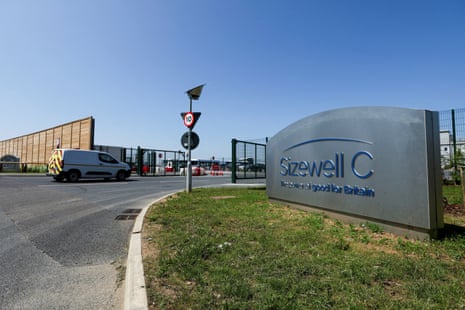
The government claims the nuclear reactor, expected to generate the equivalent of enough low-carbon electricity to power 6m homes when it begins operations in the late 2030s, could save £2bn a year from the electricity system compared with using other low-carbon technologies.
However, for households the overall savings could be outstripped by the cost of supporting its construction until almost halfway through its 60-year operational life. The project could take even longer to “break even†if there are cost overruns or delays, the NAO warned.
‘A world-class producer': English wines toast record gold medal haul
English wines won the highest percentage of gold medals per entry in a global competition, with experts describing the improvement as remarkable.
At the International Wine Challenge, English wines are winning more gold medals than ever. In 2025, the country won 10, but this year it was awarded 25.
Sam Caporn, a master of wine, said:
double quotation mark I think there are a number of reasons why England did so well this year. One of them is that for many of the top producers, the vines are getting older which leads to greater quality; Nyetimber's first vintage for example was in 1992 so actually over 30 years ago now.

She added that the wines were being matured for longer:
double quotation mark There is also the possibility of increased bottle age – Wiston for example, won a trophy for their Cuvee 2009 Magnum and reserve wines are also taking on more complexity with every year that goes by.
As the climate changes, vineyards, particularly in the south of England, can expect more sunny days and warmer weather. However, extreme weather including drought can often have the adverse effect in threatening food crops.
Scrap stamp duty and council tax to fix London housing crisis, thinktank says
Stamp duty should be scrapped and replaced with a new property wealth tax to fix London's housing crisis, a leading thinktank has proposed.
A report on the capital's property market suggests an annual tax to replace the levy paid when buying a property and council tax would encourage downsizing and raise funds for social housing. It would also help renters to save a house deposit.
The research, by the Centre for London, highlighted disparities in space between the poorest and wealthiest homeowners. It found average floor space for each person rose by almost 30% between 2004 and 2023, but this additional space went disproportionately to higher-income owner-occupiers.
Households in the top 20% of incomes have seen a 27% rise in space owned, whereas the bottom 40% had a rise of 6%. This means that, despite London having more housing available to use for each person than 20 years ago, housing inequality has widened.
Mortgage costs have dipped today, according to Moneyfacts.
The average two-year fixed residential mortgage rate is 5.73%, down from 5.74% on Tuesday.
The average 5-year fix is 5.66%, down from 5.67%.
There are currently 7,065 residential mortgage products available, unchanged from Tuesday.
UK government bond yields fall, European shares edge lower
UK government bond yields have fallen after the inflation figures.
The yield, or interest rate, on the benchmark 10-year gilt is down 4 basis points to 5.07% while the 30-year yield dropped 4bps to 5.7%.
These are bigger moves than for German, Italian and France government bonds. Germany's 10-year yield, the benchmark for the eurozone, dipped 1 basis point to 3.17%, after rising to 3.2% on Tuesday, the highest in 15 years.
Investors still worry that war-driven inflation will force central banks to raise interest rates. Markets are pricing in two rate hikes from the Bank of England this year (with no change expected at the June meeting), and at least two rate rises from the European Central Bank.
European shares have edged lower, as investors remain cautious and keep a close watch on negotiations between the US and Iran. Donald Trump said on Tuesday that the war would be over “very quickly,†while vice president JD Vance talked up progress in talks with Tehran.
The pan-European Stoxx 60 index dipped 0.1%. Germany's Dax and France's CAC were slightly lower while the UK's FTSE 100 index lost 42 points, or 0.4%, to 10,288.
Brent crude, the global oil benchmark, slipped 1% to $110.13 a barrel.
The European Union struck a provisional agreement to remove import duties on US goods, as part of a trade deal struck with Washington last July – before Trump's 4 July deadline when he has threatened to hike tariffs (again) if the deal is not implemented.
Charlotte O'Leary, associate economist at the National Institute of Economic and Social Research, a think tank, thinks there could be a “precautionary†rate rise later this summer.
double quotation mark Today's slowdown in April inflation to 2.8% may look promising, but this is likely as low as it gets for some time. The decline relative to March largely reflects base year effects dropping out rather, than any easing of inflationary pressure. We anticipate that inflation will trend higher through much of 2026, heading towards 4% by the end of the year.With the ongoing Middle East conflict keeping global oil prices elevated, the effects are becoming increasingly visible in UK petrol prices and are beginning to feed through to food prices and household energy bills. The pressure is expected to intensify further in July, with forecasts of a sharp rise in the Ofgem price cap pushing energy costs higher still.
Meanwhile, UK gilt yields are now at multi-year highs which reflect market expectations that elevated inflation will prove persistent, reinforcing the view that the monetary policy committee may deliver a precautionary rate rise later this summer.
‘Benign UK inflation data reduces chance of June rate hike’ – ING
James Smith, developed markets economist at ING, said:
double quotation mark Yes, UK inflation is set to rise again later this year, having dipped below 3% in April. But the data should reassure the Bank of England that last year's food price spike hasn't triggered a wave of second-round effects across the inflation basket. Like yesterday's jobs numbers, the data questions the need for aggressive rate hikes.We continue to think markets are overestimating the Bank of England's willingness to tighten policy, at current levels of energy prices. Investors are pricing between two and three rate rises by next spring.
The fear of the hawks last year was that the rise in food inflation – a very visible trend to consumers – together with big payroll tax and minimum wage hikes, would manifest in a more persistent bout of inflation. So far, there's not much evidence that's happening.
That should provide some reassurance that the impending energy shock is unlikely to spark a wave of “second round effectsâ€, or at least not nearly as pronounced as four years ago.
Currently, we think the Bank is somewhere between zero and one hike(s), with officials arguing that the mere fact they aren't cutting rates (as was previously likely this year) amounts to de facto tightening.
That said, after April's BoE meeting, we narrowly shifted our call for a prolonged hold to a one-and-done rate hike in June. That is now in serious doubt, though clearly a lot can still happen in the Middle East between now and then. And we suspect if there's no big improvement in energy flows by mid-June, officials might still be tempted to raise rates. We're open-minded; it's just as conceivable that the Bank could play for more time.
Here's some reaction to the slowdown in inflation in April to 2.8%.
Anna Leach, chief economist at the Institute of Directors, said:
double quotation mark Sadly, this improvement is set to be short lived as the impact from the Middle East conflict continues to build, with motor fuel prices rising at the fastest pace since the Ukraine war.Inflation is set to remain elevated, as higher energy and commodity prices spread across supply chains and household energy bills rise again. As attention intensifies on the cost of living, it is important that policy action is targeted in the right place. With business margins under persistent pressure, price rises reflect the reality of rising costs for business. Addressing the drivers of those costs — particularly regulation, taxation and energy — will be key to limiting further price rises.
Luke Bartholomew, deputy chief economist at Aberdeen said:
double quotation mark Inflation coming in softer than expected today will further take the pressure off the Bank of England to hike rates over the next few meetings. But we are most certainly not out of the woods in terms of the impact of the Iran conflict on inflation. Ironically, this is probably the month inflation would have been back at the 2% target were it not for the Iran war.Instead, headline inflation will pick up again in coming months, especially after the next energy price cap re-set in July. So as inflation climbs back towards 3.5% later this year, the question of interest rate hikes will remain pressing. But on balance, we think the weakness of the economy, and the labour market in particular, will stay the Bank's hand, with rates remaining on hold even as inflation pressures remain elevated.
The TUC said rate cuts should be “on the agenda again†with lower than expected inflation. Its general secretary Paul Nowak said:
double quotation mark So far the Bank of England have rightly resisted calls for higher rates. But with a fragile jobs market, weak pay growth and lower than expected inflation, rate cuts should now be on the agenda again.
Motor fuels prices rising at fastest pace since Ukraine war
Motor fuels inflation was the highest since September 2022, the ONS said. The average price of petrol rose by 16.6 pence a litre between March and April, compared with a fall of 3p a litre a year earlier. The average petrol price was 156.8p a litre, the highest since November 2022 when it was 163.6p a litre because of the war in Ukraine.
Diesel prices jumped by 31.3p a litre in April against a fall of 3.1p a year earlier. The average price was 190p a litre, the highest since July 2022 when it was 17.9p a litre.
Liliana Danila, chief economist at the Food and Drink Federation (FDF), warned that lower food inflation won't last.
double quotation mark Food inflation may have declined in April, but underlying pressures are building across the supply chain. Disruptions in the Middle East are pushing up production costs. The increases faced by manufacturers typically take between seven and 12 months to feed through into retail prices. However, higher energy costs affecting fresh produce – where there is little or no manufacturing involved – are likely to be reflected more quickly. Meanwhile a tidal wave of policy change, from the upcoming EU trade agreement to proposed changes to health regulation is going to add further pressure on industry.
We need to learn from the inflationary spike we saw just last year, when a stacking of regulatory costs ended up in higher prices for shoppers. By acting now to delay regulatory burdens, government can give food and drink manufacturers the headroom they need to deal with the impacts of the war in Iran, and minimise price rises for shoppers.
Prices fell in 11 food categories in April, with the largest drops for olive oil (-9.3%), flours (-6.1%), and pizza (-4.4%).
Prices rose the fastest for beef and veal (13.2%), fish (11.6%) and preserved fruit (10.7%).
Fitzner at the ONS said smaller rises in water and sewage bills and vehicle excises duty than last year also helped pull the inflation rate down.
Food prices, particularly for chocolate and meat products, and the price of package holidays drove inflation down further (the latter because of the different timing of Easter compared with last year).
double quotation mark These were only partially offset by a further increase in petrol and diesel prices, and an uptick in the cost of clothing and footwear.The annual cost of both raw materials and goods leaving factories continued to rise, driven again by higher oil and petrol prices.
The cost of raw materials rose by 7.7% in the year to April, up from a revised rise of 5.3% in March. Meanwhile, factory gate prices rose by 4%, up from a revised rise of 3% in March. This will feed through to consumer prices in the months ahead.
There was a sharp drop in the price of computer game downloads, down 18.1% in April this year, compared with a rise of 21.1% a year earlier.
Introduction: UK inflation eases to 2.8% led by lower electricity and gas bills
Good morning, and welcome to our rolling coverage of business, the financial markets and the world economy.
It's inflation day! (and Nvidia day)
UK inflation slowed more than expected last month, led by lower electricity and gas prices.
The annual inflation rate fell to 2.8% in April from 3.3% the month before, according to the Office for National Statistics. Economists had expected a reading of 3%. The decline was largely because of big increases in utility bills and other regulated prices in April last year, whereas the energy price cap was lower this year.
Core inflation, stripping out volatile food and energy costs, fell to 2.5% from 3.1%.
Food inflation also slowed, to 3% from 3.7%, led by meat, sugar and chocolate, oil, coffee and tea, and soft drinks.
Grant Fitzner, chief economist at the statistics office, said:
double quotation mark There was a notable fall in annual inflation led by lower electricity and gas prices. This was due to the government's energy bill support package reducing variable and fixed tariffs, along with lower global wholesale energy prices before the conflict in the Middle East, which fed through to the reduction in the Ofgem cap.
However, the energy price shock caused by the Iran war will drive inflation sharply higher in coming months, with the Bank of England forecasting that it could hit 6.2% early next year under its worst scenario.
The UK chancellor, Rachel Reeves, said:
double quotation mark The war in Iran is not our war but one we will need to respond to, and the decisions I took in the budget last year have kept inflation down as we deal with global instability. We have the right economic plan, and to change course now would risk our economic stability and leave working people worse off.We have already taken £117 off energy bills, frozen rail fares, and lifted the two-child limit, and over today and tomorrow I'll set out the next phase of how we will support UK households.
Reeves is due to announce more measures to reduce the cost of living on Thursday, including a cancellation of a fuel duty increase which is due to take effect in September.
Today, she is expected to unveil sweeping reforms, giving parliament the authority to approve critical energy and infrastructure projects, and better protect them from judicial reviews.
A Treasury spokesperson said:
double quotation mark For too long, vital infrastructure delivery has been delayed by judicial reviews of projects.She [Reeves] is clear that parliament must take back control to get Britain building the power plants, wind farms and grid connections that will bring bills down, strengthen our energy security, and deliver growth in every part of our country.
Asian stocks fell, extending a losing streak, as inflation fears hammered bonds. Investors are awaiting quarterly results from Nvidia, the world's most valuable company, later today.
Japan's Nikkei dropped 1.5%, while South Korea's Kospi lost 1.6%. Hong Kong's Hang Seng index slipped 0.67% and China's CSI300 was flat.
The Agenda
-
9.30am BST: UK House prices and rents
-
10am BST: Eurozone inflation (final)
-
7pm BST: US Federal Reserve minutes of last meeting