Travelodge boss resigns following criticism of handling of assaults
The boss of Travelodge has stepped down as the budget hotel chain scrambles to improve safety after two incidents where guests were assaulted at its hotels.
The firm said Joanna Boydell left on Monday after 13 years with the company and will be replaced by chief financial officer Ray Reidy on an interim basis while they hunt for a permanent successor.
Boydell was heavily criticised over her handling of an incident in 2022 and concerns over safety across the chain, prompting former prime minister Keir Starmer to step in and urge her to “seriously engage†with the government on the issue after she cancelled a meeting with MPs.

The hotel chain has come under fire for giving men the keys to women's rooms without asking the woman first.
A guest at a Travelodge in Maidenhead, Berkshire, was sexually assaulted by a man who had been given a key card to her room. Kyran Smith was jailed in February for seven-and-a-half years following the attack in December 2022. The victim was later offered what she described as an “insulting†£30 refund after the assault.
This month, it emerged that there was another incident at a hotel in London.
Travelodge staff gave a room key to the domestic abuser of a woman, who then physically attacked her. The woman, who is remaining anonymous, told the BBC she was staying in a Travelodge in London to escape the man, but he followed her and was given a key by the reception staff.
They pointed him to her room, where she says he kicked in the door, assaulted her and tried to grab her phone. Travelodge has said such instances are “very rare†and customer safety is a priority.
Reidy said today:
double quotation mark We remain focused on the safety and wellbeing of our guests and will continue taking the actions necessary to strengthen the business.We will also continue to engage proactively and constructively with government and the wider hospitality industry on the issue of safety and security.
Stephen Shurrock, the Travelodge chairman, said:
double quotation mark This announcement does not change anything about our focus on safety and security. On behalf of the board, I would like to thank Jo for her dedication to Travelodge over the last 13 years.
Key events
Closing summary
Global stock markets are drifting lower, oil prices have risen and government bond yields are climbing again despite the US Treasury's intervention to calm the bond market on Wednesday.
Investor worries over inflation from rising oil prices, caused by the Iran war, and government debt battered bond markets (and to a lesser extent, stock markets) this week. Brent crude climbed 2.3% to $93.72 a barrel on Thursday.
The yield on the 30-year US Treasury bond rose to the highest since 2007 at the start of the week but pulled back after the Treasury department announced it would at least double debt purchases in a surprise move on Wednesday.
On Thursday, the yield started rising again, by 5 basis points to 5.244%, while the benchmark 10-year bond yield alsi rose 5bs to 4.69%.
This came after the Treasury department said that total US debt topped $40 trillion for the first time. And the minutes of the last US Federal Reserve meeting showed that policymakers are concerned about rising inflation, with several officials ready to hike interest rates.
The number of Americans filing for jobless benefits fell 6,000 to 206,000 in the week to 15 August, according to the latest Labour Department figures.
The dollar fell to three-month lows against a basket of major currencies, as it became less attractive as an asset, with the pound hitting a six-month high against the greenback.
Gold rose more than 4% on Wednesday and was little changed on Thursday.
US stock indices fell with Walmart tumbling 8.7% after its quarterly results missed Wall Street expectations. Biotech company Moderna dropped nearly 21%, a day after the stock soared 177% after its mRNA skin cancer therapy achieved positive results in a late-stage clinical trial.
Over here, the FTSE 100 index slipped 17 points or 0.16% to 10,726.
Thank you for reading. We'll be back tomorrow. Take care! – JK
Danone’s takeover of Idris Elba-backed protein shake maker Huel cleared by regulator
Danone's takeover of the British meal supplement maker Huel, which counts the actor Idris Elba among its investors, has been cleared by the UK's competition watchdog.
The Competition and Markets Authority (CMA) said it has approved the €1bn (£864m) deal after carrying out a review.
The two companies agreed the deal in March, when Huel's chief executive, James McMaster, said it marked the “next step†for the business (the name is a contraction of “human fuelâ€).
The French food and drink firm Danone has said the acquisition will help it grow in the nutrition sector.
The British company, which was set up in 2015 and makes food powders, snack bars and meals from a blend of plant-based ingredients and fortified with vitamins, started out selling its powders online. It is now available in more than 25,000 stores around the world.
The Huel co-founder Julian Hearn will make about £400m from the deal, according to filings at Companies House.
He started the business in 2015 with the nutrition specialist James Collier, and remains one of the biggest shareholders in the business. Elba and his wife, Sabrina, have also invested in Huel. The size of their stakes in the business have not been disclosed but the deal will probably give them a significant payout.
The TV presenter Jonathan Ross was also previously a backer of the business.
Crypto bank part-owned by Trump family offers depositors way to ‘gain favor' with White House, experts say
Two fundamentals underpin the business model of a new crypto bank partly owned by the Trump family, cryptocurrency experts tell the Guardian.
World Liberty Trust Company received conditional approval this month from the US office of the comptroller of the currency (OCC) to start a bank. An entity affiliated with Donald Trump and his family members owns about 38% of the company. The agency is led by a political appointee of the US president.
The first distinctive feature of this bank – and stablecoin operations like it – is that there is almost no risk that it can lose money. The second is the sole logical motivation for depositors to put their money into it, according to five experts: the financial connection to the president and his family.
World Liberty is not really a bank, in the conventional sense: it won't be lending money to businesses or individuals, issuing mortgage or credit cards, or getting federal insurance on deposits.
What it will be able to do is directly issue the Trumps' dollar-pegged stablecoin, USD1. Stablecoins, unlike other cryptocurrencies, are pegged at fixed values such as $1, and used almost exclusively to buy and sell riskier crypto assets, like bitcoin.
Because of the way stablecoins are regulated – under a law signed by Trump in 2025 – World Liberty's bank will not be allowed to pay its depositors, the companies and individuals who buy its stablecoins, any interest. The bank, however, can earn interest for itself by putting the cash it collects from those depositors into high-quality liquid investments – US government-backed treasury bonds.
Why would depositors be interested in buying the Trump family's little-used stablecoins? Experts point to their ties to the White House.
“The only reason really to do it is because they want to appease Trump, because they want to gain favor with Trump or in some way help Trump for whatever reason,†said James Angel, an associate professor at Georgetown University's McDonough School of Business.
Global shares drift lower
The opening bell has rung on Wall Street, and stocks are down.
The Dow Jones lost 385 points, or 0.7%, to 53,078 while the S&P 500 fell nearly 26 points to 7,682, down 0.3%, and the tech-heavy Nasdaq dropped 129 points, or 0.5%, to 26,201.
Walmart shares tumbled 8.2% after the retailer missed analysts' forecasts, as shoppers reined in spending faced with rising fuel prices.
Over here, the FTSE 100 index is trading nearly 22 points lower at 10,721, a 0.2% drop. JD Sports is still the biggest loser, down 14%, after the sportswear chain cut its profit forecasts as cost of living pressures, fuelled by the US war on Iran, hit sales of trainers.
JD, which sells brands including Nike and Adidas, said widespread inflation had hit shoppers' wallets, resulting in a drop in sales across important markets such as the US, where it struggled to shift trainers and other footwear.
The German and French stock markets declined 0.5% while the Spanish exchange slipped 0.2% and the Italian borsa edged nearly 0.2% higher.
Boohoo fined €2.3m by French watchdog over deceptive discounts
The British online fashion seller Boohoo has been fined €2.3m (£2m) by France's consumer watchdog â for deceptive â practices ​such as offering fake discounts.
The Manchester-based firm, whose parent company renamed itself Debenhams Group last year, was found to have exaggerated the discounts it was offering, giving shoppers a false impression â of the savings they were making, ​according to the directorate-general for competition, ‌consumer affairs and ‌fraud control.
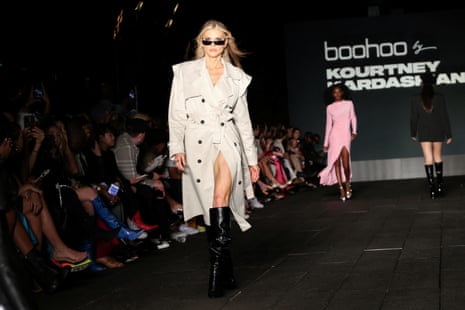
Of ‌the promotions examined by the watchdog, 40% were found not to be real price reductions, 7% were a lower reduction than advertised, and 48% were a price ‌increase.
Boohoo also used terms such as “leather†or “suede†to sell synthetic products, ​contravening French rules on product labelling, the regulator said.
Founder of China's Evergrande jailed for life after pleading guilty to fraud
The founder of Evergrande, one of China's largest property developers, has been sentenced to life in prison and had all of his personal property confiscated.
Hui Ka Yan, 67 and once named by Forbes as China's richest man, with a net worth of $42.5bn (£31.2bn) in 2017, pleaded guilty in April to eight charges.
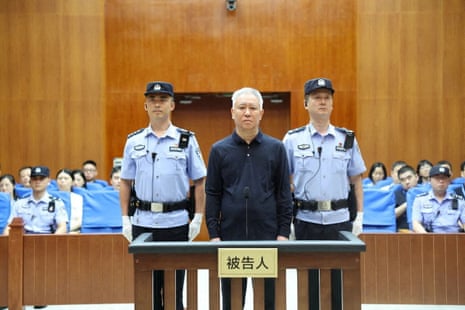
These included misuse of funds, fundraising fraud, illegally taking public deposits, illegally extending loans, fraudulently issuing securities and bribery.
The company Hui founded, Evergrande Group, was fined 8.8bn yuan (£950m), while its property arm was fined 7bn yuan, according to Chinese state media.
Hui's convictions relate to a debt crisis at Evergrande, which shook China at a time when the government had been trying to make the world's second-largest economy less reliant on the real estate sector.
Evergrande, which delisted from the Hong Kong stock exchange last year, has defaulted on most of its $300bn ​in liabilities.
Shenzhen intermediate people's court in southern China said in its ruling that between 2016 and 2021, Hui “violated state laws by employing methods such as sustained, large-scale financial fraud to inflate assets and conceal liabilitiesâ€.
It said Hui's actions had “severely disrupted the order of the socialist market economy†and “caused exceptionally heavy economic lossesâ€.
More than 50 individuals linked to Evergrande were also sentenced on Thursday, with prison terms ranging from 20 months to 18 years.
Evergrande's troubles began in 2020 when the Chinese government introduced regulations limiting the amount of debt that property companies could hold. This torpedoed the debt-fuelled real estate sector, which has traditionally accounted for between one-quarter and one-third of China's GDP.
Construction stalled on hundreds of property developments as companies scrambled for cash and struggled to pay suppliers amid weak demand during the Covid-19 pandemic. A study published this year estimated that the regulatory crackdown led to about $347bn in sunk costs across the Chinese economy.
Zuckerberg lied about concern for child safety, Meta whistleblower testifies at landmark trial
This is quite shocking.
Meta has taken a “don't ask, don't tell†strategy when it comes to the safety of children on its social media platforms, according to a whistleblower who testified during a landmark trial against the company on Tuesday and Wednesday.
Arturo Béjar, a former Meta safety engineer, told the jury that the company was aware of the harm its products caused children, which included its recommendations pushing content from sexual predators and violent and graphic images. He said he repeatedly raised the issue to various Facebook and Instagram executives but that they did little to resolve it.
In his testimony, Béjar said his job often included him briefing Meta's CEO, Mark Zuckerberg, on product issues. He estimated that he spoke to the CEO at least 100 times. One email Béjar sent to Zuckerberg in 2021 showed the engineer warning of constant reports of harmful content and damage to teenage wellbeing on Facebook and Instagram. Béjar said he emailed Zuckerberg after the CEO publicly said the company doesn't prioritise profit over safety.
“I felt that he created a false and misleading impression of Facebook's commitment to young people,†Béjar testified.
Béjar added that he sent those reports directly to Zuckerberg because, “in my experience, when Mark makes something a priority, mountains moveâ€.
“Did he ever respond to you?†the attorney representing the government asked.
“No,†Béjar replied. “I didn't hear back from him.â€
Oxfam ‘can't guarantee future' of charity shops as it also reviews warehouse business
In sad news, Oxfam is reviewing the operations of its three warehouses in Batley, Bicester and Milton Keynes and says it “cannot give guarantees†on the future of its high street shops in a “difficult economic climateâ€.
The charity said it had no plans to close warehouses or shops but insiders fear that Batley, which houses Oxfam's main textile recycling centre, will shut as part of a cost-cutting drive because the West Yorkshire site's lease is up for renewal.
All three warehouses together employ about 90 people.
A source said Oxfam was considering closing up to 100 of its 500-plus UK outlets as sales at some were no longer viable. “Donations have dropped off,†the insider said, adding that the charity's shops were also facing competition from online sellers of secondhand goods such as Vinted.
Bundesbank: Depleted German rivers hamper economic recovery
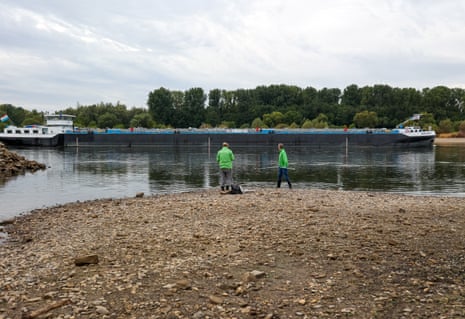
Depleted German rivers are disrupting the transport of â goods across Europe's largest economy, hampering an already sluggish economic recovery, the Bundesbank said â on Thursday.
Months of â dry ​weather have left the Rhine, Danube and other German rivers so shallow that â vessels cannot sail fully loaded, slowing shipping and driving up costs.
The â Bundesbank said this is likely to impact industrial production and exports, slowing down the recovery of ‌the German economy, ‌which will at best grow slightly this quarter. It said in its monthly report:
double quotation mark Only limited availability of transport routes on major rivers and sharply rising transport costs are likely to significantly hamper industrial output and the increase in exports. The low water levels are thus also placing a marked strain on overall economic activity in the third quarter.
It noted that low capacity utilisation in German industry and the recent rise in the European Central Bank's interest rates are also “curbing†companies' investment.
The German economy grew by 0.2% in the second quarter, according to the federal statistics office's flash estimate, less than 0.4% in the first quarter.
The German central â bank said inflation, which was at 2.8% in July, ​could ​rise ​further temporarily, although the outlook remains dependent on ​the Middle ‌East war.
But ​it cautioned ​that there is no evidence that the conflict will trigger second-round effects on inflation through higher wages.
The Bessent effect: Sterling hits six-month high against dollar
The British pound has hit a six-month high against a stuttering dollar, a â day after the US Treasury â announced a surprise ​measure to halt a rise in long-term government borrowing costs.
Sterling was up 0.4% against the dollar on Thursday at $1.3661, its highest level since 16 February. The dollar index, â which measures the greenback against six major currencies including the pound, fell 0.2% to 98.61.
The US Treasury announced on Wednesday it would at least double the size of buybacks of longer-dated Treasury â securities, sending the 30-year yield sharply lower, after it had risen to its highest since 2007 earlier in the week. Yields have since crept up again as investors assessed the effectiveness of the move.
Treasury secretary Scott Bessent's intervention makes the dollar less attractive to overseas investors.
Louis-Vincent Gave, chief executive at Gavekal Research, told Reuters:
double quotation mark A ​US Treasury actively signalling that it is ‌looking to cap long-term yields is ‌bearish news for the U.S. dollar.If US long-term yields are indeed ‌now capped, this sudden outperformance should continue since, if nothing else, the US Treasury's move puts investors long the U.S. dollar on notice.
A rebound in UK inflation, to 2.9% in July from 2.6% in June is also underpinning the pound, although separate data this week showed a cooling jobs market. This complicates the picture for the Bank of England, which is charged with keeping inflation at 2% but does not want to choke off economic growth.
Traders still expect the Bank â to raise borrowing costs once by the end of the year, while a second ​quarter-point rate rise is fully priced ​in by April next year.
UK consumers warned to beware of risky mini-bonds and loan notes
Britain's financial regulator is warning consumers about the risks of investing in loan notes and mini-bonds issued by unregulated companies, after continuing to see people lose money in these high-risk investments.
The recent failure of Woodville Consultants Ltd, a litigation funder that raised capital from retail investors through unregulated loan notes, shows the potential risk to investors, the Financial Conduct Authority (FCA) said.
A loan note or mini-bond usually involves lending money to a company for a set period in return for interest. If that company fails, consumers could lose every penny, the watchdog warned.
The FCA permanently banned the marketing of speculative illiquid securities, including mini-bonds and loan notes, to retail investors from 1 January 2021.
But consumers may still come across adverts for loan notes and mini-bonds on social media, online adverts or websites promoting high fixed returns.
The ads can look simple and safe, but warning signs include pressure to act quickly, unclear explanations of how money could be lost, or claims that an investment is “asset-backed†without clear evidence of what stands behind it.
Examples of the practices the FCA sees include:
-
Unregulated introducer firms passing consumers on to unregulated companies offering high-risk investments often taking a large fee, or commission, so reducing their initial investment
-
Consumers encouraged to certify themselves as experienced or wealthy investors to enable investments to be promoted to them
-
Firms promoting high-risk investments without the permission they need
-
Unclear fees or hidden conflicts, where those selling the investment may benefit from consumers investing
-
Scammers seeking to add ‘halo' associations to infer legitimacy; whether that be listing on overseas exchanges, or highlighting an FCA regulated firm being involved in the wider administration
-
Using trust structures or other arrangements to try to stay outside FCA rules
Lucy Castledine, director of consumer investments at the FCA, said:
double quotation mark Big, fixed returns are a warning sign, not a guarantee. Loan notes, mini-bonds and other speculative illiquid securities are high-risk investments and are not suitable for most people.Ordinary retail investors should only invest through regulated firms because if they invest through an unauthorised firm, they may have little or no protection if things go wrong. We are working hard to prevent harm, but consumers should still stop and check before investing.
The FCA encourages anyone involved in distributing or funding high-risk investments to report anything suspicious. This includes regulated firms, banks, payment firms, lawyers, accountants and auditors who may be involved in getting these investments to consumers.
More on the bond markets.
Roger Lee, head of equity strategy at Cavendish Investment Bank, has analysed the threat to UK borrowing costs.
double quotation mark UK gilts are particularly vulnerable to moves in global sovereign yields especially US Treasuries as so much of UK debt is funded internationally. Therefore, the UK is more exposed to the ‘international competition for capital' than markets with higher levels of domestic government bond ownership.Whilst this rise in sovereign yields is currently a global issue, the UK has historically high levels of borrowing, a stretched fiscal position, and lacklustre growth, but unlike France for example, lacks the perceived support of the European Central Bank.
A significant rise in gilt yields would put further pressure on the UK fiscal position where the increased costs of refinancing government debt would exacerbate the existing deficit challenges.â€
The world has never been more indebted, and many developed market countries are running elevated deficits. At the same time, especially in Europe, growth which helps to reduce debt levels has remained elusive.
As long as these underlying issues are unresolved, the risk of a developed market sovereign debt crisis, however remote, can never be entirely dismissed.