
Brent crude falls below $98 a barrel amid peace hopes
Brent crude keeps falling amid hopes that the strait of Hormuz could soon be open again. The global benchmark has slid to $97.48 a barrel, down $12 a barrel – a near-11% drop, the lowest since 22 April.
US West Texas intermediate crude fell 11.3% to $90.74 a barrel.
Reuters reported, citing a Pakistani source, that the US and Iran are getting closer to an initial peace deal.
David Morrison, senior market analyst at Trade Nation, said:
double quotation mark This move triggered a wave of ‘risk-on' trading across financial markets as investors added on a ‘peace dividend' across the board. There have been no further details concerning what may be included in the memo.But hopes are high that the strait of Hormuz may soon be reopened, and preferably without Tehran insisting on a toll for shipping passing through. Surging energy costs have already begun to create demand destruction globally. And even if the strait reopens, normalisation in shipping and trade flows could take months. Oil inventories are not critically low, but uneven distribution and declining buffers continue to raise concerns about localised shortages.
Iran's Islamic Revolutionary Guard Corps (IRGC) navy has announced the strait of Hormuz could reopen following the end of “threats from aggressorsâ€, in news initially reported by Reuters, citing state media.
More on the IRGC navy's announcement on the strait of Hormuz – in a series of posts on social media in Persian and English, it thanked captains and shipowners in the Gulf for “complying with Iran's strait of Hormuz regulations and contributing to regional maritime securityâ€. It added:
double quotation mark With aggressor's threats neutralised and new protocols in place, safe [and] stable passage through [the strait] will be ensured.
Key events
Please turn on JavaScript to use this feature
Novo shares jump after it reports surging demand for Wegovy pill
Wegovy maker Novo Nordisk said surging demand for its new weight loss pill means it will beat forecasts, sending its shares soaring.
The Copenhagen-listed share price jumped 6.6%, but is down 7.7% so far this year.
The Danish company, once the poster-child for the growth in weight-loss treatments, has been pinning its hopes on the Wegovy pill, launched in January, as it tries to recover lost ground in its battle with Mounjaro manufacturer Eli Lilly.
Struggling against competition from Lilly and generic drugmakers, Novo issued several profit warnings in recent months, the last one in February, and cut thousands of jobs last year.
Today, it said the Wegovy pill's launch was the strongest of any obesity drug in the US. It expects the tablet to launch in other countries later this year.
The company reported more than two million prescriptions of the pill since its launch stateside, with weekly prescriptions exceeding 200,000. Sales of the pill hit 2.26 billion Danish krone (£261m) in the quarter to 31 March, beating analyst predictions.
Even so, the group's adjusted net sales were down 10% for the quarter, and adjusted operating profit fell 15%.
It said adjusted sales could drop as much as 12% this year, but this marked an improvement from previous guidance of 13%.
Mike Doustdar, Novo's cchief executive, said:
double quotation mark Wegovy is driving a strong start to 2026 for Novo Nordisk, led by the rapid adoption of Wegovy pill – the most efficacious GLP-1 tablet now used by more than one million patients since its January launch.As the global momentum behind peptide-based therapies accelerates, Wegovy pill is defining a novel category as the only oral peptide for the treatment of obesity, setting a new benchmark for what patients and physicians can expect.
The strong Wegovy performance, combined with continued growth in international operations, has led us to raise our 2026 guidance for both adjusted sales and adjusted operating profit.
Chris Beauchamp, chief market analyst at IG, said:
double quotation mark After the madness of the last three years it looks like Novo's shares are returning to their longer-term trend – the euphoria that saw the shares reach such dizzying highs has entirely evaporated, but today's numbers still point to a very healthy business and a long-term opportunity in Wegovy.It might not have changed the world overnight, but it certainly marked a shift in treatments, a more consequential story in the long run, and one far more beneficial to sensible growth in the share price.
Brent crude falls 9% through $100 a barrel amid peace hopes
Brent crude futures have fallen below $100 a barrel!
The global benchmark is trading 9.2% lower at $99.79 a barrel.
Safe transit through the strait of Hormuz will be ensured with US threats coming to an end and new procedures in place, the Revolutionary Guards' navy said on Wednesday, Reuters reported, citing state media. This is Iran's first reaction to the US pausing operations to help stranded ships pass through the strait.
The Guards' statement did not specify what the new procedures entailed, and thanked owners and captains of ships for respecting Iranian regulations when moving through the waterway.
As reported earlier, there are fresh hopes of an end to US-Israeli-war with Iran.
The US believes it is getting close to an agreement with Iran on a one-page memorandum of understanding to end the war, according to the American news website Axios, citing two US officials and two other sources briefed on the issue.
Axios also reported that both sides have set a framework for more detailed negotiations on Iran's nuclear programme, a key issue at the heart of deadlocked talks between Washington and Tehran.
More on our our Middle East live blog:
Mirror and Express publisher suffers biggest slump in digital sales in two years

Mark Sweney
The publisher of the Daily Mirror and Daily Express has suffered its biggest slump in digital revenues in more than two years, as online readership continues to plunge due to algorithm changes made by Google as the AI revolution gathers pace.
Reach, which also owns more than 100 regional titles including the Manchester Evening News, the Birmingham Mail and the Liverpool Echo, reported that digital revenues slumped by 8.1% in the first three months of the year.
The publisher, which first flagged issues with search and referral volumes last July, said that “referral volumes, mainly from Google, were materially lower and reduced across the quarterâ€.
The 8.1% slump in digital revenues, which Reach has been banking on growing to counter the decline in its print-based business, is the biggest since the publisher reported an 8.5% decline in the first quarter of 2024.
Overall, Reach said that total group revenue fell by 6.9%, with print revenue declining 6.6%.
The performance of Reach, which as a FTSE-listed company publicly reports results each quarter, provides a stark almost real-time insight into the existential crisis facing news publishers as big tech companies harness AI.
At the company's full-year 2025 results presentation, Piers North, who was appointed chief executive at Reach in March last year, said that Google referrals make up around 35% of Reach page views.
Around a fifth of traffic comes from users directly visiting Reach sites, while referrals from social media, including Facebook and Whatsapp grew by 21% last year and now account for 27% of traffic.
Last year, the company belatedly moved to start building a digital subscription model, in a bid to diversify digital income streams, and has set a target of 75,000 subscribers by the end of this year.
To date the company has launched paid-for options for an ad-free experience across 11 of its flagship titles, including Manchester Eveneing News, Liverpool Echo, WalesOnline, the Express and the Daily Record.
In the coming months digital subscription tiers will be launched for the Mirror, Star, Nottingham Post and The Sentinel, known as Stoke-on-Trent Live.
Last February, The Sun launched a £2-a-month digital subscription that includes access to columns by star writers including Jeremy Clarkson, holiday deals, and some exclusive stories and investigations.
Brent crude falls 8% to hover just above $100 a barrel
Brent crude futures have now fallen 8.08%, hovering just above the $100 level, at 100.99 a barrel.
Donald Trump put “Project Freedom†– the US effort to guide stranded vessels out of the strait of Hormuz – on hold after just one day, so he could work on a deal with Tehran, and claimed that “great progress†was being made in a social media post last night.
The US believes it is getting close to an agreement with Iran on a one-page memorandum of understanding to end the war, according to the American news website Axios, citing two US officials and two other sources briefed on the issue.
Axios also reported that both sides have set a framework for more detailed negotiations on Iran's nuclear programme, a key issue at the heart of deadlocked talks between Washington and Tehran.
More on our our Middle East live blog:
US secretary of state Marco Rubio has said the military objectives of so-called “Operation Epic Fury†have concluded and the offensive stage of the war with Iran is “overâ€.
Speaking at the White House press briefing, Rubio insisted that ongoing US military action in the strait of Hormuz is “defensive†in nature and a separate operation, in line with the Trump administration's argument that it doesn't need approval from Congress to continue the war against Iran. “There's no shooting unless we're shot at first,†he told reporters, urging Iran to “make the sensible choice†and negotiate a deal.
Airports should be banned from serving alcohol to passengers before early morning flights, the Ryanair boss, Michael O'Leary, has said. He said the measure would reduce the number of passengers who were disruptive onboard aircraft.
O'Leary said Ryanair was being forced to divert an average of nearly one flight a day because of bad behaviour onboard, up from one a week a decade ago.
In an interview with the Times, O'Leary said:
double quotation mark It's becoming a real challenge for all airlines. I fail to understand why anybody in airport bars is serving people at five or six o'clock in the morning. Who needs to be drinking beer at that time?
Airside bars in the UK are not required to follow restrictions on opening hours that apply to other venues selling alcohol. O'Leary said:
double quotation mark There should be no alcohol served at airports outside [those] licensing hours.
On a cheery note…
The four-day bank holiday weekend was a busy one for pubs, which enjoyed a (much needed) sales boost.
Pubs sold 27.3m pints over the four-day bank holiday weekend, up 5% on last year, amid warmer weather and as people stayed longer (an average of 157 minutes, up 11 minutes year on year).
New data from The Oxford Partnership showed that the bank holiday generated an average of 823 pints per pub, up from 793 in 2025, delivering £4,303 in income per site. Pubs were 65.5% full, on average, and Monday was the busiest day.
City centre pubs remained the busiest (70.8% full), while rural pubs saw the strongest uplift, benefiting from better weather and destination-led visits.

There was a continued shift towards premium beer and experience-led drinking. Stout led the market, surging 14.8% year on year, while world lager (+8.4%) and premium lager (+8.1%) also delivered strong growth.
The Oxford Partnership's chief executive Ali Jordan said:
double quotation mark This Bank Holiday shows the on trade at its best. When the conditions are right, consumers are coming out, staying longer and fully embracing the social occasion. What's particularly encouraging is that this growth is being driven by longer, more relaxed visits rather than just spikes in footfall. However, the shift in behaviour is clear. Growth is increasingly coming from premium, experience-led occasions, with consumers prioritising quality and time spent over pure volume. For operators, the opportunity is to maximise these longer visits and trade consumers up across the occasion.

Lisa O'Carroll
Talks between MEPs and EU member states over the controversial US trade deal will begin at 7pm tonight in the wake of Donald Trump's threat to increase tariffs on cars this week.
The so-called “trilogue†talks between German MEP Bernd Lange's trade committee and representatives of EU countries are designed to thrash out any remaining differences over the Turnberry deal signed last year at Trump's golf course.
But the US president's threat to increase tariffs on EU cars from 15% to 25% has put ratification of the deal at risk, with Lange saying Trump has proved again he is an unreliable partner for the EU.
Lange's committee is looking for three amendments:
-
a sunrise clause, enabling the deal only if the US respects its commitments
-
a sunset clause ending the deal in March 2028 unless renewed
-
and the option to suspend part or all of the deal if Trump issues new tariffs; which would address the current scenario
Lange enters talks with the majority backing of MEPs for his negotiating position but Manfred Weber, the head of the centre right group of MEPs, the EPP, said this week it would be pushing for a quick implementation of the deal.
The threat has reopened divisions within the EU, with German chancellor Friedrich Merz and European Commission president Ursula von der Leyen pushing for a diplomatic solution and the swift implementation of the deal to avert a crisis.
However, French president Emmanuel Macron on Tuesday called on the EU to activate its so called trade “bazookaâ€, the anti-coercion instrument that would enable the EU to impose sweeping retaliatory measures.
Trump said he was imposing the tariffs because the EU was taking so long to implement its side of the deal.
The US side of the deal was already ruled unlawful by the supreme court but the EU is pushing to maintain the deal in a bid to stabilise the transatlantic relationship.
UK graduate job vacancies slump
Job vacancies in the UK bounced back in March but remained near a five-year low, and openings for graduates slumped more than a third.
UK job vacancies showed signs of recovery in March, rising 3.74% month-on-month to 752,711 – the second monthly increase after an extended period of decline, according to the job matching platform Adzuna. Yet despite this tentative rebound, the overall picture remains tough for job seekers. Vacancies are still 13.60% lower than in March 2025, and the market remains near its weakest level since 2021.
Competition has eased a tad: the number of jobseekers per vacancy fell to 2.29 from 2.40, though was still sharply higher than a year ago (1.81).
Graduates are struggling the most, with vacancies for entry-level jobs down 34.9% year on year to 10,667.
April's national insurance increase for employers and the rise in the national living wage have added to hiring costs. At the same time, global trade uncertainty – driven by US tariff policy and the war in the Middle East – has added a further layer of hesitation for employers in export-facing sectors, Adzuna said.
There is one bright spot: wages continue to grow. Average advertised salaries hit £44,327 in March, up 0.55% month and month and 4.93% annually, continuing to outpace inflation. London's average advertised salary broke through £50,000 for the first time
Equinor, UK’s biggest gas supplier, posts larger than expected surge in profits
Jillian Ambrose
The UK's biggest gas supplier has angered campaigners by reporting a larger than expected surge in profits as households brace for a hike in energy bills this summer.
The ongoing conflict in the Middle East helped Norway's state-owned oil company, Equinor, to a profit of $9.77bn for the first quarter of this year, its highest quarterly earnings since 2023 when Russia's invasion of Ukraine triggered a surge in gas market prices.
Equinor's adjusted earnings are well above the $8.65bn reported in the same quarter last year and easily beat City analyst forecasts for $9bn.
The company took advantage of higher market prices, and also pumped record amounts of gas since the US-Israeli war with Iran and the closure of the strait of Hormuz strangled the flow of Middle Eastern oil and gas from the Gulf to the global markets.
Equinor expects the disruption to last well beyond any end to hostilities.
Anders Opedal, the company's chief executive, told public broadcaster NRK: “Even if there were to be peace now, it would take some time, and we think maybe a minimum of six months before the situation normalises.â€
Tessa Khan, the executive director of Uplift, which campaigns against fossil fuels, accused the company of “raking in huge profits from a conflict that's pushing up bills for everyone elseâ€. She said:
double quotation mark Like BP last week, these are unearned windfall profits driven by Trump's war with Iran.Equinor now wants to cash in even more by developing the Rosebank oil field, which would be a terrible deal for the UK. This government must put the needs of the British public – for affordable energy and a safe climate – ahead of this Norwegian oil giant's relentless pursuit of profit.
Brent crude has fallen 3.3% to $106.19 a barrel today – but remains above $100 a barrel – after Donald Trump softened his tone, and talked of “great progress†towards a “final agreement†with Iran.
In the UK, the picture is a bit better, although service sector companies' costs rose at the fastest pace since November 2022 in April, due to surging fuel prices. This prompted some to announce fuel surcharges for their clients.
UK service providers signalled a slightly improved performance in April as business activity growth picked up. At 52.7, the headline PMI from S&P Global rebounded from March's 11-month low of 50.5 and signalled a moderate expansion of activity.
The headline index has been above the 50 no-change mark every month since May 2025, but the latest reading still signals a slower rate of growth than at the start of the year.
Pointing to the Middle East war, companies expressed worries about intensifying inflationary pressures, global supply shortages and elevated borrowing costs, which held back business and consumer demand in April. Even so, some service sector firms cited resilient global demand for technology services.
Tim Moore, economics director at S&P Global Market Intelligence, said:
double quotation mark April data signalled a modest recovery in UK service sector output growth after the considerable loss of momentum seen in March. However, this improvement could easily prove short-lived as new business intakes remained subdued in comparison to the start of 2026. Survey respondents widely noted that the Middle East conflict and subsequent global supply chain disruptions had weighed heavily on business and consumer confidence.Business activity expectations for the year ahead edged up only slightly from March's nine-month low, largely reflecting concerns about the broader economic outlook and escalating inflationary pressures.
Service providers recorded the fastest rise in average cost burdens since November 2022, which was overwhelmingly linked to greater transportation bills and increased salary payments. A number of firms also noted that they had brought in fuel surcharges for their customers, which led to a spike in prices charged inflation across the service economy to its highest for over three years in April.
The composite index, which comprises services and manufacturing, rose to 52.6, up from 50.3 in March, pointing to a moderate upturn in output levels. This reflected higher levels of manufacturing production and service sector activity in April.
Eurozone services activity slumps in April; stagflation looms for private sector
Service industries in the eurozone shrank in April for the first time in almost a year as exports worsened amid the Middle East war, according to a closely-watched survey.
The purchasing managers' index (PMI) from S&P Global slumped to a 62-month low of 47.6 last month from 50.2 in March, just above a preliminary estimate of 47.4. Any reading below the 50 mark points to contraction; any reading above indicates growth.
The composite survey, which also includes manufacturing, points to stagflation in the eurozone at the start of the second quarter, as the first decline in private sector business activity since December 2024 came alongside the sharpest rise in prices charged in three years.
Chris Williamson, chief business economist at S&P Global Market Intelligence, said:
double quotation mark The final eurozone PMI data confirm the earlier signs of an economy slipping into decline during April as the ongoing war in the Middle East derails the recovery that had been building prior to the outbreak of the conflict.Although indicative of only a modest 0.1% quarterly GDP decline so far, the absence of any signs of the crisis easing any time soon suggests that the downturn may soon deepen.
So far the service sector has been hardest hit, with consumerfacing business suffering a particular squeeze, amid a double whammy of surging energy prices and disruption to travel. However, while the manufacturing sector has shown resilience so far, this has reflected stock building as companies worry about further price hikes and supply squeezes.
This will not only dampen manufacturing growth in the coming months as the stock build fades, but will also have a knock-on effect for service sector businesses that are reliant on manufactured inputs, most notably food and of course refined fuels, should these further supply and price worries materialise.
The prospect of interest rate hikes are also front of mind among many financial service providers, hitting real estate activity in particular. However, how the European Central Bank responds to the sharp rise in inflation being signalled by the PMI will have a key bearing on the economic outlook well beyond real estate. The concern is that, with business growth expectations already down sharply since the war started, higher interest rates will exacerbate this initial slump in sentiment.
Wetherspoon issues third profit warning in five months
JD Wetherspoon has warned on profits for the third time in five months because of higher energy costs.
The surge in oil and gas prices triggered by the Iran war piles more pressure on Britain's hospitality industry, which is already struggling with weak consumer spending and higher costs from national insurance contributions.
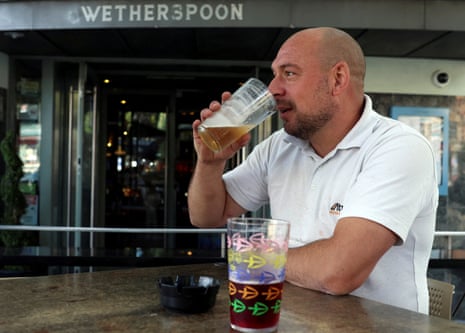
The pub chain, known for its cheap beer, reported 3.4% increase in like-for-like sales in the 13 weeks to 26 April, while sales so far this year are 4.3% ahead.
It said higher wage-related taxes will raise costs by £60m a year while higher energy prices will cost it an extra £7m.
Tim Martin, the chairman, said:
double quotation mark The company has a strong pipeline of new pubs and planned openings include Manchester airport, Heathrow airport, Paddington station, Charing Cross station and Shaftesbury Ave in central London.As many hospitality operators, including Wetherspoon, have reported, there have been substantial increases in costs, which may result in profits slightly below market expectations.
Analysts at Peel Hunt led by Douglas Jack said:
double quotation mark Higher costs are mentioned, but the higher pricing since March is not.We believe higher pricing early in the second half should boost margins in the second half.
Next reports bumper sales, will raise prices overseas to offset higher costs

Sarah Butler
Next has revealed far stronger sales than expected in the UK in the three months to the end of April – up 4.4% instead of the 1.3% predicted – thanks to bumper sales during warm weather in February and March.
The company said it now expects full year sales to rise by 5%, including 1% growth in the UK where it anticipates prices will rise by no more than 0.6% as a result of higher costs linked to the Middle East conflict.
Outside the UK, it still expects strong growth but it will put prices up in the Middle East to offset higher costs of transport and energy linked to the conflict.
Next said it expected an additional £20m of costs to the UK business from higher freight, fuel and energy costs while the cost of delivering to the Middle East is expected to rise by £17m, with other overseas costs rising by a further £10m. Overseas costs will be offset by putting prices up by as much as 8% in the Middle East.
Prices will not rise in Europe, where most cost increases have been offset by currency gains. In the UK, price rises are being offset by cost savings including lower factory prices.
The retailer added £8m to its full year profit expectations taking the total to just over £1.2bn.
UK government bond yields dip after Tuesday’s surge to 28-year high
UK government bond yields have dipped slightly after Tuesday's surge, which saw long-term borrowing costs surge to a 28-year high, limiting the chancellor Rachel Reeves' room for maneouvre.
The yield, or interest rate, on 30-year gilts has slipped 5 basis points to 5.68%, after climbing to 5.8% at one stage on Tuesday and later settling at 5.74%, the highest since 1998.
The yield on the 10-year government bond also dipped 5 bps to around 5%.
Kathleen Brooks, research director at the investment platform XTB, said:
double quotation mark What made Tuesday's sell off particularly worrying was that it happened in isolation. There was no major sell off in bond markets in the US or Europe, and UK yields also decoupled from the oil price; UK yields rose even as the price of crude oil fell.This suggests something else is triggering this sell-off, which explains why UK yields are being targeted more than their peers. Typically, when bond yields decouple from their peers it signals a rising local risk premium, such as a credibility issue and/or a potential funding crisis. This time, it also signals a rising political risk premium being added to UK yields.
Traders are watching local elections in Britain on Thursday, which are likely to add to pressure on Keir Starmer and raise questions over his future.
Meanwhile, spot gold has risen 2.4% to $4,666 an ounce.
The French shipping group CMA CGM said today that one of its vessels, the San Antonio, has been the target of an attack while transiting the strait of Hormuz, resulting in injuries among crew members and damage to the vessel (which might have prompted Donald Trump's softening of tone).
The injured crew members from the attack, which happened on Tuesday, have been evacuated and are being provided with medical care, the company said.
double quotation mark CMA CGM is closely monitoring the situation and remains fully mobilised alongside the crew.
European shares rise; FTSE 100 gains led by Diageo
We are off to a good start in Europe too. The FTSE 100 index in London has jumped 1.5%, or 153 points, to 10,372 in early trading.
Diageo shares rose 4.6% (they were up 5.5% at the open) after the world's top spirits maker, which also makes Guinness, posted surprise growth in quarterly organic sales.
Strong performances in Europe and Latin America – with strong Guinness demand in the UK and Ireland and stocking up in South America and the Caribbean ahead of the football World Cup – offset weakness in the US, its biggest market.
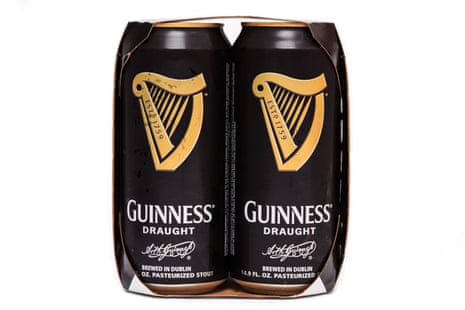
The company stuck to its 2026 forecast and said it was mindful of the Middle East war's impact on energy, suppy and distribution.
New chief executive Dave Lewis, a former Tesco boss, who took over in January, said:
double quotation mark North America remains our biggest challenge, where market conditions are soft and our offer needs to be more competitive. Actions are already underway to address tshis.
Mining (Anglo American, Antofogasta and Fresnillo) and banking stocks (Standard Chartered and NatWest Group) are also among the top risers in London.
The Italian borsa rose 1.3% while the French and Spanish markets climbed about 1%.
Introduction: Oil prices retreat and global stocks hit record highs after Trump hails ‘great progress' on Iran deal
Good morning, and welcome to our rolling coverage of business, the financial markets and the world economy.
Asian stock markets hit record highs, following in Wall Street's footsteps, and oil prices retreated after Donald Trump hailed “great progress†towards a “final agreement†with Tehran.
Brent crude oil futures fell nearly 2% to $107.7 a barrel. The dollar lost 0.36% against a basket of major currencies.
The US president said last night he was pausing ‘Project Freedom', the US effort to guide stranded vessels out of the strait of Hormuz launched on Monday, but added that his blockade of Iranian ports would remain in place. In a social media post, Trump said he made the move based
double quotation mark on the request of Pakistan and other Countries, the tremendous Military Success that we have had during the Campaign against the Country of Iran and, additionally, the fact that Great Progress has been made toward a Complete and Final Agreement with Representatives of Iranâ€.
Iran is yet to comment.
MSCI's All-Country World Index rose 0.56% to a new record while the broadest index of Asia-Pacific shares outside Japan leapt 2.8% at one stage, but then dipped 0.1%.
South Korea's Kospi jumped nearly 8% through the 7,000 mark for the first time as the Seoul market reopened after a holiday. Samsung Electronics surged 15% which took its market value above $1 trillion, ahead of Warren Buffett's investment firm Berkshire Hathaway and closing in on the retailer Walmart. Japan's Nikkei rose almost 0.4%, Hong Kong's Hang Seng added 0.8% and China's CSI 300 and the Australian market were 1.3% ahead.
Stocks on Wall Street hit fresh all-time highs on Tuesday with the S&P 500 index up 0.8% and the tech-heavy Nasdaq Composite gaining 1% amid a wave of AI-driven trades.
Chris Weston, head of research at the broker Pepperstone in Melbourne, told Reuters:
double quotation mark Investors bought and continue to add to positioning in the 2026 winners. There has been some buying in S&P 500 materials stocks, but it's tech that continues to attract the bulk of flows, notably in Apple and the memory plays.
The Agenda
-
9am BST: Eurozone services and composite PMIs for April
-
9.30am BST: UK services and composite PMIs for April
-
1.15pm BST: US ADP employment change for April


