UK business activity contracts in May as economy faces ‘perfect storm’
British businesses reported their first in output in over a year in May, as conflict in the Middle East and political uncertainty in the UK hit activity in the services sector.
The purchasing managers' index (PMI) by S&P Global dropped to 48.5, well below an expected 51.6 and under the 50 threshold that marks the difference between expansion and contraction.
The decline was driven by a fall in the services sector, where the reading slumped to 47.9, compared with expectations of 51. It was its worst performance since January 2021, when the economy was dealing with the Covid-19 pandemic.
Chris Williamson, chief business economist at S&P Global Market Intelligence, said:
double quotation mark The UK economy is facing a perfect storm as rising political uncertainty adds to the growing impact from the war in the Middle East. Businesses are reporting falling output, surging inflation, supply shortages and job cuts in May.The May PMI data indicate that the economy contracted at a 0.2% quarterly rate, representing a marked contrast to the robust growth seen earlier in the year. The blame lies first and foremost with the war in the Middle East, though companies are also noting that domestic politics are taking an increasing toll, driving uncertainty higher, in turn deterring spending, hiring and investment.
Things could well get worse in the coming months, as we have been seeing some support to manufacturing from precautionary stock building which will inevitably fade once warehouses are full.
Just as the economy shows signs of sinking into decline, prices are surging higher to herald a marked upturn in inflation in the months ahead as these costs pass through to consumers.
This combination of a faltering economy and spiking price pressures leaves the Bank of England in a major quandary, facing the growing need to hike rates to help contain inflation but thereby adding to recession risks.â€
Key events
Please turn on JavaScript to use this feature
British factory orders shrink at fastest rate since 2020, CBI says
Some more gloomy figures this morning – British factory order books were at their weakest in May since September 2020, according to a survey by the Confederation of British Industry.
Its monthly balance of total new orders slid to -41 in May from -38 in April.
Cameron Martin, senior economist at the CBI, said:
double quotation mark Against an increasingly uncertain global backdrop, the conflict in the Middle East is feeding through to higher energy costs and renewed supply chain disruption, adding another layer of challenges for manufacturers, who are already grappling with weak demand.
Business activity across the eurozone also shrank in May, at its fastest pace in two and a half years.
The PMI index fell to 47.5 in May from 48.7 in April, S&P Global found, once again driven by a slump in the services sector.
Williamson said the data showed the eurozone economy taking an “increasingly severe toll from the war in the Middle Eastâ€.
double quotation mark Job losses are also starting to become worryingly widespread as business confidence in any swift turnaround in the adverse economic climate fades further.The service sector is being hit especially hard by the surge in the cost of living created by the war, notably via the demandsapping impact of higher energy prices. While there has been some support to manufacturing from precautionary stock building, this boost is starting to fade, with demand for both goods and services now in decline.
The region's supply shock from the war is also intensifying, as indicated by increasingly widespread supply chain delays. Supply shortages threaten not only to constrain growth in the coming months but also have the potential to add further upward pressure to inflation.
The rise in the survey's price gauges already hints at inflation running close to 4% in the coming months which, combined with the growing signs of the region slipping into an economic downturn, creates a deepening dilemma for policymakers.â€
Rob Wood, chief UK economist at Pantheon Macroeconomics, says the sharp downturn in output means the Bank of England is more likely to hold interest rates in July.
double quotation mark The [monetary policy committee] now face a sharp trade-off between weaker growth and still rampant inflation pressure. The manufacturing price balances tend to be far more sensitive to oil prices than actual inflation is so we ignore those for now. The services output price balance eased to 60.6, from 62.9 in April, consistent with underlying services inflation accelerating to over 6.0% year-over-year from its latest reading of 3.7%.As a comparison, the services output price balance rose by 5.2 points between January and May 2025, almost the same as between the same months in 2022, suggesting strong pass-through of energy costs to underlying inflation. Firms also noted strong wage growth. The services price balance looks far too high to be plausible, as the PMI measures only the proportion or firms raising prices rather than by how much. But pricing indicators all point to accelerating underlying inflation.
The forward-looking components of the PMI worsened, with new orders returning to falls and future activity expectations dropping to the worst since last April. Those balances are consistent with a composite PMI reading of 49.7 in June. Businesses shed staff at a slightly faster rate than April, but also less quickly than on average in 2025, suggesting that job growth has failed to worsen yet, consistent with this week's terrible payroll numbers being revised up.
UK business activity contracts in May as economy faces ‘perfect storm’
British businesses reported their first in output in over a year in May, as conflict in the Middle East and political uncertainty in the UK hit activity in the services sector.
The purchasing managers' index (PMI) by S&P Global dropped to 48.5, well below an expected 51.6 and under the 50 threshold that marks the difference between expansion and contraction.
The decline was driven by a fall in the services sector, where the reading slumped to 47.9, compared with expectations of 51. It was its worst performance since January 2021, when the economy was dealing with the Covid-19 pandemic.
Chris Williamson, chief business economist at S&P Global Market Intelligence, said:
double quotation mark The UK economy is facing a perfect storm as rising political uncertainty adds to the growing impact from the war in the Middle East. Businesses are reporting falling output, surging inflation, supply shortages and job cuts in May.The May PMI data indicate that the economy contracted at a 0.2% quarterly rate, representing a marked contrast to the robust growth seen earlier in the year. The blame lies first and foremost with the war in the Middle East, though companies are also noting that domestic politics are taking an increasing toll, driving uncertainty higher, in turn deterring spending, hiring and investment.
Things could well get worse in the coming months, as we have been seeing some support to manufacturing from precautionary stock building which will inevitably fade once warehouses are full.
Just as the economy shows signs of sinking into decline, prices are surging higher to herald a marked upturn in inflation in the months ahead as these costs pass through to consumers.
This combination of a faltering economy and spiking price pressures leaves the Bank of England in a major quandary, facing the growing need to hike rates to help contain inflation but thereby adding to recession risks.â€
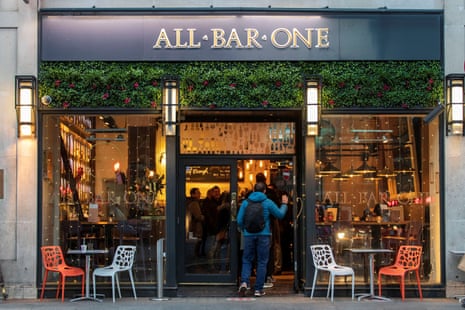
Shares in the pub chain Mitchells & Butlers have dropped sharply by 8% this morning, after it reported a slowdown in sales growth.
The FTSE 250 company, which owns All Bar One as well as Toby Carvery, Harvester and Miller & Carter, said its sales grew 3.3% in the 28 weeks ended 11 Aril, but that growth had sowed to 1.8% in the second quarter.
Victoria Scholar, head of investment at the broker Interactive Investor said the fall in the share price reflected worries that momentum is weakening and that the pub chain could experience further pressure.
double quotation mark It is facing headwinds on multiple fronts from the weak consumer backdrop and softer discretionary spending to heightened inflationary pressures that are weighing on the hospitality industry. No doubt the sector will be hoping for a boost from improving weather in the summer months ahead as well as the men's football World Cup.
The stock is the worst performer across the FTSE today. In the year to date, it has lost about a tenth of its market value.
BT revenue drops as Openreach upgrade completes
It is a mixed bag of results from BT this morning: the telecoms group has reported a drop in revenue and has forecast another fall next year, but profits are up.
Its underlying revenues fell 4% to £19.65bn in the year ended in March, with UK service revenues down 1% despite price rises. Pre-tax profits rose 8% to £1.44bn.
The FTSE 100 group is now expecting revenue in the range of £19bn to £19.5bn next year, while earnings are expected to rise between £8.2bn to £8.3bn.
But BT also told investors that it has lost fewer customers than feared, down 825,000 customers across its Openreach network, better than the 844,000 which analysts had expected.
It has also announced plans to increase its dividend by “low to mid single digit percentage†in its current financial year, and that it will expand its cost cutting plan from £3bn in savings by 2029 to £3.7bn by 2030.
Shares in the company are down 1.5% this morning.
Matt Britzman, an equity analyst at the broker Hargreaves Lansdown, says:
double quotation mark BT's results were light on fireworks, but they did what they needed to do. Revenue remains under pressure, but tight cost control helped cash profits hold up, while free cash flow came in a fraction better than expected.That matters most for BT's investment case from here. The group is now moving past the heaviest phase of its fibre build, and today's reiteration of a stronger cash flow outlook gives investors a clearer path to a more cash-generative business.
Openreach remains a key part of this story. Full fibre now reaches 23 million premises, connections are growing, and line losses were slightly better than BT had guided for, though they're still a reminder that competition is fierce. The dividend increase and new policy are helpful signals, but this is still a story about execution. BT needs to prove that years of heavy network investment can translate into sustainable growth, not just better cash flow as spending falls.â€
European markets have opened lower this morning. The UK's blue chip FTSE 100 has slipped 0.4%, while the German Dax is down 0.3% and the French Cac 40 is down 0.2%.
The Stoxx Europe 600, which tracks the biggest companies on the continent, is down 0.2%.
Nationwide to pay £100 cash bonus to millions of customers
Nationwide has put aside a £440m pot to pay £100 cash bonuses to 4 million members.
It will be the fourth “fairer share†payment by the bank since it started its profit sharing scheme in 2023. Eligible customers who have a qualifying current account, plus a savings or mortgage with the bank, will be paid the bonus from 10 June.
The announcement came as Britain's biggest building society reported an annual pre-tax profit of £1.49bn, down from £2.3bn last year when it enjoyed a one-off gain from its £2.9bn deal to buy Virgin Money.
Debbie Crosbie, Nationwide's chief executive, said:
double quotation mark More people than ever are choosing Nationwide. Our growth in mortgages, retail deposits and personal current accounts is leading the market, which means we can again make a Fairer Share payment to eligible members, and offer a new Member Exclusive Bond to all members.â€
EasyJet takes £25m hit on extra fuel costs
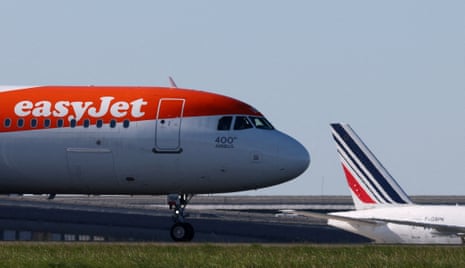
Budget airline easyJet has said it had to spend an unexpected extra £25m on jet fuel in March, after the start the US and Israel's war on Iran.
But chief executive Kenton Jarvis said this morning that there have been “no issues†with fuel supply and that people should not panic about their summer holidays.
Kenton Jarvis told BBC Radio 4's Today programme:
double quotation mark We have seen absolutely no issues with fuel supply at any of our airports in the UK, across Europe, or indeed beyond.We stay in very close contact with our fuel suppliers, airports, governments, and they are equally raising no issues looking forward. What is true is obviously there's a lot less oil coming from the Gulf region, but fuel suppliers have successfully diversified, with production increased in Norway, in West Africa, in the Americas, and refining capacity for jet fuel has also increased substantially outside of the Gulf region.â€
The company has hedged 72% of its fuel needs for the next six months, covering the busy summer period up to the end of September. However, it has temporarily suspended short-term hedging as a result of “elevated near-term fuel pricesâ€.
The airline reported a a £552m pretax loss for the six months to 31 March, compared with a loss of £394m in the same period a year earlier. It normally makes its profit in the second half of the year, which includes the peak summer period.
Closer to home, the UK chancellor Rachel Reeves is expected to give a speech in parliament this morning, outlining her latest plans for cushioning the blow to consumers from an expected rise in inflation later this year.
It comes after Keir Starmer announced that the government will postpone the planned increases in fuel duty that were due to take effect in September and December, and give lorry drivers free vehicle tax.
Inflation fears are being fanned by conflict in the Middle East, which has triggered a spike in oil prices. Brent crude, the international benchmark for oil, is up 1.5% this morning to $106.61 a barrel.
Elsewhere in the world of tech, last night SpaceX unveiled its plans to list publicly on the US stock market.
Elon Musk's rocket and satellite operations company is planning to go public on the Nasdaq exchange at a valuation of about $1.75tn, under the symbol SPCX, likely on 12 June. It is seeking up to $80bn in investment.
It said in its filing:
double quotation mark Our mission is to build the systems and technologies necessary to make life multiplanetary, to understand the true nature of the universe, and to extend the light of consciousness to the stars.
Introduction: Nvidia hits record quarter on AI chip boom
Good morning, and welcome to our rolling coverage of business, the financial markets and the world economy.
A fresh wave of AI optimism has lifted the stock market after chip designer Nvidia reported another set of record-breaking earnings last night.
The company, which designs chips critical for AI tech, reported an 85% year-on-year rise in revenue to $81.6bn in the three months ended in April, marking the 15th consecutive quarter of beating Wall Street estimates.
Nvidia forecast $91bn in sales for its current quarter, well above average investor expectations of $86bn, but short of the highest estimates. Its shares are down 1% in after hours trading, reflecting some worries among investors about how long the company can keep up its incredible growth trajectory.
Still, the revenue beat has lifted the mood in Asian stock markets: the South Korean Kospi has staged a dramatic 9% rise, while Taiwanese shares have risen by 3.3%, snapping a four-day losing streak. LG Electronics and Hyundai Mobis both rose by more than 20% after Nvidia boss Jensen Huang said that physical AI and robotics was the “second category†for major growth.
Elsewhere this morning, Wes Streeting, the former health secretary, has called for a “wealth tax that worksâ€.
Speaking to the BBC, he proposed equalising capital gains tax with income tax, which he said could raise £12bn a year.
Streeting suggested that CGT rates should mirror the three bands of income tax of 20%, 40% and 45%, according to the BBC. He told the broadcaster's Political Thinking podcast that loopholes should also be closed that allow people to disguise income from work as capital gains, and that lower rates of capital gains tax could be offered to entrepreneurs who are building companies.
His comments come after his resignation as health secretary last week, after several Labour MPs urged prime minister Keir Starmer to step down.
The agenda
-
9am BST: Eurozone flash PMI
-
9.30am BST: UK flash PMI
-
11.30am BST: UK chancellor Rachel Reeves expected to detail measures on cost of living support
-
1.30pm BST: US jobless claims
-
3pm BST: Eurozone consumer confidence reading
-
4pm BST: Bank of England governor Andrew Bailey speech at Cutler's Feast, Sheffield